If you’ve ever stood in the sweltering heat of a summer afternoon, staring at a thermostat that just won’t hit the temperature you set, or shivered through a winter night because your heating system can’t keep up, you’ve probably never thought to blame your air ducts. But here’s the thing I’ve learned in 12 years as an insulated air duct supplier: the ducts you choose aren’t just metal pipes running through your walls. They’re the unsung heroes of your HVAC system, and picking the wrong one for your specific space can waste thousands of dollars in energy bills, cause uncomfortable hot and cold spots, and even shorten the lifespan of your entire heating and cooling setup. Insulated Air Duct
I see this mistake all the time. A homeowner will call me and say, “I just need air ducts for my new house—can you send whatever’s cheapest?” But that “cheap” duct might end up costing them more in repairs and utility costs in a year than a higher-quality, application-specific duct would in five. Last month, I had a contractor reach out panicking because he’d installed standard uninsulated ducts in a 5,000-square-foot warehouse, and by the end of the first week, his client was paying $800 more in energy bills than they’d budgeted. It took us two days to pull out the wrong ducts and replace them with flexible insulated ones rated for commercial warehouse use. That’s a misstep no one wants.
So today, I want to break down exactly how to select an insulated air duct based on its application—no jargon, no confusing charts, just the real-world advice I’ve picked up working with residential homeowners, commercial contractors, industrial facility managers, and everyone in between. By the end of this, you’ll know what to ask for, what to avoid, and why the right duct can make all the difference for your space.
Let’s start with the basics: what makes an air duct insulated, and why does that matter for different applications? Insulation works by slowing down heat transfer—so in the summer, it keeps cool air from escaping your duct on its way to a room, and in the winter, it keeps warm air from losing heat as it travels. Not all insulation is the same, though. Some is made for extreme temperatures, some for small, tight spaces, some for places with high humidity, and some for heavy, consistent use. Matching that insulation to your specific application is the key.
First up: residential applications. This is the most common call I get—homeowners building new, or renovating old HVAC systems, looking for ducts for their single-family home, duplex, or small apartment building. When it comes to residential, the biggest factors are usually: where the ducts are located, how much space you have to work with, and your climate.
Let’s break down residential sub-applications. If your ducts are running in unconditioned spaces—like an attic, a crawl space, or a garage that’s not heated or cooled—this is a high-heat-transfer zone. In a hot climate, uninsulated ducts here can lose up to 30% of the cool air before it reaches your rooms. In a cold climate, that same space can cause warm air to lose 20% of its heat. For these spaces, I always recommend rigid insulated fiberglass ducts with an R-value of at least 6. R-value is the measure of thermal resistance—higher R-value means better insulation. For attic spaces especially, I suggest adding a vapor barrier as part of the insulation, because attics get humid in the summer, and moisture can get trapped between the duct and the insulation, causing mold and mildew. I worked with a family in Atlanta a few years ago who skipped the vapor barrier on their attic ducts, and by the second year, they had to replace their entire HVAC system because of mold growth inside the ducts. That’s a $10,000 mistake.
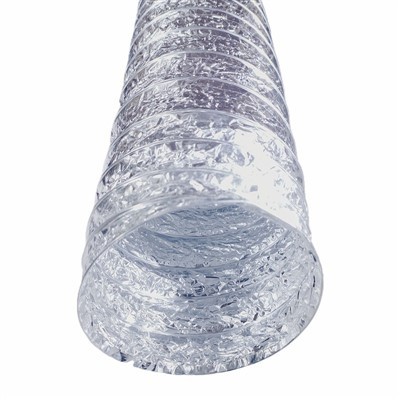
If your residential ducts are in conditioned spaces—like inside your walls, basement, or between floors—you don’t need as high an R-value, because the space around the ducts is already temperature-controlled. Here, flexible insulated ducts with an R-value of 4 to 5 work perfectly. Flexible ducts are great for tight spaces, too—if you’re running ducts around beams or through small openings in walls, their bendable design makes them easier to install than rigid ducts. The only thing to watch for with flexible ducts is that they’re not crushed during installation—crushing reduces the airflow, which makes your HVAC work harder. I always remind contractors to leave at least 2 inches of space around flexible ducts when they’re tucked into wall cavities.
Another residential application: small additions or retrofits. If you’re adding a sunroom or finishing a basement, you might be extending your existing ductwork into a space that has different temperature needs. For example, a sunroom gets a lot of direct sunlight, so the ducts feeding it need insulation that can handle consistent temperature swings—foil-faced rigid insulation works well here, because it’s durable and reflects radiant heat, which is key for sunny spaces.
Next: commercial applications. This is where things get trickier, because commercial spaces have way higher airflow needs, longer duct runs, and often stricter building codes. I work with everything from small retail shops to 10-story office buildings, and each one has unique requirements.
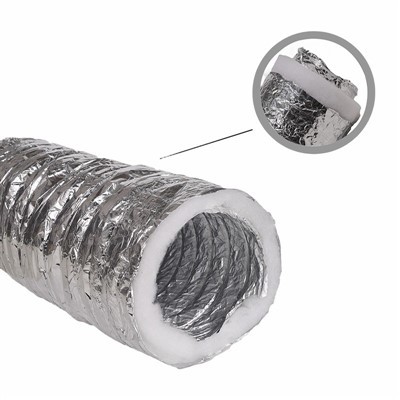
For small commercial spaces—like a café, a boutique, or a small office building—ducts need to balance efficiency with easy maintenance. Cafés, for example, have high humidity from dishwashers and coffee machines, so moisture resistance is non-negotiable. I recommend closed-cell foam insulated ducts here, which are water-resistant and don’t absorb moisture, unlike fiberglass ducts that can get damp over time. Closed-cell foam also has a higher R-value per inch, so you can get good insulation in a thinner duct, which is helpful for spaces with ceiling space constraints (many small commercial buildings have low ceilings, so bulky ducts are a problem).
For mid-sized to large commercial spaces—like warehouses, gyms, or office buildings with multiple floors—the biggest concern is airflow consistency. Large duct runs mean air has to travel further, so you need insulation that doesn’t add unnecessary bulk or restrict airflow. Rigid insulated metal ducts with external insulation are a common choice here, because they’re durable enough to handle heavy use, and external insulation doesn’t get damaged if something brushes against the duct (unlike internal insulation, which can tear over time). Warehouse spaces, especially, have extreme temperature swings—from cold winters to hot summers—so an R-value of 8 or higher is standard here. I also always make sure commercial duct insulation meets local building codes, which usually require fire-resistant materials in commercial spaces. Last year, a gym in Chicago tried to save money by using non-fire-rated insulation for their ductwork, and the city’s building inspector made them rip it all out before they could open. That’s a delay that cost them months of business—worth avoiding.
Then there’s industrial applications. This is the most specialized category, and it’s where I see the biggest difference between a good duct and a bad one. Industrial spaces include factories, manufacturing plants, food processing facilities, and laboratories. These spaces have harsh conditions: constant high temperatures, chemical fumes, dust, and heavy airflow.
For food processing facilities, for example, hygiene is the top priority. Insulated ducts here can’t absorb any food particles or moisture, because that would lead to bacterial growth, which can make food unsafe. So I recommend stainless steel ducts with external closed-cell foam insulation. The stainless steel is easy to wipe down and sanitize, and the closed-cell foam is water-resistant and doesn’t harbor bacteria. I worked with a meat processing plant in Iowa a couple of years ago that was having issues with their old fiberglass ducts shedding small particles into the air, which violated food safety regulations. Switching to stainless steel insulated ducts fixed that problem overnight.
For manufacturing plants that run high-temperature processes—like a metal stamping plant or a glass factory—ducts need to handle extreme heat, both from the air moving through them and from the surrounding environment. Regular insulation will break down at high temperatures, so I recommend fiberglass insulation with a heat-resistant outer layer, or mineral wool insulation, which can handle temperatures up to 1,800 degrees Fahrenheit. The last thing you want in a manufacturing plant is duct insulation melting or catching fire because it can’t handle the heat from the machinery nearby.
Another industrial application is laboratories. Labs have highly controlled air quality, and ducts need to prevent cross-contamination between different rooms. For example, a lab testing chemicals needs ducts that won’t let fumes from a hazardous materials room escape into a clean room. Here, I use air-tight insulated ducts with a sealed exterior, so there are no gaps where air can leak. That not only keeps the air quality safe, but also saves energy—leaky ducts in labs can waste 15-20% of the air that’s supposed to be controlled, which is a big deal for both safety and utility costs.
Now, I know what you’re thinking: “How do I know which application I’m in? What if my space is a mix—like a home with a finished basement that’s part residential, part commercial workshop?” That’s where talking to a professional matters, but there are a few general rules of thumb I always share:
-
Know your climate: If you live in a place with extreme heat (like Arizona, Florida, or Texas) or extreme cold (like Minnesota, North Dakota, or Maine), prioritize higher R-value insulation for any ducts in unconditioned spaces. For mild climates (like California or the Pacific Northwest), a lower R-value works fine, but still make sure insulation is moisture-resistant if you get a lot of rain or humidity.
-
Check the space around your ducts: If your ducts are in a tight, low-clearance space (like a small crawl space or a basement with lots of pipes), flexible insulated ducts are usually better. If they’re in a large open space (like a warehouse or a factory), rigid ducts with higher R-value are more durable.
-
Consider your maintenance needs: If you need to clean your ducts regularly (which is required in commercial and industrial spaces, and recommended every 3-5 years in homes), avoid fiberglass insulation, because it can trap dust and make cleaning harder. Closed-cell foam or rigid metal ducts are easier to sanitize and clean.
-
Don’t forget fire and safety codes: Most areas have building codes that specify what kind of insulation is allowed in commercial and industrial spaces, and even in some residential areas near wildfire zones. Always check your local codes, or ask your HVAC contractor to confirm—cutting corners here can lead to big fines or safety hazards.
I also can’t stress enough that quality matters more than price. I sell a range of insulated air ducts, from budget-friendly residential flexible ducts to high-performance industrial stainless steel ducts, but the lowest price isn’t always the best value. A duct that’s the right size, rated for your climate and use case, and made with durable materials will last 15-20 years, while a cheap, mismatched duct might need to be replaced in 5 years. I had a customer last year who bought $2,000 worth of cheap ducts for his residential attic, and had to spend another $3,500 to replace them two years later. That’s a net loss of $1,500, plus the hassle of having his home’s HVAC torn apart mid-winter.
If you’re in the process of planning a new HVAC system, replacing old ducts, or just want to upgrade your current setup, the best thing you can do is reach out to a supplier who understands different applications. As someone who’s been in this business for over a decade, I’ve worked with every type of space, and I can help you narrow down your options based on your specific needs. I don’t believe in one-size-fits-all solutions, because every home, every business, every facility is different.
At the end of the day, the goal of insulated air ducts is simple: keep your air at the right temperature, save you money on energy bills, and last as long as your HVAC system. The only way to do that is to pick the right duct for your application. Whether you’re a homeowner building a new house, a contractor working on a commercial project, or a facility manager upgrading an industrial space, don’t make the mistake of picking ducts based on price or convenience. Take the time to understand your space’s needs, and invest in insulated air ducts that are built for what you’re using them for.
If you’re ready to discuss your project and find the right insulated air ducts for your application, I’m here to help. We can walk through your space, your climate, your budget, and make sure you get a solution that works for you.
Insulated Air Duct References
ASHRAE Handbook: HVAC Systems and Equipment, American Society of Heating, Refrigerating and Air-Conditioning Engineers
National Building Code, International Code Council
Insulated Duct Design and Performance Manual, North American Insulation Manufacturers Association
Food and Drug Administration Food Safety Modernization Act (FSMA) Guidelines for Food Facility HVAC Systems
Industrial Ventilation: A Manual of Recommended Practice, American Conference of Governmental Industrial Hygienists
Dongyang Hstube Co., Ltd.
As one of the leading insulated air duct manufacturers and suppliers in China, we warmly welcome you to wholesale cheap insulated air duct for sale here from our factory. If you have any enquiry about free sample, please feel free to email us. Quality products and reasonable price are available.
Address: NO.5 CHENGDONG ECOLOGICAL INDUSTRIAL ZONE, DONGYANG, ZHEJIANG, CHINA.
E-mail: sales@hstube.com
WebSite: https://www.ductword.com/
