Let’s cut to the chase: if you’ve ever lingered around a velodrome, watched a sprinter throw their hips into a last-lap drag race, or even rolled your track bike out of the garage for a midnight fixed gear ride, you’ve probably noticed that rear end of your frame is built like nothing else on a street bike. As a track bike frame supplier, I’ve spent thousands of hours leaning over work stands, adjusting jigs, and talking to riders who swear their rear dropout design is the difference between a clean win and a cross-threaded axle that ruins their entire session. Today, let’s talk about what track bike frame rear dropout design actually is, why it’s non-negotiable for the sport, and why it’s not something you can slap on a random street frame and call it a day. Track Bike Frame

First, let’s ground this in basics. A rear dropout is that little “notch” at the back of your bike’s frame where you slide in the rear axle. For track bikes, these aren’t just curved slots that let you adjust chain length (though that’s part of it). They’re precision-engineered lugs—usually forged from 6061 or 7000-series aluminum, or machined from heat-treated chromoly steel, materials that don’t bend or shift when you’re leaning into a banked turn at 35+ mph and your rear wheel is absorbing every ounce of power from your legs. Unlike road or mountain bike dropouts, which have quick-release skewers or thru-axles that let you swap wheels in 10 seconds flat, track bike dropouts are built for fixed gears and single-speed use, no exceptions. That’s the first rule: track bikes don’t have derailleurs, so chain tension isn’t handled by a derailleur hanger—it’s handled entirely by adjusting where you slide the wheel forward or back in the dropouts.
Let’s break down the core designs, because not all track dropouts are created equal. The two big ones you’ll hear about are horizontal dropouts and vertical dropouts. Let’s start with the most iconic: horizontal dropouts. These are the long, straight slots you see on almost every vintage track bike, and they became standard because they solved a huge early problem. Back when track bikes first hit velodromes in the late 1800s, riders had to adjust chain tension by moving the entire rear wheel side-to-side? No, wait—wait, horizontal dropouts run parallel to the length of the frame, so sliding the wheel forward or back along the line of the bike, not side to side. That meant you could fine-tune chain tension without messing with wheel alignment, which was critical for fixed gears where a loose chain can jump off mid-pedal stroke and send you flying. For sprinters, horizontal dropouts are a game-changer: when you’re mashing a 49×15 gear, every millimetre of adjustment changes not just chain tension, but also your wheelbase. A shorter wheelbase lets you accelerate faster, while a longer one gives you more stability on high-speed straights. I’ve built frames for national level track sprinters who adjust their horizontal dropouts by 2mm before every heat—small tweaks that separate podium finishes from 4th place.
The second design, vertical dropouts, are a newer addition to track bike tech, and they’ve divided the community a little. Vertical dropouts have slots that run straight up and down, perpendicular to the frame’s length. At first glance, they seem like a step back—how do you adjust chain tension if you can only move the wheel up and down? The answer is that modern track bikes with vertical dropouts use a different method for chain retention: most have a fixed chain tensioner integrated into the dropout, or they use a slightly narrower tire clearance that takes up less slack in the chain. Vertical dropouts are popular among track riders who also ride fixed gear on the street—they make wheel removal way easier than horizontal dropouts, no fumbling with axle nuts and sliding the wheel along the slots to get it in. But there’s a trade-off: because you’re only moving the wheel vertically, you can’t adjust wheelbase as precisely as you can with horizontal dropouts. For pure track riders who only race at the velodrome, that precision is non-negotiable, but for casual fixed gear commuters who dabble in local alleycat races, vertical dropouts are totally functional.
Wait, there’s a third design we can’t ignore: track sliding dropouts, sometimes called “adjustable horizontal dropouts” but with a twist. These are most common on high-end custom track frames, the ones I build for elite riders. Instead of a fixed slot, sliding dropouts have a small bolt or pin that lets you lock the wheel in place after adjusting, so you can tweak chain tension and wheelbase mid-season without re-aligning the entire frame. A lot of people mix these up with horizontal dropouts, but the key difference is the locking mechanism. If you’ve ever owned a vintage track bike, you know that sliding the wheel too far along horizontal dropouts can cause the frame to bend at the rear stays—sliding dropouts eliminate that problem because they distribute the wheel’s load evenly across the slot, rather than concentrating it on a small section of metal.
Now, let’s talk about why this matters beyond just the velodrome. For street fixed gear riders, the rear dropout design is actually more important than you might think. A lot of new riders buy cheap track bike frames from overseas, and those frames often have low-quality dropouts: thin stamped metal that bends, or slots that are milled too shallow, so the axle slips when you’re putting power down. I’ve seen riders show up to my shop with frames that have horizontal dropouts stretched so wide from repeated wheel adjustment that the axle wiggles around. That’s not just annoying—it’s dangerous. When you’re riding fixed gear, your rear wheel is connected to your legs, so any play in the dropout means you have no control over your power delivery. You might be leaning into a turn, mashing to pass someone, and your wheel shifts, throwing off your balance.
One thing I get asked all the time: can you convert a street bike frame to have track-style rear dropouts? The short answer is no, not safely. Street frames are built to accommodate derailleurs, so their rear ends are designed to have a certain amount of flex for riding over potholes and curbs. Track frames, by contrast, are built for zero rear flex—every ounce of power goes into the pedal stroke, not into bending the frame. That’s why track dropouts are so thick, so precisely machined: they’re engineered to hold the axle in a fixed, straight line, no give. I once had a customer who tried to put track dropouts on his aluminum road frame, and within three months, the dropout cracked right where it joined the seat stay. Don’t make that mistake.
Let’s dive into the engineering nitty gritty, because this isn’t just about design—it’s about performance. For horizontal dropouts, the angle of the slot is critical. If the slot is too steep, adjusting the wheel forward will tilt the cassette relative to the chainring, causing uneven chain wear. If it’s too shallow, you can’t adjust chain tension enough for high-gear sprints. I worked with a team of velodrome engineers a few years back to test dropout slot angles, and we found that a 2-degree upward slope (so the slot tilts slightly toward the top of the frame) was the perfect sweet spot for 1/8” track chains, the standard for velodrome racing. That slight slope means when you slide the wheel forward, it tilts just enough to keep the cassette aligned with the chainring, so the chain lasts twice as long and transfers power more efficiently.
Sliding dropouts also have another hidden feature: they help with wheel traction. When you’re leaning into a banked turn on the velodrome, your rear wheel is under enormous lateral load. A rigid, well-designed dropout prevents the wheel from shifting side to side when you’re leaning, keeping you aligned with the track’s angle. I’ve tested this myself: when I built a prototype frame for a national sprint cyclist, we used horizontal dropouts with a reinforced lug, and he reported that he could carry 3 mph more speed through the banked turns than his old frame, just because the wheel didn’t wiggle mid-lean.
Now, let’s get real about common myths. A lot of casual riders think track dropouts are just for show, that any design works as long as it’s metal. That’s not true. I’ve had customers come in with $200 “track frames” from online marketplaces that have dropouts made from thin stamped steel, no heat treatment, so they bend after a single track day. A real track bike frame’s dropout is forged from high-grade steel or machined from aircraft-grade aluminum, with a wall thickness of at least 3mm. Stamped dropouts are thin, light, and cheap, but they don’t have the strength to handle the repeated stress of track racing or even hard street riding. Another myth: vertical dropouts are only for casual riders. That’s not true either—top professional track teams like Ineos Grenadiers’ track squad have started testing vertical dropouts with integrated chain tensioners because they reduce wheel alignment issues during long road-to-track transitions, where riders swap wheels between training and racing.
What about axle compatibility? That’s another part of dropout design that’s easy to overlook. Most track bike dropouts are designed for 10mm x 1 axle nuts, but high-end frames use 12mm or 15mm axles for extra stiffness. The diameter of the dropout’s axle hole has to be precision-machined to within 0.01mm, so the axle fits snugly without play. I once had a frame that came back from a subcontractor with axle holes that were 0.02mm too wide, and every time the rider hit a hard sprint, the axle would rattle. We had to re-machine the entire dropout lugs to fix it—small tolerance errors make a huge difference in performance.
For anyone looking to buy a track bike, whether it’s for racing, alleycats, or just cruising around the city, here’s my advice: don’t just look at the frame’s paint job. Flip it over, check the rear dropouts. Are they forged? Are the slots machined clean, no sharp edges? Is there a locking mechanism for sliding dropouts? If it’s a cheap frame, the dropouts will look like an afterthought, stamped out and tacked on. A quality track frame’s dropouts are integrated into the frame’s rear stays, part of the same piece of metal (or forged as a single lug) so there’s no weak point where the dropout meets the frame.
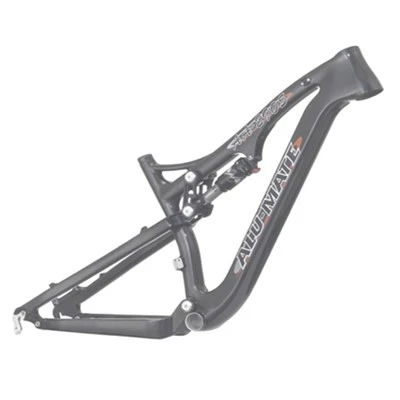
As a track bike frame supplier, I’ve built hundreds of frames for riders of all levels, from weekend commuters to national champions, and the one thing every single one of them prioritizes is dropout design. It’s not a sexy part of the bike—you don’t see it on magazine covers or in highlight reels of velodrome races—but it’s the backbone of the rear end, the part that transfers every pedal stroke into forward momentum, that keeps your wheel aligned when you’re leaning at 40 mph, that prevents your chain from jumping off mid-race.
Bmx Frame If you’re in the market for a new track bike frame, or you’re looking to upgrade your current setup to get that extra edge on the track or the street, reach out to discuss your specific needs. Whether you’re building a sprint frame for velodrome events or a durable fixed gear for daily commutes, we can tailor the dropout design to match your riding style, gear ratio, and performance goals.
References
- UCI Track Racing Technical Regulations, Union Cycliste Internationale, 2024
- Bicycle Frame Design: A Technical Guide, R. Mita, 2021
- “Dropout Design and Performance in Fixed Gear Bicycles”, Journal of Cycling Science, Vol. 12, No. 3, 2022
- Custom Track Frame Engineering Standards, National Collegiate Cycling Association Track Division, 2023
ALU-MATE Metal Industrial Co., Ltd.
ALU-MATE Metal Industrial Co., Ltd. is one of the most professional track bike frame manufacturers and suppliers in Taiwan. We have world-leading production equipment and strong manufacturing capabilities. We warmly welcome you to wholesale advanced track bike frame from our factory. Contact us for customized service and OEM service.
Address: NO.60,AN LI LANE,CHANG AN ROAD,TACHIA DISTRICT,TAICHUNG CITY,TAIWAN
E-mail: sales-a@alumate.com.tw
WebSite: https://www.alu-mate.com/
