If you’ve ever needed to ship time-sensitive goods—whether it’s a medical prototype, a last-minute retail restock, or a perishable food order—you’ve probably asked yourself the same question: How much does air freight express cost per kilogram? As someone who’s run a small air freight express operation for the past 12 years, I can tell you there’s no one-size-fits-all answer. But over decades of working directly with shippers, I’ve learned to break down the variables that actually shape this cost, and how to navigate them to get fair, transparent pricing. Air Freight Air Express
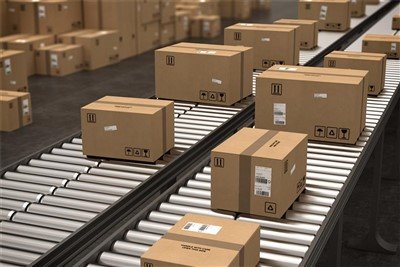
Let’s start with the basics: Air freight express isn’t the same as standard air cargo. Standard air cargo is for bulk, non-urgent shipments, packed into pallets and booked months in advance with commercial airlines. Air freight express is the expedited option—your goods get priority handling, they move on dedicated or near-dedicated flights, and they’re door-to-door from pickup to delivery, usually in 1 to 3 days. That speed comes at a premium, but it’s non-negotiable for so many businesses, from tech startups launching a new product line to pharmaceutical companies shipping temperature-sensitive vaccines.
When a shipper asks me for a per-kilogram rate, the first thing I have to talk through is the weight of the shipment. It’s not just how much your box weighs—it’s the “dim weight” (or dimensional weight) we calculate for all air shipments, because airlines charge based on space used as much as actual weight. For every cubic meter of space your goods take up, if they’re lightweight (like bubble wrap, pillows, or small electronics in foam packaging), we convert that to a weight equivalent to 167 kilograms. So if you’re shipping a 1kg box that’s 0.1 cubic meters, the dim weight is 16.7kg, not 1kg. That’s a big difference, and it’s one of the first things that trips up first-time shippers.
Beyond weight, the distance between pickup and delivery points is the next biggest cost driver. A shipment from Shanghai to Los Angeles will have a different rate per kg than one from Miami to Toronto, even if the weight is identical. Why? Longer routes have higher fuel costs, more operational fees for handling, and more legroom for flights, but there’s a caveat: Rates don’t scale linearly with distance. A shipment that’s twice as far won’t be twice the cost. For example, a 10kg shipment from New York to London might be $8 per kg, while a 10kg shipment from New York to Dubai might be $11 per kg, not $16. That’s because shorter routes have higher per-kilogram costs due to fixed handling fees, while longer routes spread those fixed costs over more miles.
Then there are the service-level variables that make air freight express what it is. Do you need pickup from your loading dock, or do you drop off at our terminal? Do you need a signed delivery receipt, or will it be left at a depot? Are your goods fragile, hazardous (like lithium batteries or flammable materials), or temperature-controlled? Special handling adds cost every time. Hazardous goods, for example, require specialized packaging, training for the handlers, and extra documentation, so their per-kg rate is often 20-50% higher than standard cargo. Temperature-sensitive shipments need refrigerated containers, which add another 10-15% to the base rate.
Peak seasons also play a huge role. The months leading up to major holidays—like Christmas in December, back-to-school in July and August, or Chinese New Year in January and February—are when demand for air freight express skyrockets. Airlines increase their rates because they can, and available space shrinks. During 2021’s holiday peak, I saw rates per kg for standard shipments jump 40% from the off-season, and for express, it was even higher. If you can ship outside of peak windows, you can save a lot.
But here’s the part most shippers don’t know: There are also hidden costs that make the initial “per kg” quote seem misleading if you don’t ask. Airport security fees, customs clearance fees, fuel surcharges—those are all added on top of the base per-kg rate, and they can make up 15-25% of the total cost. Good air freight express providers will break these down clearly, but some will fold them into the per-kg rate to make the quote look lower, which can lead to surprises at checkout.
Let me give you some real numbers to put this in perspective, based on the shipments I handle every day. For standard, non-specialized shipments between major global hubs, the off-season per-kg rates range from $5 to $12. A small 5kg package moving from Chicago to Toronto might be $7 per kg, total $35. A 50kg shipment from Frankfurt to Dubai might be $9 per kg, total $450. During peak season, those same rates go up to $8 to $15 per kg, so that 50kg shipment becomes $750.
If your goods have special requirements, add on top: $1 to $3 per kg for fragile handling, $2 to $4 per kg for temperature control, and 20-50% for hazardous materials. For example, a 10kg pharmaceutical shipment from Singapore to Sydney, temperature-controlled, would be around $10 per kg base plus $3 for temperature, total $130, off-season. During peak, that jumps to $195.
Now, I know what you’re thinking: That’s a pretty wide range. Why can’t I just get a fixed rate? The truth is, air freight express is a service, not a commodity. It’s about reliability. If your shipment is 24 hours late, that prototype you were supposed to present to investors is useless, or that perishable food has spoiled. A provider that can guarantee on-time delivery has a higher cost, and that’s baked into the per-kg rate.
Over the years, I’ve seen small businesses and large corporations make the same mistake: choosing the lowest per-kg rate and ending up paying more in the long run. I once had a client, a startup that makes custom bike parts, go with a provider who quoted them $1 per kg cheaper than me for a 20kg shipment from Shenzhen to Los Angeles. That sounded great—they saved $20 upfront. But the provider missed the flight twice, so the parts arrived 5 days late, costing the startup a $10,000 retail order. The $20 savings was nothing compared to their loss.
That’s why, when you’re asking about per kg cost, you should also be asking about what’s included. Does the quote include door-to-door delivery? What’s the on-time performance rate? Are there any hidden fees? Can they handle any special requirements your goods have? A reputable air freight express provider will be transparent about all of this, not just throw a number at you.
Another factor that affects per kg cost is shipment size. Larger shipments get better rates, because the fixed costs (like handling at the terminal, documentation, and trucking) are spread over more kilograms. A 100kg shipment will have a lower per kg rate than a 10kg shipment, because the fixed $50 handling fee is $0.50 per kg for 100kg, vs $5 per kg for 10kg. If you’re shipping multiple small packages, it’s often cheaper to consolidate them into one larger shipment, which brings down the per kg cost. I see this all the time with e-commerce merchants—they used to ship each order individually, but when they consolidate 10 small orders into one, they save 30% on average.
I’ve also worked with shippers who don’t realize that air freight express rates are negotiable, especially for regular shipments. If you’re shipping 4 or 5 times a month, or if you have consistent, large shipments, a good provider will give you a discounted per kg rate to keep your business. That’s how I’ve built long-term relationships with my clients—flexible pricing that works for their volume, not just a one-size-fits-all number.
Let’s talk about current market conditions, too. Post-pandemic, air freight rates have stabilized a lot compared to the sky-high numbers we saw in 2021 and 2022. But fuel costs, which make up a big part of the per kg rate, are still volatile. When oil prices go up, air freight rates go up, and when they go down, rates adjust. A good provider will pass those fuel changes on transparently, not keep them hidden.
So, to circle back to the original question: How much does air freight express cost per kilogram? The answer is, it depends. It depends on your weight, your route, your shipment’s special needs, the season, and the level of service you need. It can be as low as $5 per kg for a large, off-season, standard shipment between nearby hubs, to $15 or more per kg for a small, peak-season, temperature-sensitive or hazardous shipment.
But here’s the thing: The rate isn’t the only thing that matters. For businesses that rely on timely delivery, the reliability of the provider, the transparency of the quote, and the ability to handle unexpected issues (like customs delays or flight cancellations) are worth their weight in gold. That’s why I built my operation to be focused on those things, not just the lowest numbers.

If you’re ready to get a clear, no-obligation quote for your next air freight express shipment, or if you have questions about how the rate applies to your specific goods and route, I’m here to help. I can walk you through all the variables, break down every cost, and make sure you’re getting a rate that’s fair for your shipment and your business.
Express UPS Don’t let vague per kg quotes leave you in the dark. Reach out to us today to discuss your shipping needs, and we’ll give you a transparent pricing breakdown tailored to your requirements. Whether you’re a small business shipping your first prototype or a large corporation with regular global shipments, we have the experience and flexibility to meet your needs.
References
- International Air Transport Association. (2023). Air Cargo Pricing Trends 2023.
- Air Forwarding Association of America. (2022). Dimensional Weight Calculation Standards for Express Shipments.
- World Trade Organization. (2023). Global Trade Logistics Costs and Time-Sensitive Cargo.
- Federal Aviation Administration. (2021). Hazardous Materials Air Freight Handling Requirements.
Foshan Shijie International Logistics Co., Ltd.
With abundant experience, we are one of the most professional air freight air express service suppliers in China. We are committed to offering reliable air freight air express service and logistics solutions with low price. If you have any enquiry about quote, please feel free to email us.
Address: Room 701A, Office Building, Jinbo Commercial Center, No.88, Guiye Road, Guicheng Street, Nanhai District, Foshan City, Guangdong Province
E-mail: alicesmith.tradingbusiness@gmail.com
WebSite: https://www.fsshijielogistics.com/
