Hey there, fellow ocean lovers and maritime folks! If you’ve ever stared at a floating buoy bobbing in the middle of the sea, wondering how the heck it gets there—well, you’re in the right place. As someone who’s part of a marine buoy supplier team (yes, that’s us!), I’ve spent way too many late nights planning deployments, troubleshooting last-minute issues, and even tagging along on a few trips out to see it all go down. Today, I’m breaking down exactly how marine buoys end up in their spots, no fancy jargon, just real stuff we deal with every single day. Marine Buoy
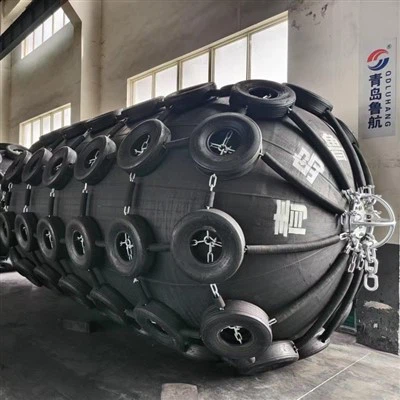
First off, let’s cut to the chase: not all buoys are built the same, so their deployments aren’t either. You’ve got your basic weather buoys, ones that measure wave height, water quality buoys for fisheries, even those tiny ones that track hurricanes. Each has a different job, so how we get them in the water changes. But there’s a core process we follow for almost every deployment, and I’m gonna walk you through it like I’d explain it to a buddy over a coffee.
Step 1: Pre-Deployment Prep That’s Not Just “Grab The Buoy And Go”
We can’t just roll up to a dock, load a buoy, and hit the water. That’s a surefire way to end up with a broken sensor or a buoy that drifts way off its target. The first thing we do is do a site survey. Wait, what’s a site survey? Basically, we look at where the buoy’s supposed to go—check water depth, current strength, wind patterns, even if there’s any commercial shipping lanes nearby that might run into it. Last year, we almost messed up a deployment for a coastal town because their map showed a spot that was 50 feet too shallow. The buoy’s anchor would’ve dragged along the seabed instead of sitting tight, and we’d be back there in a week fixing it. No fun.
Then, there’s the buoy itself. Before it leaves our warehouse, we test every single part. Sensors? We run them through fresh water to make sure they’re picking up temp and salinity right. The battery? Because most of our buoys run on lithium-ion these days, not those old heavy lead ones, we check charge levels—some long-range buoys need to hold a charge for 5 years, so we don’t skip that test. The mooring system is another big one. Anchors aren’t just big rocks we toss over. Depending on water depth and current, we use different anchors: for shallow waters (under 100 feet), a fluke anchor works great—looks like a big metal hook that digs into sand or mud. For deeper stuff, a drag embedment anchor, which actually buries itself in the seabed when we lower it. We also use chain and nylon rope—chain for the bottom part (it’s heavy, keeps the buoy from pulling too much), nylon for the top part (it stretches a bit, so if a boat accidentally hits it, the rope gives instead of snapping).
Oh, and we mark everything for navigation. No one wants a floating obstacle where it shouldn’t be, so we attach a radar reflector, a bright light for night, and even a GPS tracker on the mooring line. That way, if something goes wrong, we can find it fast.
Step 2: The Deployment Boat—It’s Not Your Average Fishing Vessel
You can’t launch a buoy from a tiny rowboat. We use workboats that are designed for this kind of heavy lifting—usually 20 to 50 feet long, with a crane or a winch to handle the buoy and the anchor. Sometimes, for bigger projects (like a network of buoys across a bay), we’ll charter a bigger vessel, maybe a research ship, but most of the time, our go-to is a sturdy workboat that can handle rough seas.
The crew? It’s not just one guy driving. We have a captain who knows the area like the back of their hand, a deckhand who handles the winch and lines, and usually someone from our team—like me—who’s in charge of making sure the buoy’s sensors are communicating right. Last month, we had a crew member forget to turn on the buoy’s transmitter before we left the dock, so when we got to the site, we had to do a little boat-side fix. Saved us from a 2-hour drive out again, but man, that was a close one.
Step 3: The Big Launch—Lowering Anchor, Then Buoy
Okay, here’s the part everyone cares about. When we get to the deployment spot, we shut off the engine (or drop the anchor for the boat) to stay in one place—you can’t have currents pushing you around while you’re setting the buoy. First, we attach the mooring line to the winch on the boat. The anchor is on the end of the line, right? So we lower the anchor first. Wait, why? Because if we lower the buoy first, it’ll just float away before we can set the anchor. That’s the mistake a lot of new teams make, trust me.
How do we know when the anchor hits the seabed? We have a depth sensor on the line, so we watch the numbers on our tablet. When the depth matches the site survey, we stop lowering the anchor. Then, we let a little more line out—like, 10 to 20% extra—because currents will pull the buoy a bit, so we don’t want the line to be tight the whole time. That slack is key; it prevents the mooring from snapping if there’s a storm.
Once the anchor’s set, we lower the buoy. We attach the buoy to the end of the mooring line, then slowly let it down into the water. It floats right away, obviously, because it’s designed to be buoyant. We then adjust the line length again to make sure the buoy sits at the right height—usually 10 to 15 feet below the surface, so waves don’t slosh over the sensors, and it’s visible for boats.
Wait, but what if the water’s really deep? Like, 1,000 feet or more? Then we use a buoyant mooring line. Regular chain is too heavy to lower that far, so we use a rope that has floats along it. The anchor still goes down to the seabed, but the top part is light enough that the buoy can stay up. That’s a trick we learned a couple years ago when we did a deployment 1,200 feet out—saved us hours of struggling with a too-heavy line.
Step 4: Post-Deployment Check—We Don’t Just Leave It There
Just because we lowered the buoy doesn’t mean we’re done. We have to make sure it’s working. Back on the boat, we pull up the buoy’s signal on our laptop. We check that temp, salinity, wave data—whatever sensors are on it—are transmitting correctly. We also double-check the GPS location to make sure it’s in the spot we wanted. Last year, a buoy drifted 3 miles off because we didn’t add enough slack to the mooring line during a heavy current, so we now add 15% extra slack every time, no exceptions.
If something’s off, we fix it right there on the boat. Sometimes a sensor is loose, sometimes the light isn’t working—we carry spare parts on every trip, because you never know. Once, we had to replace a radar reflector mid-deployment because a seagull had knocked it loose. Yeah, seagulls are a pain, but they’re part of the job.
Step 5: Follow-Up—Dealing With Storms, Drift, And Accidents
Deploying the buoy is only half the battle. Oceans are rough, so we check in on our buoys every 3 to 6 months, more often if there’s a hurricane or big storm. For example, when a tropical storm’s headed our way, we’ll send a signal to the buoy to boost its battery charge and make sure it’s not going to break apart. Sometimes, a buoy will drift a bit—currents are strong, especially in open water—so we use our GPS trackers to find it and tow it back to the spot, or adjust the mooring line.
We’ve even had to do emergency deployments. A few years back, a coastal town lost their weather buoy during a winter storm, and we got a call at 2 a.m. to send a crew out. We loaded a spare buoy, ran to the dock, and launched it before the next weather system hit. That’s the stuff we live for—knowing our buoys are there when people need them, whether it’s for fishing forecasts, storm warnings, or keeping shipping lanes safe.
Wait, let’s talk about something else: deploying buoys that are special, like for research or aquaculture. Aquaculture buoys (the ones that mark fish farms) have different needs—they’re often in shallow, near-shore waters, so we use lighter anchors, sometimes even concrete blocks for smaller buoys. Research buoys might have extra sensors for carbon dioxide or ocean acidification, so we take extra care not to damage those during deployment. It’s all about matching the deployment to the buoy’s purpose.
What About The Challenges We Face?
Let’s be real, it’s not always smooth sailing. Tides are a big one—if you deploy during high tide, by the time low tide hits, the seabed is closer, so you have to adjust the mooring line length. If you mess up, the buoy could hit the seabed and get damaged. Bad weather is another one—we’ve had to turn back mid-deployment because waves were too rough, and we didn’t want to risk losing the buoy or hurting anyone on the crew.
Then there’s illegal moorings. Sometimes, someone will drop a boat anchor too close to our buoy, so the lines get tangled. We have to send a crew out to untangle them, which is a pain, but we’d rather do that than have the buoy stop working.
Why This Matters For You (And Us, As A Supplier)

If you’re reading this, you’re probably someone who needs a marine buoy—whether it’s for a coastal project, aquaculture, weather monitoring, or something else. When you work with a supplier like us, we don’t just sell you a buoy and send you a manual. We walk you through the deployment process, because we know it’s not easy. We help with the site survey, recommend the right anchor and mooring for your spot, and even offer deployment support if you need it.
Mooring Buoy At the end of the day, deploying a buoy is all about making sure it does its job out there in the ocean. It’s not just a metal and plastic device—it’s a tool that helps keep people safe, supports fisheries, and lets us understand our oceans better. If you’re looking to get a buoy deployed, or just have questions about the process, don’t hesitate to reach out to our team. We’re here to make it as smooth as possible, no stress, no weird hoops to jump through.
References
- National Oceanic and Atmospheric Administration (NOAA). "Marine Buoy Deployment and Maintenance Guidelines". 2022.
- International Association of Marine Aids to Navigation and Lighthouse Authorities (IALA). "Mooring System Design for Oceanographic Buoys". 2021.
- Marine Technology Society. "Practical Considerations for Offshore Buoy Deployment". 2020.
- US Coast Guard. "Navigation Safety Standards for Floating Marine Instruments". 2023.
- Journal of Atmospheric and Oceanic Technology. "Deployment Techniques for Shallow-Water Water Quality Buoys". 2019.
Qingdao Luhang Marine Airbag and Fender Co., Ltd.
Qingdao Luhang Marine Airbag and Fender Co., Ltd. is well-known as one of the leading marine buoy manufacturers and suppliers in China. If you’re going to buy customized marine buoy, welcome to get pricelist and quotation from our factory. For price consultation, contact us.
Address: No.7 Xiangjiang Road, Jimo Aera, Qingdao, China
E-mail: sale@luhanggroup.com
WebSite: https://www.marinefloatingfender.com/
