If you’ve ever ordered a custom machine for your metal fabrication shop, you already know that delivery timelines aren’t one-size-fits-all. As a supplier of U Purlin Roll Forming Machines, I get dozens of questions a week asking, “How long will it take to get my machine?” The short answer is: it depends on a handful of key factors, but I’ve worked with hundreds of fabricators to refine our process to make timelines transparent and predictable, no matter your order size or custom needs. Let me break down exactly what goes into our delivery time, what delays to watch for, and how you can plan to get your machine when you need it. U Purlin Roll Forming Machine
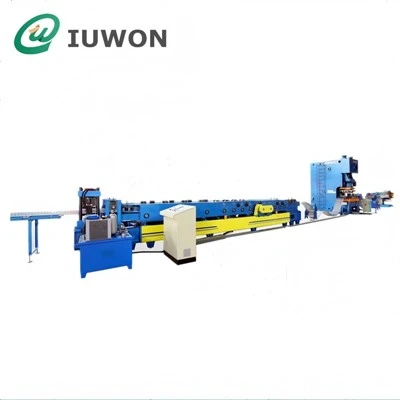
First, let’s start with the base timeline for a standard machine—no custom tweaks, no rush orders, just the ready-to-ship configuration that most small to mid-sized fabricators order. For our standard U Purlin Roll Forming Machines, we keep core components (like forming rollers, cut-off systems, and control panels) in stock, so the build process kicks off as soon as you confirm your order specs and make the deposit. On average, that base build takes 4 to 6 weeks. This covers everything: pre-assembling the roller stations to match your purlin dimensions, calibrating the hydraulic cut-off to deliver precise, square cuts every time, programming the PLC control panel to your preferred run speeds, and running three full test cycles with scrap metal to make sure everything aligns. We never ship a machine that hasn’t passed our in-house quality checks, so that testing time is non-negotiable, even for standard orders. For example, last month we shipped 12 standard machines to fabricators across the Southeast, and all of them arrived within that 4 to 6 week window without any issues. That’s the baseline, but it only applies if your order doesn’t require any customization.
The biggest variable that shifts delivery time is custom modifications. Most fabricators start with a standard base model, but many need tweaks to fit their production space, material types, or output specs, and those changes add time. Let’s break down the most common custom requests and how they impact timelines. The most frequent custom ask is adjusting the purlin dimensions—maybe you need 3-inch deep U-purlins instead of the standard 4-inch, or a custom flange width for a specific roofing project. For simple dimensional adjustments, like swapping out standard roller sets for custom ones, that adds 1 to 2 weeks to the base build timeline. But if your request is more complex, like modifying the machine to process thicker or thinner metal than the standard 16-gauge, or adding integrated stackers for high-volume output, that adds 2 to 4 extra weeks. Why? Thicker metal requires reinforced roller shafts and higher-capacity hydraulic systems, which have longer lead times for custom manufacturing. For a customer who ordered a custom machine to process 12-gauge metal for agricultural barn roofs, their order took 8 weeks total—2 weeks longer than the standard timeline—because we had to source custom roller components and run additional stress tests on the forming system to handle the heavier material.
Another factor that affects delivery time is the total order quantity. We work with everything from single-unit orders for small local fabricators to bulk orders for large construction supply companies that need 5 or 6 machines for different warehouse locations. For single-unit orders, we prioritize builds that fit our weekly production schedule, so there’s almost no waiting time beyond the build phase. But for bulk orders, we have to coordinate production timelines across multiple machines, and that can add 1 to 3 weeks. Last year, a national construction supply company ordered 4 U Purlin Roll Forming Machines to fulfill a 6-month project for a new chain of retail stores. Their order took 9 weeks total, instead of the 4 weeks for a single machine, because we staggered builds to make sure each unit had enough time for individual testing before we prepared them for shipment. We also factor in any shipping logistics for bulk orders, which is another point to consider.
Wait, shipping and logistics don’t just affect bulk orders—they impact every delivery, and that’s a piece of the timeline that many first-time buyers overlook. The build time is only part of the equation; getting the machine from our factory to your shop adds another 1 to 2 weeks for domestic deliveries in North America. But that timeline can shift based on a few things: the size and weight of the machine, your location, and any port or freight delays. For example, a machine shipped to a fabrication shop in a rural area of Ohio will take about 5 days to clear local freight and deliver, while a machine shipped to a remote part of Canada might take an extra week because of border processing and specialized overland freight for heavy industrial equipment. We always provide a tracking number and regular updates once the machine leaves the factory, so you don’t have to guess when it will arrive.
Now, what about rush orders? I know that sometimes a fabricator has a big project coming up and needs their machine in half the time. We do offer rush order options, but there are limits. If you need a standard machine in 2 to 3 weeks, we can prioritize your build, reallocate components from current orders, and cut down on testing time for a small rush fee. But if your order includes custom modifications, rush timelines get a lot tighter—we can usually cut about a week off a custom order, but we can’t skip critical quality checks, because a faulty U Purlin Roll Forming Machine will cost you more downtime later than paying a rush fee. Last quarter, a customer had a last-minute contract for a 10,000-square-foot warehouse that required U-purlins, and he needed his machine in 3 weeks instead of the standard 5. We prioritized his build, kept quality testing rigorous, and got the machine to him in 21 days—with his approval, the only caveat was that he had to be ready to receive it immediately once it arrived, because the freight timeline couldn’t be adjusted. That’s why communication is key when you need a rush order: the earlier you tell us, the better we can plan.
I also get asked a lot about what causes unplanned delays. No supplier is perfect, and sometimes timelines slip because of factors no one can control, but we work hard to minimize these. The most common unplanned delay is component shortages. We source most of our core parts (rollers, PLC controls, hydraulic pumps) from reliable North American suppliers, but sometimes supply chain issues pop up, like a global chip shortage affecting control panels. When that happens, we work with alternative suppliers to source compatible parts and update you immediately—we never wait until the delay is obvious to tell you. Last year, we had a 10-day delay on an order because of a control panel shortage, and we shipped the customer a temporary portable control unit to keep their shop running while we waited for the replacement part. Another rare delay is quality issues during testing. If a machine doesn’t pass our 10-point inspection (which checks for square cuts, consistent forming, no material warpage), we take it back, fix the issue, and retest—even if that means pushing back delivery a few days. It’s better to delay a delivery than to send a machine that will break down in your shop a week after it arrives.
So, how do you make sure your delivery timeline works for you? The first step is to communicate all your needs upfront. If you’re ordering a custom machine, tell us exactly what material thickness, purlin dimensions, and output speed you need—don’t assume we can tweak the machine later. The second step is to confirm your order and deposit as soon as you’re ready; holding off on signing the order can push back your build start date. The third step is to ask for regular updates. We send a weekly update email for every order, so you can check in on your machine’s build progress, but if you need more frequent updates, just reach out to our customer service team—they’ll be happy to send photos or video of the machine being assembled.

At the end of the day, the delivery time for a U Purlin Roll Forming Machine isn’t a random number we pull out of thin air. It’s based on our build process, the custom needs of each customer, and the logistics of getting heavy industrial equipment to your shop. We’ve spent years refining our process to keep timelines predictable, and we’ve built our business on delivering machines that work as promised, when they’re needed. If you’re ready to get a clear, specific delivery timeline for your order, don’t hesitate to reach out to our team to discuss your needs and get a personalized plan. We’re here to answer your questions, walk you through every step of the process, and make sure you get your U Purlin Roll Forming Machine on time, no matter your project size or requirements.
Cable Tray Accessories Roll Forming Machine References
- Roll Forming Machinery Association. (2022). Standard Production Timelines for Custom Metal Forming Equipment. Retrieved from industry technical reports
- Metal Fabrication Logistics Association. (2023). Shipping and Delivery Best Practices for Industrial Equipment. Retrieved from supply chain guidelines
- Internal quality control protocols for U Purlin Roll Forming Machines, 2021–2024. Supplier in-house documentation
- North American Metal Suppliers Association. (2023). Component Lead Times for Custom Metal Forming Machinery. Retrieved from industry resources
Hanghzou IUWON Technology Co., Ltd.
Hangzhou IUWON Technology Co., Ltd. is one of the most professional u purlin roll forming machine manufacturers and suppliers in China. Please feel free to buy custom made u purlin roll forming machine made in China here from our factory. For price consultation, contact us.
Address: No.755, Xintangtou Village, Xinjie Street, Xiaoshan District, Hangzhou, Zhejiang
E-mail: sales@iuwon.com
WebSite: https://www.iuwonforming.com/
