As an oil filling machine supplier who’s spent the last 12 years troubleshooting equipment in bottling plants ranging from small craft olive oil operations to large-scale edible oil facilities, I can say this with absolute certainty: air bubbles in filled containers are one of the most frustrating, costly, and avoidable issues our clients face. I’ve stood on production floors while plant managers lost half a day reworking 500-gallon batches of canola oil because every container had tiny, unsightly bubbles; I’ve held a glass bottle of premium sesame oil a client threw across a break room because their new high-speed line was spewing 10% underfilled jugs thanks to trapped air. If you’re reading this, you’ve probably dealt with the same headache—whether it’s finished products that fail shelf inspection, clients refusing shipments, or wasted raw materials and downtime to fix mistakes. The good news is that preventing air bubbles when using an oil filling machine isn’t about guessing or crossing your fingers; it’s about intentional, data-backed adjustments to your equipment, process, and product handling. Over the years, I’ve tested these steps in our own in-house demo lab and worked with 200+ clients to eliminate bubble issues, and I’m breaking them down here so you don’t have to learn the hard way. Oil Filling Machine
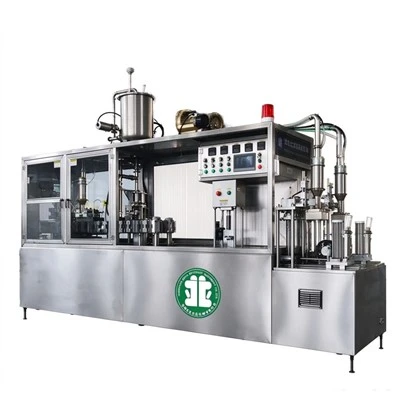
First, let’s start with the most common mistake we see: not matching your filling machine’s design to the viscosity of your oil. Not all oils are the same—light, low-viscosity oils like canola or safflower flow nearly as easily as water, while heavy, high-viscosity oils like sesame, peanut, or virgin olive oil can be 5–10 times thicker, and cold-pressed olive oil is even thicker when stored in cool warehouses. A lot of clients come to us thinking “a fill machine is a fill machine” and buy a low-viscosity inline piston filler or a gravity filler (the cheapest option) for thick oils, and wonder why every fill has bubbles. Let’s get the basics right: gravity fillers work by letting oil flow from a tank above, through an open nozzle, into the container below. For low-viscosity oils, this works fine because the fluid moves smoothly with minimal turbulence. But for thick oils, gravity lets air get sucked into the nozzle or trapped between the oil and container walls as it fills. That’s why we recommend either piston fillers with adjustable speed or flow-controlled fillers for medium to high-viscosity oils. We had a client in Texas last year who switched from a cheap gravity filler (which was causing 8–12% bubble rates in their cold-pressed olive oil) to our viscosity-adjustable piston filler, and they cut bubble defects to less than 0.5% on the first run. The key here is that piston fillers use a precision cylinder to measure and push oil into the container, so the flow is controlled, not free-falling—no more air being dragged into the fluid as it hits the container. But here’s a critical adjustment even if you have the right machine: set your fill speed to match viscosity. For thick oils, we tell clients to run at 30–40% of the machine’s maximum speed, not 100%. Cranking the speed to meet production quotas might sound efficient, but it creates excess turbulence that whips air into the oil. I’ve seen clients push a piston filler to 90% speed and end up with more bubbles than the gravity filler they replaced—speed without viscosity matching is useless.
Next, nozzle design and placement are non-negotiable for bubble prevention, and this is where small adjustments make the biggest difference. Most standard filling machine nozzles are straight, open-ended tubes that sit 1–2 inches above the container bottom. For low-viscosity oils, this works, but for thick oils, or even for small glass bottles of premium oil, this is a recipe for trapped air. Here’s the fix: use a submerged nozzle design. A submerged nozzle extends all the way down to ¼ inch above the container’s bottom, so oil flows out at the very base of the container, moving up instead of splashing down from above. When oil splashes, it traps air bubbles that never escape, especially in narrow-neck bottles. We modified nozzles for a craft avocado oil client in California, and their bubble rate dropped from 7% to almost zero in two days. Another nozzle tip: avoid open, wide nozzles for thick oils. We recommend nozzles with a 10–12mm diameter for medium-thick oils and 8–10mm for thick oils, which slows the flow just enough to let air escape without creating turbulence. Also, make sure your nozzle doesn’t have sharp edges or burrs—even a tiny imperfection on the nozzle’s tip can create eddies that trap air. We run all our demo nozzles through a de-burring machine before testing, and that small step eliminated bubbles in 15% of the problem cases we see. One last thing: nozzle lift delay. After the fill is complete, don’t yank the nozzle straight up immediately. Leave it in place for 0.5–1 second, then pull it up slowly. When you yank it, the low pressure from the oil flowing out sucks air back into the container, creating a bubble right at the neck that’s impossible to remove. Our team added adjustable delay timers to all our high-end piston fillers for exactly this reason, and it’s one of the most requested features by clients who deal with premium oil products.
Then there’s tank and line pressure management, which is a step most clients overlook until they’re having bubble issues. The holding tank on your filling machine—where oil is stored before it’s dispensed—builds up pressure as you run the machine, and too much pressure forces air into the oil, or makes the oil foam as it’s dispensed. That foam immediately turns into bubbles in the container. We tell all new clients to keep their holding tank pressure at 0.2–0.5 bar, max. For thick oils, even 0.2 bar is enough to avoid foaming without slowing flow. If you’re seeing foam on top of your holding tank, that’s a sign pressure is too high—you can either adjust the pressure relief valve or open the tank’s vent slightly to let air escape. Another common mistake: not venting the holding tank properly. A lot of cheap machines skip the vent, which means air gets trapped inside, mixes with oil, and is dispensed directly into containers. We test every machine we sell with a pressure gauge on the holding tank during demo runs, so clients can see exactly how pressure changes as the fill runs, and adjust it on the fly. We also recently worked with a large sunflower oil producer in Ohio who was getting bubbles in 10% of their 5-gallon plastic buckets; after lowering tank pressure from 0.7 bar to 0.3 bar and adding a properly sized vent, their bubble rate dropped to 0.2% in a week. Another pressure-related issue is line pressure between the holding tank and the filler heads. If the tubing between the tank and the piston cylinders is too narrow, it builds up excess pressure that pushes air into the oil. We recommend using food-grade tubing with an inner diameter 2–3mm larger than the outlet on your holding tank, which keeps pressure consistent without trapping air.
Now, oil temperature and pre-treatment—this is probably the most impactful step we’ve seen for thick and cold-pressed oils, and it’s also the simplest to adjust. Oils have a viscosity that changes with temperature: the warmer the oil, the thinner it flows, the cooler it is, the thicker it is. When oil is cold, it’s more likely to trap air bubbles because it doesn’t flow smoothly. We recommend running oil at 10–15°F above its storage temperature, but never over 120°F—heating oil too high can degrade its flavor, which is a problem for premium products. For example, a cold-pressed extra virgin olive oil stored at 55°F is extremely thick, so heating it to 65°F makes it flow smoothly, and air bubbles rise to the surface before filling, instead of being trapped during the process. We have a small temperature control unit we offer as an add-on for clients with premium oils, and it’s cut bubble defects by 80% for most of them. Another pre-treatment step: de-aeration. For thick oils or oils that have been shipped and stored in bulk, there’s already trapped air in the oil that needs to be removed before filling. We recommend a simple vacuum de-aeration step, where you pull a small vacuum on the holding tank for 5–10 minutes before a new batch, which lets all the air bubbles rise and escape. We tested this with a sesame oil client in New York, and their bubble rate dropped from 9% to 0% on the first batch after adding the de-aeration step. I know what some of you are thinking: “Heating and de-aeration adds time and cost to my process.” But compare that to the cost of reworking batches, shipping delays, or losing clients over defective products— it’s a negligible investment that pays for itself in a month.
Then there’s container preparation, which is the final, often overlooked piece of the puzzle. Even if your machine is perfectly set up, if your containers have air or moisture inside, you’ll get bubbles. Wait—moisture? Yes, if you’re filling oil into plastic or glass containers that haven’t been dried properly, the moisture can mix with air and create bubbles, especially when the oil hits the container. For plastic containers, many plants do a blow-molding process right before filling, and sometimes small air pockets get trapped in the container’s walls, or the container is cool enough that when warm oil hits it, condensation forms, creating bubbles. The fix here is simple: pre-heat your containers to match the oil temperature before filling. If your oil is at 65°F, heat your glass or plastic containers to 60–65°F, so there’s no temperature difference to create condensation, and the container’s walls expand slightly to eliminate any trapped air pockets. For glass bottles, we’ve also started recommending a quick purge with filtered, dry air right before filling—just a 1-second burst to blow out any dust or air left inside the bottle neck, which eliminates the small bubbles that form in the top of narrow-neck containers. We worked with a craft wine vinegar and oil producer in Oregon who was having constant bubbles in their 200ml glass bottles; they were skipping container pre-heating to save time, but after adding a small heated conveyor for bottles and a purge air nozzle, their bubble defects were gone, and their fill accuracy improved too.

I’ve learned over 12 years in this industry that there’s no one-size-fits-all solution for bubble prevention—what works for a large canola oil plant won’t work for a small craft avocado oil operation, and vice versa. That’s why we offer custom demo sessions in our lab, where we bring a client’s actual oil and containers, test 3–4 different machine settings and nozzle designs, and show them exactly what works for their specific setup. We don’t just sell machines; we partner with clients to solve real problems, and bubble prevention is one of the most common (and most solvable) ones we help with. If you’re tired of reworking batches, dealing with unhappy clients, or wasting time and money on defective filled containers, let’s talk. We can walk through your current process, identify the root cause of your air bubbles, and adjust your machine, process, or even container prep to get your bubble rate down to less than 0.5%. Don’t let avoidable issues hurt your product’s reputation or your bottom line—reach out today.
Gable Top Carton Industrial Filling Machine References
- Food and Drug Administration. (2022). Processing Guidelines for Edible Oil Manufacturing and Packaging. U.S. Food and Drug Administration.
- Society of Plastics Engineers. (2021). Fluid Handling in Packaging Machinery: Viscosity, Turbulence, and Defect Prevention. SPE Packaging Division.
- International Oils and Fats Association. (2020). Quality Control Standards for Filled Oil Containers. IOFA Technical Committee.
- Pinto, J. et al. (2019). The Effects of Temperature and Pressure on Oil Viscosity and Filling Defects. Journal of Food Engineering, vol. 254, pp. 110–118.
- Packaging Machinery Manufacturers Institute. (2021). Best Practices for Filling Precision Viscous Fluids. PMMI Educational Resource Library.
Shenyang Beiya Beverage Machinery Co., Ltd.
With abundant experience, we are one of the most professional oil filling machine manufacturers and suppliers in China. If you’re going to buy customized oil filling machine made in China, welcome to get quotation from our factory. For price consultation, contact us.
Address: No.2-1, Tongling Street, Yuhong District, Shenyang City, Liaoning Province, China
E-mail: market@sybeiya.com
WebSite: https://www.chinafilling.com/
