Hey there! If you’ve ever spent time around industrial labeling, surveying, laser projection, or even those fun little laser pointers that line up a straight red line on your wall, you’ve probably encountered a collimated dot laser module – whether you knew it or not. As someone who’s been in the dot laser modules supplier game for years, I get asked all the time: “What exactly is that thing, and why does it matter so much for my project?” Let’s break this down like we’re chatting over a coffee – no stuffy engineering jargon that makes your eyes cross, promise. Dot Laser Modules
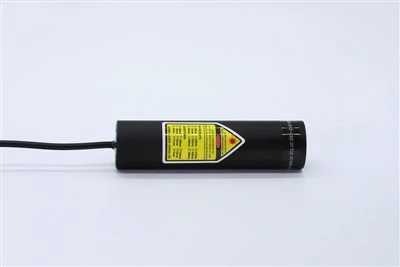
First, let’s start with the basics. You’ve probably heard of a regular laser pointer. The tiny red dot it throws on your wall? That’s a diverging dot. It spreads out, right? Move the pointer back a few feet, and the dot gets bigger and dimmer, like a flashlight beam. A collimated dot laser module is the opposite. It’s engineered to keep that laser dot tight, focused, and consistent – it barely spreads out, even over long distances. Think of it like holding a magnifying glass just right over a tiny light source: instead of the light scattering, it’s all pointed in one neat, parallel line, so the dot stays sharp no matter how far you go.
Let me give you a real example that most people can wrap their heads around. Last year, a customer of ours was working on a warehouse inventory system. They needed a laser that would cast a precise 1-inch dot on a shelf 50 feet away, so their barcode scanners could pick up the label every single time. If they’d used a regular diverging laser, that 1-inch dot would’ve turned into a 6-inch blurry mess by 50 feet – the scanner would miss half the barcodes, and they’d be pulling their hair out re-calibrating all day. But a collimated dot laser module? The dot stayed exactly 1-inch, crisp as a tack, 50 feet out. That’s the whole point of collimation in these modules: consistency at distance.
Now, how do we actually make a collimated dot laser module? I know a lot of customers don’t care about the inner workings, but it helps to understand why they’re different from other lasers. At the core, you’ve got a laser diode – that’s the part that generates the actual laser light. But the magic happens in the collimation lens, which is usually a tiny glass or plastic lens aligned perfectly with the diode. The diode emits light in all directions, so the lens bends all those messy, spreading light waves into parallel ones. It’s like herding cats – instead of them running every which way, they all stay in a straight line. If the lens is misaligned even by a fraction of a millimeter? BAM, you get a diverging dot, and all that accuracy goes out the window. That’s why quality control is non-negotiable for us – every single module we ship gets tested for collimation to make sure it holds tight.
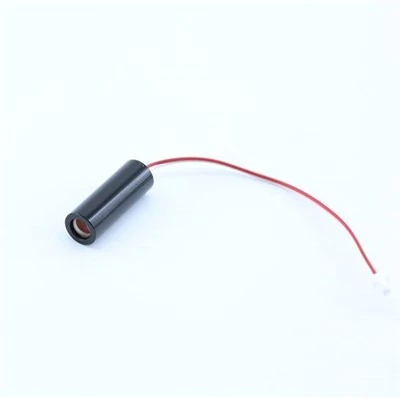
Let’s talk about the different types of collimated dot laser modules, because they aren’t all one-size-fits-all. First, the wavelength. Most people know red lasers (around 650nm – that’s the number of light waves per millimeter, for those who care), but we also do infrared (808nm, 980nm) for things like distance sensors and night vision, green (520nm) for applications where the dot needs to be super visible in bright sunlight, and even blue (450nm) for some industrial use cases. Then there’s the power output. A tiny 5mW module is perfect for a laser level or a presentation pointer, while a 500mW one is for heavy-duty things like industrial positioning or long-range surveying. We even make them in different sizes – some are as small as a grain of rice for compact devices, others are a bit bigger for higher power applications.
Wait, let’s get into where these things are actually used, because that’s when it clicks for most people. Surveying and construction is a big one. Surveyors use collimated dots to mark exact points on a job site, sometimes hundreds of feet away, so they can lay out foundations or utility lines without having to hold a tape measure every time. We had a customer last summer who builds solar panel farms – they use our collimated dot modules to mark where each panel post goes, 100 yards apart across acres of land. If their dot drifted even an inch, the whole array would be off, and they’d have to dig up every post to fix it.
Then there’s industrial automation. Think about pick-and-place robots on an assembly line – they need to grab tiny parts, right? A collimated dot laser acts as a guide for the robot’s end effector, so it knows exactly where the part is every single time. No more misplacing a microchip or a tiny screw. Even medical devices use them – some surgical tools use collimated dots to mark incision points with pinpoint accuracy, because a blurry dot could mean a mistake that’s hard to fix.
Oh, and don’t forget about the more fun, everyday uses. Arcade games that track laser pointers for light gun games use collimated dots so the sensor can pick up the exact point you’re aiming at, not a blurry smudge. Some high-end laser projectors use collimated dots to create crisp, bright images without the spread that makes regular projectors look fuzzy on big screens. Even some pet toys use collimated dots – they’re brighter and last longer outside than regular laser pointers, which is why our customers who make those for outdoor play love them.
Now, let’s bust a couple of myths I hear all the time. First myth: all laser dots are collimated. Nope, totally not. As I said earlier, regular pocket lasers are diverging – move them back, the dot gets bigger. If you’re buying a laser for anything that needs precision at distance, you need collimation. Second myth: higher power means better collimation. No way. A high-power laser is just a brighter one – it can still be diverging, which would make its dot useless for long distances. Collimation is about the optics, not the power, though you do need enough power to make the dot visible at your target distance.
As a dot laser modules supplier, the biggest thing I hear from customers is that they don’t realize how much of a difference a good collimated module makes until they’ve used a bad one. We had a small business owner come to us last year who was working on a custom 3D scanner. He’d bought a cheap collimated module from another supplier for $10, and it worked great for the first 10 feet, but beyond that, the dot started blurring so bad the scanner couldn’t read it. He wasted weeks troubleshooting his scanner before realizing the module was the problem. We sent him a sample of our standard collimated dot module, and within a day, his scanner was working perfectly out to 30 feet. That’s the value right there – consistency you can count on, no guesswork.
What should you look for when you’re shopping for a collimated dot laser module? Let’s keep this practical, no engineer-speak. First, define your target distance. If you only need a dot on a desk 2 feet away, you don’t need a high-power module made for 100 feet – that’ll be overkill and more expensive. Second, visibility. If you’re working in bright sunlight, red might be too hard to see, so go green. If you need it for night use, infrared is better because it’s not visible to the naked eye, but you can use sensors to pick it up. Third, size and mounting. Where are you putting this module? Is it going into a tiny device, or a big piece of machinery? Make sure the module fits the space you have, and that it has mounting holes or a way to attach it easily. Fourth, reliability. How long do you need it to last? Industrial applications might need a module that runs 24/7, while a hobby project might only need it for a few hours a month. A good supplier will tell you the lifespan of their modules, usually measured in hours of operation.
Wait, one more thing: alignment. Even the best collimated module won’t work if it’s not aligned properly when you mount it. That’s why we offer optional alignment services for bulk orders – we can mount the module to a bracket or housing so the dot is pointing exactly where you need it, so you don’t have to mess with tiny adjustment screws on your end. It’s a small extra step, but it saves our customers hours of setup time.
I know a lot of people are worried about laser safety, too, so let’s cover that quickly. All collimated dot laser modules we sell are compliant with international safety standards, like FDA and CE ratings. Most are Class 2, which means they’re safe for accidental glance exposure – your eye will just blink away before any damage is done. Higher power ones are Class 3R or 3B, and we make sure to label them clearly with safety warnings, so you know exactly how to handle them. Never, ever point a laser at someone’s eye – that’s basic safety, and we always make that clear to every customer.
At the end of the day, a collimated dot laser module might seem like a tiny, boring part of whatever project you’re working on, but it’s often the thing that makes the whole thing work. Without that tight, consistent dot, you’re dealing with blurriness, missed targets, wasted time, and wasted money. I’ve seen it hundreds of times: a customer has a great idea for a product, but they pick the wrong laser module, and it falls flat. Then they come to us, and suddenly their project is a success because of that little collimated dot.
If you’re in the market for a collimated dot laser module, or if you just have questions about which one is right for your project, don’t hesitate to reach out. We work with everyone from small hobbyists building their first prototype to big industrial companies scaling up production, so no order is too small or too large. We’ll send you free samples if you need to test them, help you pick the right wavelength and power, and even customize modules if you have a specific need that off-the-shelf ones don’t cover.
So whether you’re building a warehouse inventory system, a laser-guided toy, a solar farm layout tool, or a medical device, a good collimated dot laser module is the unsung hero that makes it all precise and reliable. Stop wasting time and money on modules that drift and blur at distance – let’s chat about what you need, and find the right solution for your project.
Fiber Coupled Laser Modules References:
- Laser Institute of America. (2021). ANSI Z136.1: American National Standard for Safe Use of Lasers.
- Silfvast, W. T. (2004). Laser Fundamentals (2nd ed.). Cambridge University Press.
- International Electrotechnical Commission. (2018). IEC 60825-1: Safety of Laser Products – Part 1: Equipment classification and requirements.
- Koechner, W. (2013). Solid-State Laser Engineering (6th ed.). Springer.
- Smith, M. J. (2020). Applied Photonics for Industrial Automation. CRC Press.
Changshu Desheng Optics Electronics Co., Ltd.
As one of the most professional dot laser modules manufacturers and suppliers in China, our products have good reputation in the market. Please feel free to buy advanced dot laser modules for sale here from our factory. Good service and quality products are available.
Address: 8A, Yineng science and technology industrial park, No.183, Yinhe Road, Southeast Development Zone, Changshu, Jiangsu Province, China.
E-mail: desheng1@dershinelaser.com
WebSite: https://www.ds-lasers.com/
