If you’ve ever worked in process control, HVAC, or industrial automation, you’ve probably heard control valves and control dampers thrown around interchangeably. But let me tell you straight: as a control valve supplier with 18 years on the ground in this industry, they’re not the same—not even close. I’ve had so many clients come to me after mixing them up, asking for a “damper upgrade” for a steam line, or wondering why their flow rate won’t settle after swapping a valve for a damper. Today, let’s break this down like we would with a new plant engineer on their first day, no stuffy jargon, just what matters for your operation. Control Valve
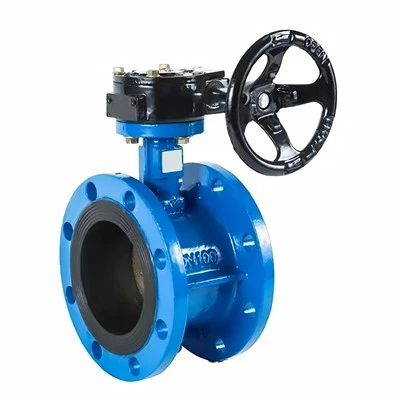
First, let’s start with what each component actually does, because that’s the root of every confusion. A control valve’s core job is regulating the flow of a fluid: that can be gas, liquid, slurry, even corrosive chemicals or high-temperature steam. It uses a movable plug, ball, or disk (called a trim) that slides or rotates inside a pipe to open, close, or partially block the path. The size of the opening directly changes how much fluid passes through—simple as that, but precision is everything here. We calibrate our control valves to maintain exact setpoints: if your process needs 120 gallons per minute of cooling water, we can adjust the valve to hold that within a fraction of a percent, even if upstream pressure spikes or downstream demand fluctuates.
A control damper, on the other hand, is built for air or gas flow in ductwork, not pipes. Think of it like a louvered window for HVAC, or a flapper in a fireplace vent. It uses multiple hinged blades inside a duct to adjust airflow, mostly for balancing systems, isolating air streams, or adjusting general ventilation. Its trim is usually lightweight, designed to move easily in low-pressure, low-density gas environments—not for holding back pressurized liquids or abrasive slurries. I’ve seen a damper try to regulate a 150-PSI water line, and within an hour, the blades were bent and the seal was gone; they just aren’t made for that kind of force.
Next up: pressure and flow characteristics, which is where the real tradeoffs show up. Control valves are engineered for high-pressure differentials. If your process has a 100-PSI gap between the inlet and outlet of the pipe, a control valve can handle that without failing, maintaining consistent flow. They’re also sized based on flow coefficients, or Cv, a number that tells us how much fluid passes through a valve at a given pressure. We calculate Cv for every application: if you have a 6-inch steam line, we’ll spec a valve with the right trim size to match your flow needs, no guessing.
Control dampers, though, operate at way lower pressures. Most HVAC dampers work with pressure differentials of just a few inches of water column—like 0.1 to 0.5 PSI, max. Push a damper beyond that, and not only will it struggle to move the blades (even with a motorized actuator), but it can cause noise, vibration, or structural damage to the ductwork. Dampers also don’t have the precision of control valves. If your ventilation system needs 5,000 CFM of air, a damper might get you close, but it won’t hold that exact number the way a control valve holds a flow rate. That’s a big deal for industrial processes where even a 5% fluctuation can throw off product quality or waste energy.
Then there’s the construction and durability, which comes down to what each is built to handle. Our control valves are made to last in harsh industrial environments. We use materials like stainless steel, cast iron, or alloy steel for the body and trim, depending on the fluid. For example, if you’re handling sulfuric acid, we line the valve with PTFE to resist corrosion; if you’re moving coal slurry, we use hard chromium plating on the trim to prevent abrasion. The actuators (the part that moves the trim) are heavy-duty, often air-operated or electric, to handle the forces needed to open and close against high pressure. We test every valve we ship for leakage, pressure ratings, and cycle life—most of our valves can handle tens of thousands of cycles before needing a rebuild.
Control dampers, by contrast, are usually lighter, with thinner blades and frames. They’re built for air, not heavy fluids, so materials tend to be galvanized steel or aluminum, not the high-grade alloys we use for valves. Actuators for dampers are smaller, too, since they don’t have to fight high pressure. That’s why they’re so common in offices, factories for ventilation, or commercial kitchens—they’re cheap, easy to install, and work great for low-demand air flow. But if you put a damper in a control valve application, it’ll wear out fast. I had a food processing client a few years back who tried to use a damper to regulate milk flow to their bottling line. The slurry-like milk (mixed with solid particles from the production process) got caught in the damper’s blade hinges, and within three months, the damper was leaking and causing inconsistencies in fill levels. They swapped to one of our sanitary control valves, and that issue was gone overnight.
Another key difference: control accuracy and response time. In process control, you can’t have a valve taking 10 seconds to adjust when your setpoint changes. Our control valves have fast-acting actuators, often with positioners that adjust the trim in milliseconds to match the controller’s signal. That means if your temperature sensor detects a drop in reactor temperature, the valve opens slightly right away to add more cooling water, no lag. The positioner also ensures the valve stays at the exact position it’s supposed to, even if the pressure changes. That’s critical for batch processes, chemical manufacturing, or any operation where stability is non-negotiable.
Control dampers have much slower response times. They’re not designed for dynamic adjustment; most are either open, closed, or set to a fixed position and left there. Even motorized dampers take a few seconds to move the blades, which is too slow for process control. If a pressure spike hits a duct, a damper might not react fast enough to prevent a shutdown, whereas a control valve can adjust in real time. I’ve seen clients try to use dampers for HVAC zone control, and they end up with uneven temperatures because the damper can’t adjust fast enough to match each zone’s demand.
Now, let’s talk about misuse—because this is where most of the confusion comes from. I get at least a dozen calls a month from people who’ve swapped a control valve for a damper (or vice versa) and are having problems. The most common mistakes are using a damper for liquid flow, using a control valve for high-pressure gas applications, or sizing the wrong component. For example, a utility client tried to use a control valve as a damper in their flue gas duct, because they thought it would be more precise. But control valves have trim that’s not built to handle the high-velocity, abrasive flue gas, and within six months, the trim was worn through, causing leaks and forcing a plant shutdown. They ended up installing our high-temperature butterfly dampers for that application, which are designed to handle flue gas and last for years.
Another mistake is assuming they’re interchangeable for cost savings. Sure, a damper might be cheaper upfront, but the downtime, maintenance, and rework you’ll end up with will cost you way more in the long run. As a control valve supplier, I’d never push a valve on you if a damper would work better—transparency matters. If your application is low-pressure air or ventilation, a damper is the right choice, and I’ll point you to a partner who specializes in dampers. But if it’s liquid, high-pressure gas, slurry, or any process where precision and reliability are key, a control valve is non-negotiable.
Let’s also cover use cases to make it concrete. Control valves belong in: process piping in chemical plants, refineries, food and beverage processing, pharmaceutical manufacturing, power plant steam lines, and any industrial system where fluid flow needs precise regulation. If you’re making a batch of medicine, for example, you need to add the exact amount of raw material, so a control valve ensures you don’t add too much or too little. In refineries, controlling the flow of crude oil or natural gas affects every step of the process, from distillation to product quality—one wrong adjustment can ruin a batch or cause a safety hazard.
Control dampers belong in: HVAC systems for commercial and residential buildings, air handling units, industrial ventilation, fume hoods, and ductwork for exhaust systems. If you’re balancing air flow in a office building to make sure every floor has the right temperature, a damper is perfect. They’re also used in fire systems to shut off air to a fire zone, which is a critical safety function. I’ve installed hundreds of dampers in schools and hospitals, where they work reliably for years without issue.
Now, what about common edge cases? For example, high-pressure gas—can you use a damper? No, because as I said earlier, dampers can’t handle the pressure. A control valve’s trim is designed to seal against high pressure, preventing leaks, whereas a damper’s blades will usually have gaps that leak at high pressure. What about slurry? Dampers have hinged blades that can get clogged with solids, while control valves have trim that’s designed to handle abrasion and keep solids moving through the pipe. I’ve designed control valves for mining operations handling ore slurry, and they last 5+ years with minimal maintenance, whereas a damper would be clogged and replaced every six months.
Another edge case: cryogenic applications. If you’re handling liquid nitrogen or natural gas, you need components that can work at -200°F or lower. Control valves are available in cryogenic configurations, with special seals and trim that don’t become brittle at low temperatures. Dampers, on the other hand, are usually made of materials that can’t handle extreme cold, and their actuator seals will fail. I had a client in the LNG industry who tried a damper for a cryogenic line, and within a month, the seals cracked, causing a leak. Swapping to our cryogenic control valve fixed the issue entirely.
So, to circle back to the original question: are control valves the same as control dampers? No, they’re two completely different components, designed for different environments, different pressures, different flow types, and different levels of precision. Mixing them up isn’t just a minor mistake—it can lead to lost production, increased maintenance costs, safety hazards, and poor product quality.
As someone who’s been in the control valve industry for decades, I’ve seen the damage that comes from mis-specifying these components. That’s why I always take the time to ask clients detailed questions about their application: what fluid are they handling? What’s the pressure? What’s the required flow rate? How precise does the regulation need to be? Only then can I recommend the right component, whether that’s a control valve or a damper. I don’t push products that aren’t right for your operation, because your success is my success.
If you’re currently having issues with flow regulation, or you’re planning a new project and aren’t sure which component you need, don’t guess. Reach out, tell me about your application, and we can work together to find the perfect solution. We don’t just supply control valves—we provide the expertise to make sure they work for you, so you can keep your operations running smoothly, safely, and efficiently.
Y-strainer References:
- Miller, R. W. (2018). Flow Measurement Engineering Handbook (5th ed.). McGraw-Hill Education.
- Li, Y., & Wang, Z. (2020). “Performance Analysis of Control Valves and Dampers in Industrial Flow Regulation.” Journal of Process Control, vol. 89, pp. 112-125.
- ASME B16.34-2021, Standard for Valves – Flanged, Threaded, and Welded End. American Society of Mechanical Engineers.
- HVAC Duct Design Manual (2019). Air Conditioning Contractors of America (ACCA).
- Carnahan, B., & Lopez, A. (2017). “Material Selection for Control Valves in Harsh Industrial Environments.” Industrial Corrosion, vol. 63, no. 4, pp. 345-358.
Xiamen Uliveto Technology Co., Ltd.
With abundant experience, we are one of the most professional control valve manufacturers and suppliers in China. We warmly welcome you to wholesale advanced control valve at competitive price from our factory. If you have any enquiry about OEM&ODM service, please feel free to email us.
Address: 10th Floor, Tower B, SM International Center, Xiamen,Fujian Province, China
E-mail: sales@ulivetoflow.com
WebSite: https://www.ulivetoflow.com/
