Yo guys, let’s cut to the chase—if you’re running a shop that uses rapid fittings (you know, the quick-connect ones for pneumatic lines, hydraulics, or even DIY plumbing), a leak isn’t just a tiny annoyance. It can mess with your system pressure, waste cash on wasted air/fluid, or even cause a total breakdown mid-job. As a supplier of these bad boys, I see so many skips on proper leak testing, and it costs folks way more in the long run. Today, I’m breaking down exactly how to test these fittings without being a total nerd about it—no fancy lab gear required, mostly stuff you’ve already got in your toolbox. Rapid Fittings
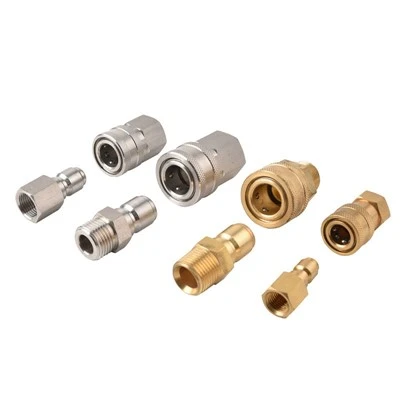
First, let’s get one thing straight: rapid fittings aren’t all the same. I sell ones for 1/4” pneumatic lines, high-pressure hydraulic ones, even low-temp coolant quick connects. Each needs a slightly different test, but the core rules apply. Skip this, and you might end up with a leak that sneaks out during a shift, not in your quiet office at 2am.
The Basics You Need Before You Start
Before you even hook up a gauge, grab three things: air (or whatever fluid your system uses—never test water with compressed air if you’re doing hydraulic fittings, trust me), a soapy water mix (half dish soap, half water, stirred, no fancy stuff), and a pressure gauge that matches your system max. Also, make sure the fitting is seated all the way. I see people half-inserting the quick connect all the time—those little snap rings inside aren’t lying. If you don’t hear that tiny click when you push the line in? It’s not sealed yet, and that’s a leak waiting to happen. Duh.
The Go-To Test: Soap Bubble Method (For Most Applications)
This is the OG, and it works for like 90% of the fittings I sell. Here’s how to do it right, step by step, no mistakes:
- Bump up the system pressure to the rated level for your fitting. Don’t overdo it—if your fitting’s rated for 150 PSI, cranking it to 200 just to make a leak show is dumb. You might blow the fitting, and then you’re out a part and have a mess to clean. For pneumatic, 10-20 PSI over the operating level is safe; for hydraulics, stick to 5-10% above rated pressure.
- Grab that soapy mix—put it in a spray bottle, don’t just pour it on. If you pour, you’ll miss tiny leaks, and the soap will run off before you can see bubbles. Spritz it all over the fitting: the connector end, the line where it seats, the outer ring of the quick connect (that’s where a lot of leaks hide).
- Watch for bubbles. If you see a steady stream? That’s a bad leak. Tiny little bubbles that pop fast? Still a problem, especially if it’s a hydraulic line that needs zero fluid loss. If nothing happens for 30 seconds? That’s a pass.
Pro tip: If you’re testing a fitting that’s been used before, wipe it down first—old grease or dirt can stop bubbles from forming, so you might miss a leak. I’ve had customers send back used fittings saying “they don’t leak” only to find crud on the seal.
For Hydraulic Fittings: The Pressure Hold Test (More Accurate)
Pneumatic leaks are easy, but hydraulic? Even a tiny drip can be a safety hazard. Here’s a better test for those:
- Fill the hydraulic line with your system fluid, then pressurize it to operating pressure. Shut off the pump, so no more fluid’s moving.
- Watch the pressure gauge for 5-10 minutes. If it drops more than 5 PSI (for low-pressure hydraulics) or 10 PSI (for high-pressure), you’ve got a leak. Don’t just go by the first drop—sometimes a seal takes a second to settle, so give it time.
- Once you confirm a pressure drop, go back to the soap method to find exactly where it’s coming from. Hydraulic leaks often hide between the fitting body and the O-ring, or where the line meets the connector. That pressure hold test saves you from spraying soap all over a whole system, which is a pain.
The No-Pressure Test (For Parts You Haven’t Installed Yet)
If you’re testing brand new fittings before you even put them in a system, you don’t need to crank up pressure. Here’s a quick way to check for factory defects:
- Take the male end of the fitting, push it into the female side (make sure you hear that click!), then pull on it gently. If it comes apart easy, that’s a bad seal already—send it back. Even a tiny pull shouldn’t move a properly seated quick connect.
- Blow through the line on the male end. If air escapes from anywhere on the female side (other than the actual connection port), there’s a manufacturing flaw. I check every batch of parts we get for this, but sometimes a bad one slips through—better to catch it before it’s on your job site.
Common Mistakes Guys Make (That Cause Fake Leaks)
Let’s be real, most “leaks” people complain about aren’t actually bad fittings. They’re small errors:
- Not cleaning the seal area: If there’s a bit of dirt or a scrap of rubber from the line on the O-ring, it won’t seat right. I always tell customers to wipe the fitting and the line end with a rag before connecting.
- Over-tightening the nut (for threaded quick connects): Wait, rapid fittings aren’t just push-in. Some have threaded ends, and people think “tighter is better.” No—too tight can warp the body, break the O-ring, or even crack the fitting. Hand-tight plus a quarter turn is max.
- Testing with the wrong fluid: If you use water to test a hydraulic fitting that’s made for oil, the water can get into the seals and cause them to fail later. Always test with the same fluid you’ll use in your system.
When a Fitting Actually Leaks: What to Do
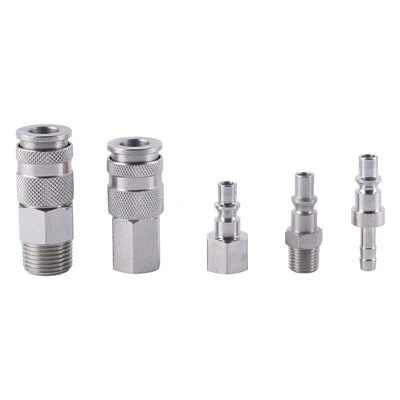
If you run a test and find a leak, don’t panic. First, disconnect the fitting and inspect the O-ring—if it’s torn, cracked, or has a scratch, swap it out. O-rings are cheap, and they’re the most common culprit. If the O-ring looks good, check the fitting body for cracks (hold it up to a light—if you see a tiny line, that’s a crack). If it’s cracked, bin it, no fix for that. If you’ve tried replacing the O-ring and it still leaks, hit us up—we’ll replace it, no questions (that’s how we do it).
Hydraulic Quick Couplings Now, after going through all this, you’re probably thinking “I just need to make sure my fittings don’t leak when I use ’em.” That’s where we come in—we stock rapid fittings for every kind of system, from tiny pneumatic lines to heavy-duty hydraulic setups, all tested to meet industry standards. If you’re dealing with persistent leaks that you can’t track down, or you just need to switch to more reliable fittings, hit us up to chat through your needs. We’re here to hook you up with parts that work, so you don’t have to waste time testing (or re-testing) leaks.
- Pneumatic Quick-Connect Fittings: Installation, Testing, and Maintenance (Industry Handbook, 2022)
- Hydraulic Leak Detection: Best Practices for Industrial Systems (Society of Manufacturing Engineers, 2021)
- Common Failures in Push-to-Connect Fittings (Journal of Fluid Power, 2020)
Cixi Poolke Hydraulic Pneumatic Co., Ltd.
Cixi Poolke Hydraulic Pneumatic Co., Ltd. is one of the most professional rapid fittings manufacturers and suppliers in China, also supports customized service. Please feel free to wholesale the newest rapid fittings made in China here from our factory. Quality products and reasonable price are available.
Address: #88 Zhengtong Road, Kandun Industrial Park315303, Cixi, Zhejiang, China
E-mail: contact@poolke.com
WebSite: https://www.poolkecouplings.com/
