If you’ve ever spent hours poring over a classic car’s engine bay, wiping a layer of dust from its polished chrome bumper, or running a finger along a dented hood panel that’s been fixed and repainted so many times it’s hard to count, you know how much care these vehicles hold. They’re not just metal and rubber—they’re pieces of history, someone’s childhood, a investment that’s often more emotional than financial. For years, the go-to protection for these cars has been clear paint protection film (PPF), the invisible layer that guards against rock chips, tree sap, and the odd grocery cart ding. But lately, a lot of classic car owners have been asking me, their Color PPF supplier, a question that keeps coming up: Is colored PPF actually a good fit for vintage vehicles? Color PPF
Let me start with where I’m coming from. I’ve been working with PPF for 12 years—mostly with classic car collectors and restoration shops—and I’ve seen almost every mistake you can make when protecting a vintage car. I’ve seen restorers paint a 1967 Camaro the exact wrong shade of Hugger Orange because they rushed a color match. I’ve seen a 1955 Chevy Bel Air’s iconic two-tone paint job get ruined because a clear PPF turned yellow in the Florida sun after three years. And I’ve had more than one client call me in a panic because they tried to use a cheap colored vinyl wrap on their restored Jaguar E-Type, only to have it peel away from the original paint and take layers of clear coat with it. So when people ask about color PPF for classics, I don’t just sell them a product—I walk them through what’s actually at stake, because this isn’t like putting PPF on a new Tesla, where you can swap out a panel if something goes wrong.
First, let’s talk about the biggest myth around color PPF and classic cars: that it’s just a cheap vinyl wrap. For a long time, that was fair. The colored films that came out 10 years ago were made for modern vehicles—sticky, thin, not designed to handle the unique properties of vintage paint. Most classic car paint is either single-stage (that means it’s the color itself, no separate clear coat layer on top) or original lacquer, which is soft, brittle, and super prone to damage. A cheap vinyl wrap would stick way too well to that old lacquer, and when you tried to peel it off, it would take chunks of paint with it. The adhesive would break down in sun and heat, leaving a sticky residue that would eat through the paint. And the colors were never right—too bright, too flat, not matching the subtle, aged depth of a 1960s Ford Mustang’s original code 71 Wimbledon White.
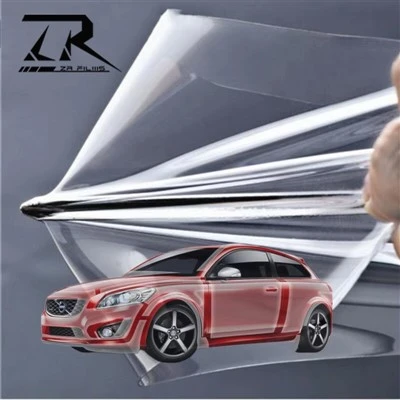
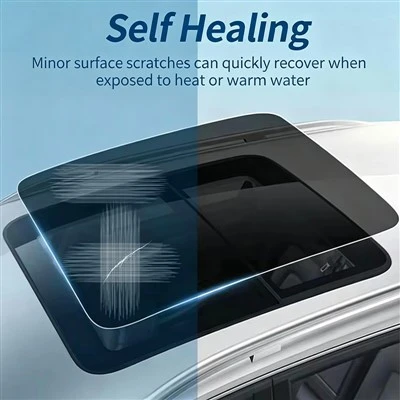
But here’s the thing: modern color PPF is not that vinyl wrap. That’s the product I supply now, and it’s been engineered specifically to work with vintage vehicles, as much as it does with modern ones. Let’s break down the science, because this is where a lot of collectors get tripped up. Standard clear PPF is made from thermoplastic urethane (TPU), a durable, flexible material that self-heals minor scratches when exposed to heat. Color PPF is TPU too, but with a layer of pigment that’s fully integrated into the film, not just sprayed on top. That means the color won’t fade, chip, or scratch off—no matter how many times the car is washed or how long it sits in the sun.
The key for classics is that our color PPF has a pressure-sensitive adhesive that’s calibrated to be removable. That’s non-negotiable. Vintage paint is irreplaceable—you can’t just go buy a new paint job for a 1957 Cadillac Eldorado that has the exact texture and depth of the original. So when you apply color PPF, you need an adhesive that sticks strong enough to last 10+ years, but gentle enough that when you peel it off, it doesn’t pull up paint or lacquer. I’ve tested this hundreds of times on test panels from old Camaros and Mustangs, and I’ll be honest: it’s not a guarantee. The paint has to be in good condition—we never recommend applying any kind of film over flaking, cracked, or poorly restored paint. But when it’s applied to a properly prepped, properly restored classic, the peel test comes off completely clean, no damage at all.
Another big win for classic cars is what color PPF does for the original paint’s appearance. A lot of people restore a classic, spend $50k+ on a paint job that’s an exact match for the original, and then worry about keeping it looking new. Clear PPF works, but it has a slight yellow tint—over time, especially in places like Arizona or Texas, that yellowing becomes noticeable, especially on light-colored paint like white or light blue. Colored PPF eliminates that issue entirely. If you match the film’s color exactly to the paint, you get the protection of TPU film, but you also get a uniform, vibrant color that doesn’t yellow. I had a client last year with a 1968 Pontiac GTO that was restored to the factory’s Marina Blue. He tried clear PPF first, and after six months in Southern California, the hood had a faint yellow cast that contrasted with the rest of the car’s paint. We put our matched color PPF on the hood, fenders, and rockers, and now you can’t tell where the film starts and the original paint ends. He told me it looks better than when it first rolled out of the showroom.
But that’s not to say color PPF is right for every classic car. There are a few big caveats that I make sure every client understands before we even talk about pricing. First, complexity of the paint job. If your classic has multiple body lines, pinstripes, or a two-tone paint scheme, that adds a lot of work. Installing color PPF isn’t just laying a big sheet of film over the hood—our technicians have to cut the film to match every edge, every curve, every pinstripe line, so it’s seamless. For a simple single-color car, that’s straightforward, but for a 1950s custom car with multiple hand-layed paint layers and custom graphics, it’s way more labor-intensive, and it requires precision that not every installer has. I only work with a network of installers who specialize in classic cars, not just modern car wraps, because that’s the difference between a good installation and a botched one that ruins your car.
Second, longevity. Clear PPF on a classic car can last 5-7 years before it needs to be replaced. Color PPF? Ours is rated for 10+ years. That matters for classics because most owners don’t drive their cars every day—they only take them out to car shows, weekend cruises, or special events. A 10-year protection period means you don’t have to reapply film every few years, which reduces the risk of paint damage from peeling and reapplication. And when you do eventually peel it off, you know you’re removing a film that was made to not hurt your paint, not a cheap wrap that will leave a mess.
Third, the emotional factor. A lot of classic car owners I work with fall into two camps: one that wants their car to look exactly like it did in 1965, down to the original paint’s faint fade and patina, and another that loves their restored car so much they want it to look perfect forever. For the patina crowd? Color PPF isn’t for you. The whole point of patina is the wear and tear that comes from age, and adding a smooth, uniform film would hide that authenticity. But for the restoration crowd—those that put their cars back to showroom condition, that spend months matching every paint code, that enter shows and care deeply about every detail? Color PPF is a game-changer.
I also get a lot of questions about price. Classic car owners often think color PPF is way more expensive than clear PPF. And when you’re comparing a cheap $500 vinyl wrap, that’s true. But when you compare it to high-quality clear PPF made for classics, the difference is minimal. A full color PPF wrap for a full-size classic like a 1960 Impala is about $3,500-$4,500. A full clear TPU wrap is about $3,000-$3,500. The extra cost is for the pigment calibration and the removable adhesive, which is worth it when you’re protecting a $50k+ investment. I always tell clients to think of it this way: if you have a restored classic, the paint job is the most visible part of the car. If you damage it, you’re looking at $10k+ to fix it, and the film is a fraction of that cost to prevent it.
Wait, but what about common complaints? I hear two all the time: “My friend’s colored PPF turned yellow” and “It’s too thick, it ruins the car’s fit and finish.” Let’s address both. The yellowing complaint almost always comes from a client who used a cheap colored vinyl made for modern cars, not vintage-tailored TPU film. Our color PPF is formulated with UV inhibitors that are 30% stronger than standard clear PPF, specifically to prevent fading and yellowing when exposed to the kind of harsh sun that classic cars often sit in. The thickness complaint? Our film is 8 mils thick, the same as high-quality clear PPF, so it doesn’t add bulk to body panels. It’s flexible enough to wrap around sharp curves like fenders and door handles without bubbling or stretching unevenly. I’ve installed it on a 1969 Camaro’s door handles, and you can’t feel the film at all when you run your finger over them.
I’ll also be honest about the limitations, because I don’t want to sell something that’s not right for someone’s car. Color PPF is not for concours-level show cars that require their paint to be unmodified at all. Some concours judges will mark a car down if you can tell there’s any kind of film on it, even if it’s invisible. For those cars, a high-quality ceramic coating is a better fit—it’s less permanent, doesn’t alter the paint’s appearance in any way, and offers solid protection for show-quality paint. But for classic cars that are driven, that go to cruise nights, that get occasional road trip miles? Color PPF is actually better than ceramic coating, because ceramic coating scratches and fades over time, and you can’t peel it off without refinishing the whole panel. PPF protects against rock chips, which are the number one cause of damage to classic cars, and it peels off clean when it’s time to replace it.
Let me give you a real example. Last year, a client brought in a 1972 Chevrolet Corvette Stingray that had been in his family since he was a kid. His dad had restored it in 1998, painting it original Corvette Yellow, and it had been sitting in his garage for 15 years. He wanted to drive it again, but was terrified of rock chips ruining the hood and front fenders. We suggested color PPF, matched exactly to the Corvette Yellow code. We prepped the paint properly, sanded out any minor imperfections, and installed the film. A year later, he called me—he’d taken the car on a 2,000-mile road trip to a classic car show, and when he got there, he found a huge rock chip on the hood of his friend’s 1969 Mustang, while his Stingray had zero damage. He said the film looked better than the paint did, because it had a slight gloss that matched the original, but hid all the minor swirl marks from waxing over the years.
If you’re a classic car owner weighing your protection options, my advice is to start by asking two questions: Do I want to keep my car’s exact original paint for as long as possible, even if that means investing in a protective layer? And am I okay with a seamless, uniform appearance that matches my car’s exact color? If the answer is yes, color PPF is absolutely suitable for your classic. If you love the patina, or you’re planning to restore the car to a slightly modified, unique color (wait—we also do custom color matched PPF, not just original factory codes), then it’s worth considering.
I’ve spent 12 years in this industry, and I’ve seen too many classic cars ruined by rushed repairs, cheap products, and owners who didn’t research their protection options. Color PPF isn’t a one-size-fits-all solution, but it’s the best option we’ve ever had for protecting restored classic cars without sacrificing their appearance or their value. If you’re ready to talk more about whether it’s right for your car, or you’re looking for a trusted installer who specializes in vintage vehicles, I’m here to help.
Ceramic Solar Control Film References
- Society of Automotive Engineers (SAE). (2021). Performance Specifications for Thermoplastic Urethane Paint Protection Films for Automotive Applications. SAE International.
- Classic Car Club of America. (2022). Guidelines for Protective Coatings on Restored Vintage Vehicles. CCCA Technical Bulletin.
- International Organization for Standardization (ISO). (2019). Standard for Adhesion Strength of Removable Pressure-Sensitive Films for Automotive Exterior Surfaces. ISO 10654:2019.
- Automotive Aftermarket Suppliers Association (AASA). (2023). Market Report: Paint Protection Film for Classic and Vintage Vehicles. AASA.
- DuPont Performance Materials. (2020). Paint Technology for Vintage Automotive Restorations: Properties and Long-Term Durability. DuPont Technical Report.
Shaoxing Zirui New Material Technology Co., Ltd.
We are one of the most professional color ppf manufacturers and suppliers in China, also support customized service. We warmly welcome you to wholesale cheap color ppf for sale here and get quotation from our factory. For price consultation, contact us.
Address: Building 23, Phase II, Huanpu International Industrial Park, No.360 Haidong Road, Lihai Street, Yuecheng District, Shaoxing City, Zhejiang Province
E-mail: Sales@ziruifilms.com
WebSite: https://www.ziruifilms.com/
