If you’ve ever stepped onto a manufacturing floor and watched parts emerge from a heat treatment process stronger, more uniform, and free of internal stresses, chances are they were processed in an annealing furnace. For nearly two decades, I’ve worked side-by-side with metal fabricators, aerospace engineers, and automotive component makers as an annealing furnace supplier, and one question comes up more than any other: “What customization options do I have to make this furnace fit my specific workflow, not the other way around?” Too many manufacturers default to off-the-shelf equipment, only to realize months later that their furnace can’t handle the batch sizes, metal types, or quality standards they need. Over the years, I’ve helped hundreds of clients tweak their annealing setups to match their exact needs, and today I want to walk through the most practical, impactful customization options we offer—all rooted in real factory challenges I’ve seen firsthand. Annealing Furnace
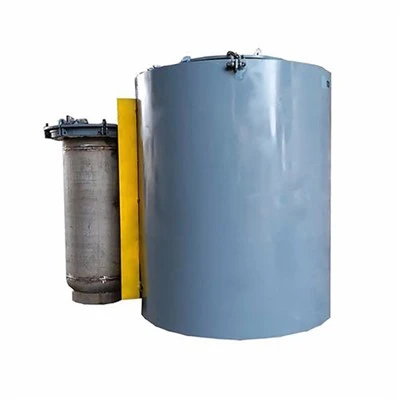
Let’s start with the core of any annealing furnace: the chamber and heating system. Off-the-shelf furnaces typically use a one-size-fits-all heating array, but that rarely works for specialized materials. For example, a client making tiny, high-precision titanium medical implants can’t risk hot spots that warp the delicate parts; we built them a chamber with zoned heating, where every inch of the chamber has its own temperature sensor and heater bank. That way, the center of the chamber stays exactly 10°C cooler than the edges during the slow cool-down phase, eliminating dimensional variation in 98% of their parts, a metric that would’ve been impossible with a standard furnace. For a steel fabricator processing heavy structural beams, we opted for a continuous chamber with convection heating instead of radiant heating—convection circulates air more evenly through large, bulky loads, so even the core of a 6-inch steel beam reaches the annealing temperature consistently, instead of staying cold on the inside while the surface overheats. Another key customization here is the heating element type. If you’re processing stainless steel or nickel-based alloys, metal sheathed elements hold up better to repeated thermal cycling than ceramic ones, so we’ll swap those in. For high-temperature annealing (above 1,200°C), silicon carbide elements are non-negotiable, and we’ll adjust their spacing and power output to match your heat-up time needs—some clients need to heat 10 tons of cast iron over 12 hours, while others are annealing small aluminum batches in 2 hours, and the heating setup changes entirely for each.
Next, atmosphere control is one of the most underrated, game-changing customizations we offer. Annealing isn’t just about heating metal—it’s about controlling its chemical composition during the process. If you process carbon steel in an air-filled furnace, the high heat will cause oxidation, leaving a scaly, weak surface that requires extra grinding later. We had a client making automotive valve springs that were failing inspection because of oxidation, so we customized their furnace to run with a nitrogen-hydrogen (N2-H2) atmosphere. The nitrogen displaces air, and the hydrogen removes any existing surface oxides, resulting in a bright, scale-free finish straight out of the furnace—no secondary cleaning needed, cutting their production time by 15%. For clients working with reactive metals like titanium or zirconium, even N2-H2 can’t prevent surface contamination, so we build fully sealed vacuum furnaces. We worked with an aerospace parts maker a few years back that needed to anneal titanium turbine blades to eliminate internal stresses without absorbing oxygen or nitrogen. Our custom vacuum furnace reaches a base pressure of 1×10^-6 torr before heating, and we add a small argon backfill during the cool-down phase to keep the metal pure. That client went from reworking 12% of their blades to zero, saving them over $200,000 a year in scrap. For some low-carbon steel applications, we even offer controlled humidity atmospheres, where we adjust the water vapor content to precisely control decarburization—too much vapor and you lose carbon from the metal surface, too little and you get that unwanted scale, so getting that balance right is non-negotiable for many metal stamping clients.
Load handling and capacity customization is another area where off-the-shelf furnaces fall short, especially for small batch manufacturers or large-scale production lines. Let’s talk about batch vs. continuous furnaces first: standard batch furnaces work great for small runs, but if you’re doing 24/7 production, a continuous setup keeps parts flowing through the heating and cool zones without stopping, cutting downtime between batches. We customized a pusher-type continuous furnace for a fastener manufacturer that processes 10,000 steel bolts an hour. Instead of manually loading and unloading batches, the furnace has a hydraulic pusher that moves trays of bolts through the heating zone, then a quench zone for rapid cooling, all controlled by a PLC that syncs with their production line. For smaller manufacturers, especially those making prototype parts or custom low-volume orders, we offer modular batch furnaces that can be expanded as your business grows. A client that started out making 500 aluminum engine blocks a year recently added a second chamber to their furnace so they can run two different annealing cycles at the same time—one for their engine blocks and a smaller one for custom aluminum brackets they now make for a nearby aerospace firm. We also customize load fixturing all the time. Delicate parts like thin-walled aluminum casings can warp under their own weight when stacked on standard steel trays, so we build custom perforated trays that distribute weight evenly, or even hang parts from the top of the chamber if that’s a better fit. For heavy loads like cast iron engine blocks, we reinforce the load rails and add extra lifting points to the furnace door, so operators can safely move 2,000-pound loads without risk of damaging parts or the furnace.
Temperature and time cycle customization is where we really tailor a furnace to your metallurgical goals. Annealing isn’t a one-size-fits-all process—full annealing, stress relief annealing, process annealing, and recrystallization annealing all have different temperature set points, heat-up rates, hold times, and cool-down rates. A standard furnace will have pre-programmed cycles, but we can completely rewrite those, or let you set custom cycles on the HMI. We worked with a metal stamper that was annealing cold-rolled steel to make it easier to form into car body panels. They needed a slow cool-down over 8 hours, followed by a 4-hour hold at a lower temperature to ensure the steel recrystallized properly, which standard furnaces couldn’t replicate without additional adjustments. We customized the furnace’s cooling system to use natural convection plus a small blower, so we could control the cool-down rate to within 0.5°C per minute, exactly what their metallurgists required. For clients doing stress relief on weldments, we offer custom ramp-up rates that are slow enough to prevent thermal shock—welding creates uneven stresses, so heating too fast can cause new cracks, which is a critical point for heavy construction equipment parts. We also add data logging as a standard on all our custom furnaces, but for clients in regulated industries like aerospace or medical devices, we customize the logging to meet AS9100 or ISO 13485 requirements, with tamper-proof records that can be directly submitted to their quality teams. That way, they don’t have to handle separate data loggers or manually transcribe temperatures during production, saving hours of administrative work.
Safety and operational customization is often overlooked, but it’s what keeps a furnace running smoothly for years. Standard furnaces have basic safety features, but we can add custom safety protocols based on your facility’s needs. For example, if your floor space is limited, we build compact furnaces with all the same safety features as a standard model, just with a smaller footprint—we recently designed a furnace that fits in a 10×12 foot space for a client in a crowded urban manufacturing facility, something an off-the-shelf furnace couldn’t accommodate. For facilities with limited ventilation, we add closed-loop exhaust systems that filter any fumes from the atmosphere or heating elements, so they don’t contaminate the shop air. We also add custom operator interfaces: some clients want a simple touchscreen with pre-set cycles for different parts, so new operators don’t have to adjust complex settings, while others want full remote access to monitor cycles and make adjustments from their office, which is especially useful for multi-site operations. We even customize emergency shutdown (ESD) protocols: for high-temperature vacuum furnaces, we add a backup nitrogen supply that kicks in automatically if the power goes out, so the chamber doesn’t vent air and ruin a batch of titanium parts, a feature that’s saved clients tens of thousands of dollars in spoiled inventory during unexpected power outages.
Over the years, I’ve learned that the best annealing furnace isn’t the most expensive one or the biggest one—it’s the one that solves your specific production headaches. A fabricator making small custom parts doesn’t need a 10,000-pound continuous furnace, just a small batch unit with precise atmosphere control and custom fixturing. A large-scale automotive parts maker doesn’t need a tiny lab furnace, they need a continuous line that syncs with their existing conveyor systems. Every client brings unique challenges, and our job as a supplier isn’t just to sell equipment—it’s to work with you to build a furnace that fits your process, your parts, and your goals.
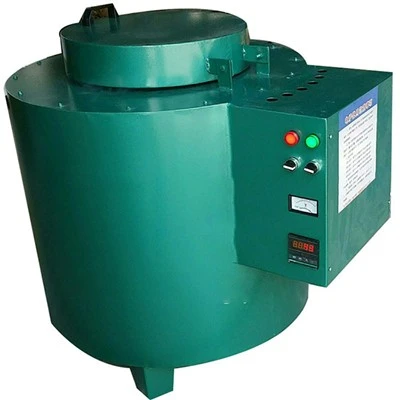
If you’re tired of off-the-shelf furnaces that force you to adjust your workflow to match their limits, let’s talk. Whether you need to fix consistent oxidation issues on your steel parts, handle delicate aerospace alloys, or scale up production without sacrificing quality, we can customize an annealing furnace that works for you. Reach out to our team to discuss your requirements, and we’ll help you design a solution that boosts efficiency, reduces scrap, and fits perfectly into your manufacturing floor.
Electric Furnace References
- ASM International. (2019). Heat Treater’s Guide: Practices and Procedures for Irons and Steels. ASM International.
- Davis, J. R. (Ed.). (2001). Heat Treating of Aluminum Alloys. ASM International.
- Boyer, R. R. (1996). Atlas of Titanium: Processes and Properties. ASM International.
- Groover, M. P. (2020). Fundamentals of Modern Manufacturing: Materials, Processes, and Systems (7th ed.). Wiley.
- Campbell, F. C. (2012). Structural Metallurgy for Engineers. ASM International.
Danyang Dingfeng Industrial Furnace Co., Ltd.
Danyang Dingfeng Industrial Furnace Co., Ltd. is one of the most experienced annealing furnace manufacturers and suppliers in China, also supports customized service with low price. Please feel free to wholesale high quality annealing furnace made in China here from our factory. For pricelist, contact us now.
Address: Lizhuang Economic Development Zone, Danyang City
E-mail: saleszk@dffurnace.com
WebSite: https://www.dffurnace.com/
