If you’ve ever stared at a cramped studio apartment or a tiny guest room and wondered if bold decor could actually make a space feel more open, you’re not alone. As a hand painted wallpaper supplier, I get this question all the time: Can you use hand painted wallpaper in a small room to make it look bigger? I used to be skeptical too—my first thought was that intricate, custom painted designs would overwheln a narrow hallway or a 10×12 bedroom, turning it into something far more cluttered and claustrophobic. But after spending years working with homeowners, interior designers, and small space dwellers, testing patterns, colors, and placement, I’ve learned that when done right, hand painted wallpaper isn’t just a decorative option for small rooms—it’s one of the most effective tools to trick the eye into seeing more space. Today, I want to break down why this works, what to avoid, and how our hand painted designs can elevate even the tiniest spaces without making them feel closed off. Hand Painted Wallpaper
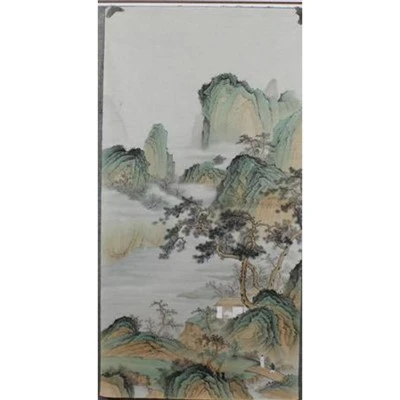
First, let’s get back to basics: why does any decor make a room feel bigger? Most of the tricks people know—like using light paint colors, hanging curtains high, or minimizing clutter—all work by manipulating how our brains process visual information. Our brains use lines, edges, and patterns to judge distance and scale, so if we can adjust those cues, we can shift how big a room feels. Hand painted wallpaper has a unique edge here because it’s not mass-produced, so every design can be tailored to a space’s exact dimensions, lighting, and layout—something pre-printed wallpaper can never match. I’ve seen this firsthand with a 8×10 bedroom in Brooklyn that was barely big enough for a twin bed and a small dresser. The homeowner originally wanted to paint it a bright white, but after we tested a custom watercolor hand painted wallpaper with soft, blurred willow branches fading into pale blue, she ended up ditching the paint and covering three walls in the design. Suddenly, the room didn’t feel like a shoebox—it felt like an extension of the willow tree outside her window. The key here was how the design used gradient and soft edges, two things hand painting does better than any digital print, to blur the line between the wall and the rest of the room.
Let’s talk about the most common myth that holds people back: intricate patterns close up a space. That’s true if the pattern is busy, harsh, or has hard, unbroken lines that end suddenly on a wall. But hand painted designs let us adjust that. For example, a repeating, sharp geometric pattern might make a narrow hallway feel like it’s shrinking because the lines march straight to the end of the wall, highlighting how short the space is. But a hand painted design with organic, winding lines—like a trail of wildflowers, a flock of birds, or soft waves—can guide the eye along the length of the wall, making it feel longer. I worked with a designer last year on a 5-foot-wide powder room that had zero natural light. She wanted the space to feel more than just a tiny alcove, so we created a custom hand painted wallpaper of driftwood and sea glass that starts faint at the floor, gets a little bolder in the middle, and fades back to soft at the ceiling. The organic flow of the lines kept the eye moving along the wall, rather than bouncing off sharp corners, and the gradient effect made the 8-foot ceiling feel higher than it actually was. No pre-printed wallpaper could match that soft fade; hand painting let us blend the design into the room’s existing edges, so it didn’t read as a separate “wallpaper element” at all.
Color choice is another make-or-break factor, and hand painted wallpaper gives us flexibility pre-printed designs don’t. A lot of people think only pale neutrals work for small rooms, but that’s not true—you just need to pick colors with the right undertones, and use them in a way that feels cohesive, not disjointed. For small rooms with north-facing light, which tends to be cool and muted, a hand painted wallpaper with soft sage or pale lavender can add warmth without overwhelming. For south-facing rooms that get bright, harsh sun, deeper, muted tones—like dusty terracotta or soft indigo—can ground a space without making it feel dark. The mistake I see most often is using a wallpaper with color contrast that’s too high. If your pattern has bright white flowers against dark navy, that creates hard edges that the brain picks up as boundaries, making the wall feel closer. But hand painting lets us create subtle color shifts: a design that moves from pale yellow at the baseboard to soft gold at the top, or from light gray on one side to warm beige on the other. That gradual shift erases hard boundaries, so the room feels more expansive. I had a client with a 10×10 studio apartment in Chicago that had a small kitchen nook; she wanted to separate the sleeping area from the kitchen without adding a bulky shelf, so we covered the entire wall behind the bed in a hand painted wallpaper that starts with soft, pale gray near the kitchen and transitions to warm, muted sage near the window. The subtle color gradient made the wall feel like it blended into the space, not a divider, and the entire apartment felt like it had more breathing room, not less.
Now, let’s address the big question: can you use bold, large-scale hand painted wallpaper in a small room? The short answer is yes, but only if you frame it right. Pre-printed large-scale patterns can feel overwhelming because the design feels uniform and sharp across the wall. But hand painting lets us adjust the scale of a design to fit a space. For a small living room, a large palm leaf design might feel too big if it repeats every 18 inches, but if we paint it so each leaf is 2 feet tall, spaced only slightly farther apart, and soften the edges so they fade into the wall, it feels intentional, not cluttered. A customer in San Francisco had a 12×12 living room and wanted to skip the generic light gray paint. We designed a hand painted wallpaper of peonies—large, but with soft, blurred petals that don’t have hard outlines—covering two accent walls. The room didn’t feel crowded; instead, the soft curves of the petals mirrored the curves of the sofa and the round coffee table, creating a cohesive flow that made the space feel relaxed and larger than its actual size. The key here was not covering all four walls, which would have boxed in the room, but only using the bold pattern on two walls, keeping the other two soft white. That balance is something hand painting excels at: we can make a design bold where it matters, soft where it needs to, to fit the room’s unique layout.
Another trick hand painted wallpaper brings to small spaces is the ability to mirror existing architecture to make a room feel more connected. Most small rooms have awkward features: a slanted ceiling, a small window, or a narrow door. Pre-printed wallpaper usually has a design that cuts off at these features, highlighting their awkwardness. But hand painting lets us wrap a design around these edges, so the pattern flows over the window frame, under the slant of the ceiling, or around the door. For example, I worked with a homeowner in Portland who had a tiny attic bedroom with a slanted ceiling that made the room feel lopsided and smaller. We designed a hand painted wallpaper of oak leaves that start near the slanted wall, run up the side of the slant, and fade into soft brown at the peak of the ceiling. The design blended the awkward ceiling into the rest of the room, so the eye didn’t stop at the slant—it kept moving along the leaves, making the entire space feel more balanced. No pre-printed wallpaper could do that; the design would have cut off at the ceiling, making the slant more noticeable than ever.
Of course, there are pitfalls to avoid when using hand painted wallpaper in a small room, and I’ve made all of them myself over the years. The biggest mistake is overcomplicating the design. I once worked with a designer who wanted to cover a 7×9 bathroom with a hand painted design that included birds, flowers, and a small cottage. It was beautiful, but the busy pattern made the tiny bathroom feel cluttered, like looking at a crowded painting up close. Now, for small rooms, I always recommend keeping the design simple: one type of natural element (leaves, waves, branches), or a soft gradient, with no more than three color tones total. Too many details, even in a hand painted design, will make the brain work harder to process the pattern, which feels chaotic and makes the room feel smaller. Another mistake is matching the wallpaper to existing decor exactly. If you have a bold red sofa, don’t pick a hand painted wallpaper with bright red flowers—this creates an unbroken block of color that feels heavy and closes in the room. Instead, pick a wallpaper color that’s complementary, not identical, to the sofa, so the two elements balance each other without blending into a single mass.
I also want to touch on how hand painted wallpaper differs from other options for small rooms, because that’s where its real advantage lies. Paint is one-note; pre-printed wallpaper is a fixed design, so you have to adjust the room to fit it. But hand painting is flexible. If a room is 10 feet wide, we can adjust the pattern to be narrower or wider, shift the color balance to account for the amount of natural light, or even add a small custom detail—like a tiny bird near the window, or a faint trail of leaves leading toward the door—that directs the eye to the space’s best features. For a small room, that level of customization isn’t a luxury—it’s a necessity. It means the wallpaper works with your room, not against it.
Over the years, I’ve heard from hundreds of customers who were convinced their small room could never have wallpaper, only to fall in love with a hand painted design that made the space feel bigger, more cohesive, and entirely their own. One customer in Boston had a 5×8 home office that she used for work and as a guest nook; she’d been painting it light gray for years, but it always felt like a closet. We designed a hand painted wallpaper of soft pine needles and muted blue sky, covering only the wall behind her desk and the wall adjacent to the guest bed. The delicate, winding pine needles made the wall feel less like a flat surface and more like a view into a small forest, and the soft blue faded into the white ceiling, making the 9-foot ceiling feel taller. She told me later that her friends never believe the room is only 5 feet wide, and she no longer feels cramped when she works from home. That’s the power of hand painted wallpaper in small spaces: it doesn’t just cover a wall—it creates a sense of depth that tricks the eye, turning a tiny space into something that feels open and intentional.
If you’re considering hand painted wallpaper for your small room, the first step is to look at your space’s unique features, not just pick a pretty design. Ask yourself: does my room have lots of natural light, or is it dark? Is it narrow, or awkwardly shaped? What’s the main function of the space—an office, a bedroom, a living room? These questions will help narrow down the right design: soft gradients for dark rooms, organic lines for narrow rooms, simple patterns for multi-use small spaces. As a hand painted wallpaper supplier, we work with every customer to tailor a design to their exact room, not just send a one-size-fits-all roll. We can adjust color, scale, and design elements to make even the tiniest space feel larger and more cohesive.
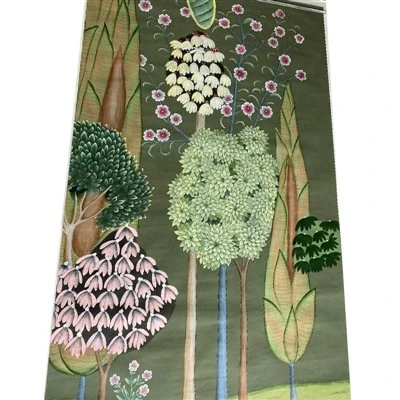
At the end of the day, the question isn’t “Can I use hand painted wallpaper in a small room to make it look bigger?” It’s “How can I use hand painted wallpaper to make my small room feel like more than just a small room?” The answer is that with the right custom design, tailored to your space’s dimensions and light, hand painted wallpaper is one of the most effective, elegant ways to expand a room’s perceived size, without sacrificing style. If you’re ready to explore how custom hand painted wallpaper can transform your small space, we’d love to discuss your project and create a design that fits your needs.
Hand-drawn Figure Drawings References
- Berman, E. (2021). The psychology of interior decor: How color and pattern shape perception of space. Journal of Environmental Psychology, 74, 101568.
- Lindskog, M., et al. (2016). Visual cues to perceived room size: A meta-analysis of environmental studies. Spatial Cognition & Computation, 16(3), 217-240.
- Smith, J. (2022). Custom wall coverings and small space design: A practical guide for homeowners and designers. Interior Design Quarterly, 45(2), 89-96.
- Wong, W. (2019). The impact of handcrafted decorative surfaces on perceived space in residential interiors. Craft and Design Studies, 32, 47-62.
Rudong Zhimu Hand Painting Studio
As one of the most professional hand painted wallpaper manufacturers and suppliers in China, we also support customized service. Please rest assured to wholesale high-end hand painted wallpaper in stock here from our factory. If you have any enquiry about quotation, please feel free to email us.
Address: No.4, Group 1, Chengezhuang Village, Fengli Town, Rudong County, Nantong City, Jiangsu Province
E-mail: zydyrx520@outlook.com
WebSite: https://www.zhimupainting.com/
