Hey there, let’s cut to the chase—if you’re a part maker, medical device manufacturer, optical component producer, or even a brand that’s been chasing crystal-clear plastic parts, you’ve probably wondered this: can a high speed injection moulding machine actually pump out parts with that high, flawless transparency we all want? I get it. I’m on the supply side of high speed injection moulding (HIM) gear, so I hear this question at least 10 times a week, usually paired with a side of “my old standard moulding machine can’t do this without 10 different workarounds that cost way too much and still give me bubbles.” Let’s break this down like we’re chatting over a coffee—not a textbook. Spoiler: yes, it can, but only if you’re matching the right machine features to the right process details, and skipping the myths that trip people up. High Speed Injection Moulding Machine
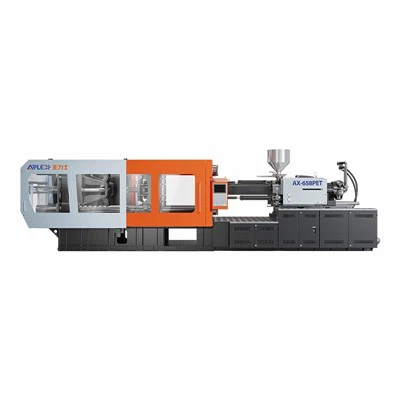
First, let’s get one thing straight: transparency in plastics isn’t just “looks clear.” It’s about light passing through without scattering, right? That means zero micro-bubbles, no tiny flow lines, no uneven crystallinity, and no residual stress that bends light. Regular injection moulding machines slow down to let plastic pack into every nook, right? But slowness is actually the enemy here. When plastic melts sits around in the barrel too long, it starts degrades a tiny bit—those micro-particles scattered light, turning clear parts hazy. Slower injection also means more time for air to get trapped between the plastic and the mould walls, which is what causes those pinholes you have to grind out later. High speed machines fix both of those, but not every HIM machine is built the same. Let’s talk about the non-negotiables that make a HIM machine good for transparent parts.
First up: barrel design and heating. I see so many cut-rate HIM machines that just cranked up the motor speed and left the barrel the same as a standard machine. Big mistake. Transparent plastics—think polycarbonate (PC), cyclo-olefin polymer (COP), acrylic (PMMA)—are super sensitive to shear and heat. Shear is the friction when plastic melts pushes through the barrel and mould; too much shear can break molecular chains, which messes up clarity. Too little, and the plastic doesn’t melt evenly, leaving un-melted pellets that scatter light. Good HIM machines for transparency have small-diameter barrels. Wait, small? Yeah—because a smaller barrel means the plastic has a shorter residence time in the heated zone. No more waiting around for 5 minutes while the next cycle runs; the plastic melts, injects, and cools in 10 to 20 seconds flat, so no thermal degradation. They also have individually segmented heating zones with precise PID control, not just one big heater wrapping the whole barrel. That way, you can dial in the exact temp for the feed zone (not too hot to pre-degrade pellets), the melt zone (just enough to get a uniform melt without breaking chains), and the nozzle (hot enough to keep plastic from solidifying mid-injection). For example, when we set up a PC lens job for a medical client, we tuned the barrel’s rear zone to 260°C, middle to 285°C, front to 290°C, and kept residence time under 90 seconds total. No yellowing, no haze—just crisp parts.
Next, injection speed and pressure control. This is where HIM machines shine, but again, not all speed is equal. A lot of people think “faster = better” for transparent parts, but that’s only true if the speed is precise and adjustable in tiny increments. When you inject molten plastic into a mould cavity, the flow front moves like a wave. If it’s too slow, that wave cools down fast near the mould walls, leaving a solid skin layer that traps air inside the part. Too fast, and the flow front shears so much it creates “jetting”—streaks of plastic that cool unevenly and leave lines you can see. Good HIM machines have servo-driven injection systems that let you adjust speed in 0.1 mm/s steps, not just high/medium/low. We’ve tested this with PMMA parts for a lighting client: a standard machine would run at 50 mm/s injection speed, causing jetting and streaks. Our HIM machine dialed in 120 mm/s for the first 10% of the shot (to get a smooth, uniform flow front without jetting), then 80 mm/s for the rest. Result? Zero lines, 92% light transmission (that’s near industry-grade optical clarity), and cycle time 30% faster than the old standard machine. Also, pressure hold—this is key. Regular machines hold pressure for ages to pack the part, but that introduces residual stress. High speed machines use dynamic pressure control: they hold pressure only for the first 50% of cooling, then drop it gradually as the part solidifies. Less residual stress means less light refraction inside the part, so it stays clear, not distorted.
Wait, what about mould related stuff? I can’t talk about the machine without mentioning the mould, because even the best HIM machine can’t fix a bad mould. But since we’re talking about the machine, let’s link them. HIM machines have higher clamp force precision, right? Because when you inject at high speed, the plastic builds up a lot of back pressure. If the clamp isn’t precise, the mould can shift a tiny bit, causing flash and uneven walls. That unevenness scatters light. Good HIM machines have toggle or hydraulic-mechanical clamping with ±0.5 ton precision, not just rough “enough clamp.” Also, the ejector system is soft-start on HIM machines for transparent parts—no slamming ejectors that leave tiny marks on the part’s back side, which would show up as haze when the part is used. We had a client making COP parts for a smartphone camera lens: their old machine had a clamp precision of ±2 tons, leading to mould shift and flash that required grinding. Our HIM machine’s precision clamp eliminated that—no grinding, 100% good parts on the first run.
Now, let’s bust the myths that people spread around this topic. Myth 1: “You have to use a specialized transparent grade of plastic to get clarity with a HIM machine.” No—okay, maybe some cheap, low-grade plastic has built-in haze, but if you pick the right machine, you can use standard optical-grade PC or PMMA and get the same clarity, often with less waste. We had a client that was paying 20% more for “HIM-compatible” optical PC; we switched them to standard optical PC and tweaked the melt temp and speed, cut their material cost by 18% and kept clarity the same. Myth 2: “HIM machines only work for small parts, so I can’t use them for big transparent parts like water bottles or car lights.” Nope—we have clients running 2-liter PC water bottles on our large-format HIM machines, with full optical clarity, no lines, no bubbles. The key is matching the barrel size to the shot size; you don’t want a tiny barrel for a big shot, that would cause too much shear. For big parts, we use longer screw barrels with low shear geometries, paired with the same precise speed control as small machines. We’ve even done automotive taillight lenses (which are like 500g shots) on our HIM line—they pass the 1000-hour UV test and have 90% light transmission, same as the competitor parts that cost 2x more to make.
Wait, let’s talk about real-world numbers, because I know you guys care about that. Last quarter, we did a trial run for a client making PC blood centrifugal rotor parts—these need to be crystal clear so they can see sample layers inside. Their old standard machine was getting 82% light transmission, 12% scrap rate due to haze and bubbles. Our HIM machine trial: first run, 91.5% light transmission, scrap rate 1.2%, cycle time cut from 45 seconds to 28 seconds. That’s not just “better”—that’s a game-changer for their bottom line. No rework, less material waste, faster throughput, and parts that actually meet their medical grade clarity requirements. Another example: a client making acrylic window panels for consumer electronics, using a 1kg shot. Standard machine: 89% light transmission, 9% scrap, cycle time 60 seconds. HIM machine: 92% transmission, scrap 0.8%, cycle time 38 seconds. The difference? The HIM machine’s dynamic back pressure control that eliminated trapped air, and the small barrel that kept melt temperature consistent so no degradation.
Now, what are the pitfalls to avoid when you’re shopping for a HIM machine for transparent parts? First, don’t buy a machine just because it’s labeled “high speed.” Ask for specs on barrel diameter, residence time, injection speed resolution, back pressure control, and clamp precision. A lot of manufacturers slap a “high speed” label on a machine that just has a faster injection motor, no actual precision controls for transparency. Second, don’t skip the trial run. Any good supplier will let you test their machine with your material and part before you buy. We do free trial runs for all our clients, because we know that numbers on a sheet don’t tell the whole story—your part, your plastic, your requirements are specific. Third, don’t forget about the auxiliary equipment. You need a good dryer for transparent plastics (they absorb moisture, which causes bubbles and haze), and a cool mold temperature controller that keeps the mold at a consistent temp (especially for optical parts). A HIM machine won’t fix a bad dryer, so factor that in.

At the end of the day, the question isn’t “can a high speed injection moulding machine produce high transparency parts?” It’s “can you pick the right high speed injection moulding machine that’s built for transparent parts, not just fast cycles?” The answer is a resounding yes. I’ve seen it work for medical devices, automotive parts, consumer electronics, optical components—you name it. The old excuses about slowness causing degradation, trapped air, or residual stress? Those are all fixed with the right machine features, paired with a little process tuning. If you’re tired of dealing with hazy parts, high scrap rates, or slow cycle times that eat into your profit, we can help you figure out the right setup. We don’t push one-size-fits-all gear; we work with you to match the HIM machine to your specific part, material, and clarity requirements. Whether you’re making tiny medical lenses or big automotive light covers, we’ll get you the high clarity parts you want, with faster cycles and less waste. If you want to chat through your current challenges, run a free trial, or just get more details on how our HIM machines deliver consistent transparency, reach out to us today—we’re here to help you stop settling for good enough, and start making parts that stand out.
Plastic Injection Moulding Machine References
Rosato, D. V., & Rosato, M. G. (2000). Injection Molding Handbook (3rd ed.). Kluwer Academic Publishers.
Izzo, D. J., & Kamal, M. R. (2015). Effect of injection speed and melt temperature on optical properties of polycarbonate injection molded parts. Polymer Engineering & Science, 55(12), 2879-2887.
Lu, B., et al. (2021). Residual stress and optical transparency of injection molded cyclo-olefin polymer parts. Journal of Applied Polymer Science, 138(24), 50782.
Ningbo Yalishi (Arlex) Plastic Machinery Co., Ltd.
Address: No.63, Huangsu East Road, Industrial Zone, Dongqian Lake Tourist Resort, Ningbo, Zhejiang Province
E-mail: leo@arlex.cn
WebSite: https://www.arleximm.com/
