Hey everyone, Pipe Fitting Tee
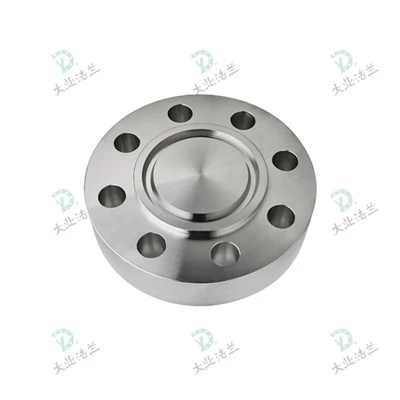
If you’re in the piping game—whether you’re a plant engineer, a construction foreman, or a guy who’s been sourcing pipe fittings for 20+ years—you’ve probably stared at a schedule 40 steel tee and thought, “How much pressure can this thing actually handle?” I get it, because that’s the first question every client asks when they reach out to us as a pipe fitting tee supplier. It’s not a random number; mess this up and you’re looking at leaks, downtime, or even something way worse. Today, I’m breaking this down like we’re talking shop over a coffee, no stuffy engineering jargon that makes your eyes glaze over.
First, let’s get the basics straight: schedule 40 (sch 40) isn’t just a size—it’s a wall thickness specification for steel pipe and fittings. Sch 40 is the most common, right? It’s the “standard” wall, thinner than schedule 80 but thicker than extra-strong, so it’s used in everything from water lines to chemical processing, HVAC, and even oil and gas (low-pressure, anyway). A steel tee’s job is simple: it’s the fitting that lets you turn a pipe 90 degrees in the middle of a run, so you can branch off another line. We make them from carbon steel, stainless steel, sometimes alloy, but when people ask about sch 40, they’re almost always talking carbon steel because that’s the workhorse of the industry.
Now, the big question: maximum pressure. Let’s cut to the chase—there’s no one-size-fits-all number. It depends on three huge factors that I see people skip all the time: the material grade, the pipe size, and the temperature. I’ve had a guy order 2-inch sch 40 tees for a water system and ask me why we don’t just label them “can handle 150 psi across the board.” Here’s why that’s wrong.
First, material grade. Most sch 40 tees we supply are made from A106 carbon steel, specifically A106 Grade B. That’s the standard for general applications. A106 Grade B has a minimum yield strength of 30,000 psi and a tensile strength of 60,000 psi. If we used a higher grade, like A53 Grade B, it’s almost the same, but A106 is more common for fittings. But if you’re using a tee in a high-temperature application—like near a furnace, or for steam lines—you might need A335 P11 alloy steel, which can handle way more heat, which means less pressure drop at high temps. Lower grade stuff, like A500, is for structural use only—don’t use that for pressure piping, I’ve seen that mistake way too many times.
Next, pipe size. This is the one that trips people up. A 1-inch sch 40 tee can handle way more pressure than a 12-inch sch 40 tee, even if they’re the same schedule. Why? Because the wall thickness of sch 40 scales with the pipe’s outer diameter, right? Wait, no—wait, let’s get specific. For steel pipe, sch 40 wall thickness is calculated as: for NPS (nominal pipe size) 1/8 to 10 inches, sch 40 wall is (NPS x 0.135) inches. For NPS 12 and up, it’s (NPS x 0.150) inches. So a 1-inch sch 40 pipe has a wall of ~0.133 inches, while a 12-inch sch 40 has a wall of ~0.375 inches. But when you calculate pressure capacity, it’s based on the pipe’s wall thickness and inner diameter, not outer. So the formula here is Barlow’s Formula—every pipe fitter knows this one, but let’s explain it simply: Pressure = (2 x Wall Thickness x Tensile Strength) / Inner Diameter. That’s the key equation here, no fancy stuff.
Let’s run the numbers for A106 Grade B sch 40 tees to make it real. Let’s take a 1-inch sch 40 tee first: inner diameter is ~1.029 inches, wall thickness ~0.133 inches, tensile strength 60,000 psi. Plug into Barlow’s: (2 x 0.133 x 60,000) / 1.029 = ~15,500 psi. Wait, that’s way higher than the 150 psi I mentioned earlier. Oh right—because that’s the “maximum theoretical” pressure, but no one uses that. We have to account for safety factors. The industry standard for pressure piping is a 3:1 safety factor for carbon steel at ambient temperature. That means you divide that theoretical number by 3. So 15,500 / 3 = ~5,166 psi? Wait, no, hold on—wait, that’s for straight pipe, but tees are fittings, so we adjust for that too. Fittings have their own pressure ratings, right? The ASME B16.9 standard (that’s the code we follow for buttweld tees) says that sch 40 buttweld tees have the same pressure rating as the pipe they’re connected to, as long as they’re made to the same schedule. Wait, but wait—temperature changes everything. That 5,166 psi at 70°F? At 200°F, A106 Grade B’s tensile strength drops a bit, to around 57,000 psi, so the rating goes down to ~4,800 psi. At 500°F? It’s down to 45,000 psi, so ~3,750 psi. And by the time you hit 750°F, that’s almost half the ambient rating—around 2,400 psi.
Wait, but why do I keep saying “ambient” and throwing these numbers around when most people are working with lower pressure systems? Because a lot of our clients don’t realize that even low-pressure steam lines run at 300°F, which changes the game. Let’s get to the numbers that actually matter for most jobs. The ANSI/ASME pressure class ratings—you’ve seen these: Class 150, Class 300, Class 600. Wait, is a Class 150 tee the same as sch 40? Yes, for carbon steel at ambient temperature. Class 150’s maximum pressure rating for A106 Grade B sch 40 is around 275 psi? Wait no, wait—no, let’s check the ASME B16.5 flange ratings, which match the tees. At 70°F, Class 150 carbon steel is rated for 275 psi, Class 300 is 740 psi, Class 600 is 1500 psi. But wait, earlier Barlow’s gave us 5k psi—why the gap? Because those class ratings also account for test pressure, safety margins, and fitting design. The ASME standards test fittings to 1.5 times their rated pressure to make sure they don’t fail, so that’s where the numbers come from.
Here’s the part I tell every new client: don’t mix up sch 40 with pressure class. A lot of people say “I need sch 40 tees for my 200 psi water line” and that’s fine, because Class 150 sch 40 can handle way more than 200 psi. But if you’re running a steam line at 300 psi and 350°F, sch 40 (Class 150) might not cut it. Let’s do the math for that: Class 150 at 350°F for A106 Grade B is rated for ~175 psi. So 200 psi is too much—you’d need Class 300 sch 40, which is rated for ~440 psi at that temp. That’s a common mistake I see, and it’s why we always ask for the application details before we quote.
Wait, what about smaller tees? A 1/2-inch sch 40 tee vs a 10-inch sch 40 tee. Let’s take 10-inch, sch 40, A106 Grade B. Inner diameter is ~9.562 inches, wall thickness ~0.365 inches. Barlow’s: (2 x 0.365 x 60,000) / 9.562 = ~4,580 psi, divided by 3 is ~1,527 psi. Which is exactly the Class 600 rating for ambient temp. That makes sense, right? Because larger diameter sch 40 has a thinner wall relative to its inner diameter, so lower pressure capacity. That’s why a 10-inch sch 40 tee can’t handle as much as a 1-inch one, even though both are sch 40.
Another thing: seamless vs welded tees. We supply both, but seamless sch 40 tees (ASME B16.9) have higher pressure ratings than fabricated welded tees? No, wait—no, if they’re both made to the same schedule and material, the rating is the same. The only difference is that seamless tees are better for high-pressure applications because there’s no weld seam to weaken the structure, but if a fabricated tee is welded properly and tested, it meets the same rating. We test every batch of tees we send out with a hydro test, right? 1.5 times the rated pressure, so you know they hold. No cutting corners here.
Now, let’s cover edge cases because I get asked about these too. What about stainless steel sch 40 tees? A316 stainless is way stronger at high temps, right? At 70°F, A316 has a tensile strength of 80,000 psi, so the pressure rating for a 2-inch sch 40 tee is around 375 psi (Class 150 is 275, Class 300 is 740—so A316 sch 40 at ambient is actually Class 300 equivalent for smaller sizes). That’s why stainless is used for corrosive applications and higher pressure. What about black steel vs galvanized sch 40 tees? Galvanized is zinc-coated, so it’s for water lines, but the zinc melts at around 400°F, so you can’t use galvanized tees for steam or high temp. And their pressure rating is a bit lower, around 150 psi ambient, because the zinc adds a tiny bit of wall thickness but reduces the tensile strength of the underlying steel.
Here’s the big takeaway I want you to remember: there’s no universal maximum pressure for a sch 40 steel tee. It’s dependent on material, pipe size, and operating temperature. If you’re working on a residential water line, a 2-inch sch 40 carbon steel tee is perfect—its max pressure at ambient is ~2500 psi theoretical, so even your 100 psi water line is way under. But if you’re working on an oil pipeline that runs at 600°F, you’re going to need to spec the right material and size, not just grab any sch 40 tee.
Wait, let’s clear up a myth I hear all the time: “sch 40 means it can handle 150 psi, always.” That’s wrong. That 150 psi is the Class 150 rating, which is just the minimum for sch 40, but as we saw, smaller sizes can handle way more, larger ones still handle way more than 150. The only time Class 150 is the right spec is for low-pressure, ambient temp applications. If you’re working with anything higher, you need to calculate the rating based on your specific conditions.
Now, why does this matter for you, as someone sourcing pipe fitting tees? Because using the wrong tee is expensive. If you buy a sch 40 tee that’s rated for 200 psi for a 300 psi line, you’re looking at a burst pipe, which can cost thousands in downtime, repairs, and even safety hazards. We’ve had clients come to us after a burst tee shut down a chemical plant for 3 days because they went cheap on undersized tees. That’s why we don’t just sell you a sch 40 tee and send you on your way—we ask you for three things: what’s the operating pressure, what’s the operating temperature, and what’s the pipe size. That way we can give you the exact tee that will work for your application, no overpaying for a Class 600 tee when you only need Class 150, no undersizing and risking failure.
Let’s wrap this up: here’s a quick cheat sheet for A106 Grade B sch 40 carbon steel tees (the most common one we supply) at ambient temperature (70°F):
- 1/2-inch: ~2,500 psi theoretical, ~800 psi rated, way more than Class 150
- 2-inch: ~1,800 psi rated, perfect for 150-500 psi lines
- 10-inch: ~1,500 psi rated, still great for low-to-medium pressure
- Above 12-inch: around 1,200 psi rated, so good up to Class 300 for most temps
If your temperature goes up 100°F, cut that rated pressure by ~10%. If it goes up 500°F, cut it by ~50%. That’s a simple rule of thumb that works for most carbon steel sch 40 tees.

At the end of the day, when you’re choosing a sch 40 steel tee, don’t just go by the schedule number. Do your math, or better yet, reach out to someone who knows the ins and outs of pipe fittings. We’re here to help—whether you’re a small contractor needing 5 tees for a job or a large industrial plant needing 500, we can get you the right sch 40 steel tees, tested to ASME standards, with exact pressure ratings for your application. Don’t guess when it comes to pressure—get the right tee, and keep your system running safe and smooth.
Pipe Fitting Reducer References
- ASME B16.9, Manufactured Steel Butt-Welding Fittings
- ASME B16.5, Pipe Flanges and Flanged Fittings
- API 5L, Specification for Line Pipe
- Miller, R. M., Flow of Fluids Through Valves, Fittings, and Pipe, Crane Co., 2018
Zhejiang Daye Flange Co., Ltd.
Zhejiang Daye Flange Co., Ltd. is one of the most experienced pipe fitting tee manufacturers and suppliers in China. With a professional production team, we offer a wide range of flanges with superior quality and competitive price. Welcome to buy CE approved pipe fitting tee in stock here and get pricelist from our factory. We also accept customized orders.
Address: Headquarter: 8, Gangqiang Road, Yongxing Street, Longwan District, Wenzhou City, Zhejiang Province, China
E-mail: sales@dayeflange.com
WebSite: https://www.daye-flange.com/
