If you’ve ever pipetted a sample that seemed straightforward until your test results came back skewed, or loaded a plate that leaked mid-centrifugation, you already know lab consumables aren’t just plastic ware—they’re the unsung foundation of every experimental workflow. As a third-generation laboratory consumable supplier with 18 years in the game, I’ve seen countless researchers brush off a crinkled tip package or a slightly misaligned PCR well as a “harmless manufacturing quirk.” That’s the kind of mistake that doesn’t just slow down a project—it derails months of work, wastes thousands in reagent costs, and delays critical breakthroughs in everything from vaccine development to environmental testing. Quality control (QC) in lab consumables isn’t a box to check for certification; it’s the invisible safety net that turns raw samples into trustworthy data, and it’s why every lab manager and lead researcher should demand more than just “good enough” from their supply chain. Laboratory Consumable
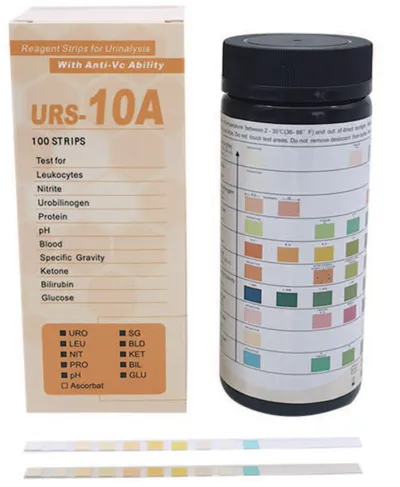
Let’s start with the basics: what even counts as a “lab consumable”? When I say that, I’m talking about the things that touch your sample, your reagent, and your equipment every single day—tips, pipette tips, microcentrifuge tubes, PCR plates, serological pipettes, centrifuge bottles, even things as small as filter tips. Unlike capital equipment (like centrifuges or microscopes), these are single-use (or occasionally multi-use) items that are often overlooked in procurement decisions because they’re low-cost individually. But if one box of 1,000 tips fails, that’s not just $50 down the drain—it’s 1,000 wasted pipetting steps, dozens of ruined assays, and potentially irreversible damage to samples that might take weeks to recollect. Early in my career, I worked at a small academic lab that bought a bulk lot of PCR plates from a discount supplier to save $120. Halfway through a 96-well genotyping study for a local university’s agriculture department, we noticed that 30% of the plates had wells that bowed at 95°C during thermal cycling. By the time we caught it, we’d already run 12 full plates, ruining 2,000 plant DNA samples that had been carefully collected over three months. The “savings” ended up costing the university $15,000 in re-sampling, reagent replacement, and delayed field trial timelines. That’s the first lesson about QC: cutting corners on consumable quality doesn’t just cost money—it costs credibility, especially for researchers who are presenting data to regulators or publishing in peer-reviewed journals.
So what does effective QC for lab consumables actually look like? It’s not just a final check before a box gets shipped—it’s built into every step of the manufacturing process, from raw material sourcing to final packaging. Let’s break that down, starting with the most critical part for most consumables: plastic resin. Most lab plastics are made from polypropylene (PP), which is chosen for its chemical resistance, thermal stability, and low binding to nucleic acids or proteins. But not all PP is the same. A supplier that skips QC for raw resin might use recycled plastic that has residual additives, or a resin batch with inconsistent molecular weight, which can lead to issues like wells melting during thermal cycling, tips breaking mid-pipette, or proteins sticking to the plastic instead of staying in solution. At my company, we test every resin batch from our two primary suppliers for purity, melting point, and extractables—substances that leach out of the plastic when it’s exposed to buffers, organic solvents, or even water. Extractables are a huge red flag for sensitive assays like ELISA, PCR, or cell culture: even a tiny amount of leftover catalyst or plasticizer can inhibit polymerase activity or kill mammalian cells, leading to false negative or positive results. We also test resin batches for endotoxin levels for consumables used in cell culture or in vivo research—this is non-negotiable, because even trace endotoxins can trigger an immune response in cell lines, ruining weeks of culture work.
Next, QC has to account for manufacturing precision, because even a tiny defect in a consumable can throw off an entire experiment. For pipette tips, for example, the bore size (the inner diameter of the tip opening) has to be within 0.05mm of the specified measurement. If a batch of tips has a bore that’s too narrow, pipetting accuracy drops by as much as 10%—which might seem small, but when you’re working with 1μL samples for digital PCR, that’s enough to skew copy number counts. For PCR plates, well depth and flatness are critical: if a well is 0.1mm deeper than it should be, the thermal gradient across the plate changes, leading to variable amplification efficiency between wells. For serological pipettes, the volume markings have to be accurate to within 1%—not just for the marked line, but throughout the entire length of the pipette, because researchers often use only a fraction of the volume. That’s why we use automated coordinate measuring machines (CMMs) to test 100% of each production run’s critical dimensions, not just a random sample. We also do functional testing for every batch: for tips, we test pipetting force and tip ejection to make sure they work with all major brands of pipettes (Eppendorf, Gilson, Rainin, etc.), because a tip that sticks in a pipette can lead to sample loss or cross-contamination. For centrifuge tubes, we test burst speed—how fast they can spin before cracking or leaking—because even a tube that meets the minimum burst speed can fail unexpectedly mid-spin, spilling samples and damaging expensive centrifuges.
Cross-contamination is another hidden risk that QC catches, especially for consumables used in nucleic acid work or pathogen testing. If a box of PCR tips is contaminated with leftover DNA from a previous batch, that will show up as false positive bands in gel electrophoresis or false Ct values in qPCR. For suppliers, that means implementing strict batch segregation and cleanliness protocols: manufacturing lines for low-binding, PCR, and cell culture consumables should be isolated from lines for general-use ware, and each batch should undergo nucleic acid testing (NAT) to check for residual DNA or RNA. At our facility, we also use swab testing of finished consumables to check for surface contamination, and we track every batch’s manufacturing batch number so that if a QC issue is found, we can immediately notify all customers who received that lot and offer a full refund or replacement. We had a minor NAT issue a few years back with a batch of filter tips used for viral RNA extraction—one of the raw resin drums had a tiny amount of lab animal DNA residue that wasn’t caught in initial testing. We caught it during our final batch QC, before it shipped, and worked with our customers to replace their stock within 24 hours, avoiding any impact on their testing. That’s the kind of proactive QC that builds trust, not just reactive fixes after a problem is reported.
One area where QC is often overlooked is packaging, but it’s just as important as the consumable itself. A lab consumable that’s designed to be sterile, for example, is useless if the packaging is torn during shipping, or if the sterilization dose (usually gamma irradiation) wasn’t evenly applied. For sterile consumables like cell culture flasks or surgical swabs, QC includes verifying sterility through growth testing—incubating samples of each batch in nutrient media to make sure no microbial growth occurs. For consumables that require UV protection, like light-sensitive ELISA plates or RNA storage tubes, we test packaging for light transmission to make sure it blocks wavelengths that can degrade samples. We also use tamper-evident packaging for all sensitive consumables, and we print lot numbers and expiration dates directly on every box, not just a sticker that can fall off. Last year, a customer reached out to us saying that they’d received a box of PCR tubes that was missing the lot number, and they couldn’t confirm if it was from a batch that had passed QC. We were able to trace it back to a minor packaging error at our warehouse, and we immediately implemented a second check step for all lot number prints—small, simple QC tweaks that prevent big problems for our customers.
Now, let’s talk about why this matters beyond just the small-scale lab setting. In clinical laboratories, for example, consumable quality is a patient safety issue. A blood test that uses a flawed microcentrifuge tube might give a false result for a patient’s cholesterol levels, leading to incorrect medication or unnecessary procedures. In environmental testing, a faulty filter might let particulate matter pass through, leading to incorrect data about air or water pollution, which affects policy decisions and public health. In pharmaceutical R&D, a contaminated consumable can derail clinical trial studies, delaying the launch of life-saving drugs by months or years. At our company, we work closely with clinical, pharma, and academic labs, and we prioritize consumables that are ISO 9001 certified, because that certification requires consistent, rigorous QC across every aspect of manufacturing and distribution. But we also go a step beyond certification: we have a full-time QC team of 12 people, including material scientists, microbiologists, and assay developers, who test every batch before it leaves our warehouse. We don’t outsource our testing to third parties for the most critical assays—we do it in-house, because we know our products better than anyone.
I want to be clear: I’m not saying every lab has to buy the most expensive consumables on the market. QC doesn’t mean overpaying for unnecessary features—it means buying consumables that are made to consistent, tested standards, with no hidden defects. For small labs or academic teams working on pilot studies, we offer mid-range lines that have all the core QC checks (raw material purity, dimensional accuracy, functional testing) at a lower cost, and premium lines for high-sensitivity assays that require extra testing for extractables or sterility. The key is transparency: a good supplier will provide you with QC certificates for every batch, tell you exactly what tests were done, and be available to answer questions if you run into an issue. If a supplier can’t provide you with a Certificate of Analysis (CoA) for every lot, or if their QC process is a black box, that’s a red flag.
Let’s circle back to that story I told earlier about the university’s plant genotyping study. Today, that department is one of our long-term, repeat customers, because we worked with them after that mistake to implement a QC check process for their consumables: every time they receive a new batch of PCR plates, they run a small test on 10 plates to check for well flatness before starting their full studies. We also now provide them with a pre-shipment functional test report for every PCR plate batch, so they don’t have to waste time doing their own incoming testing. That’s the kind of partnership that comes from prioritizing QC over quick sales, and it’s the reason we’ve been in this business for 18 years.

If you’re a lab manager, lead researcher, or procurement officer reading this, I want to encourage you to ask your current supply provider one simple question: “What QC steps do you perform on each consumable batch, and can you provide a CoA for our next order?” If they can’t give you a clear, specific answer, it’s time to look for a supplier that takes quality as seriously as you take your work. We work with labs of all sizes, from small start-up biotechs to large clinical networks, and we customize our QC support to fit each lab’s needs. Whether you’re working on a one-off pilot study or a multi-year clinical trial, we make sure every consumable that leaves our facility has passed rigorous testing, so you can focus on your research, not troubleshooting faulty supplies.
Labs Histology Pathology Consumable If you’re interested in learning more about our QC processes, or if you’d like to discuss your lab’s specific consumable needs, don’t hesitate to reach out to our team to schedule a no-obligation consultation. We’re happy to walk you through our testing procedures, provide sample CoAs for our products, and help you build a supply chain that supports your most critical work.
References
- ISO 13485:2016, Medical Devices – Quality Management Systems – Requirements for Regulatory Purposes.
- Tuan, N. N. et al. (2021). "The Impact of Consumable Quality on Quantitative PCR Assay Reliability." Journal of Laboratory Automation, 26(3), 412–421.
- American Society for Microbiology (ASM) (2019). "QC Guidelines for Laboratory Consumables Used in Microbial Culture and Testing."
- Wilson, K. & Walker, J. M. (2018). Principles and Techniques of Biochemistry and Molecular Biology (8th ed.). Cambridge University Press.
- European Molecular Biology Laboratory (EMBL) (2020). "Best Practices for Procurement and QC of Molecular Biology Consumables."
Hangzhou Medvo Co., Ltd.
As one of the most professional laboratory consumable manufacturers and suppliers in China, we’re featured by quality products and good price. Please rest assured to buy advanced laboratory consumable made in China here from our factory. Welcome to view our website for more information.
Address: Room 1704, Building 1, Kaiyuan mingcheng, Shushan Street, Xiaoshan District, Hangzhou City. P.R of China
E-mail: sales@optimedvo.com
WebSite: https://www.hzoptimedvo.com/
