Can a Conventional Milling Machine be used for gear cutting? Conventional Milling Machine
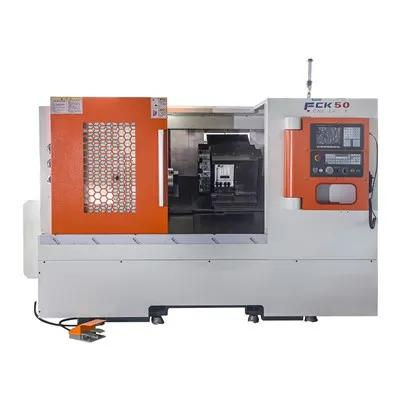
As a supplier of conventional milling machines, I often encounter inquiries from customers about the machine’s capabilities, especially when it comes to gear cutting. This is a topic that sparks a lot of interest in the machining industry, and today, I’d like to delve into whether a conventional milling machine can indeed be used for gear cutting.
Understanding Conventional Milling Machines
Before we explore gear cutting, let’s briefly understand what a conventional milling machine is. A conventional milling machine, also known as a knee – type milling machine, is a versatile tool used in machining operations. It consists of a spindle, a table, and various cutting tools. The machine operates by rotating the cutting tool while the workpiece is moved linearly along the table to achieve the desired shape.
Conventional milling machines come in different types, such as vertical and horizontal milling machines. Vertical milling machines have a vertically oriented spindle, which is ideal for operations like face milling and slotting. Horizontal milling machines, on the other hand, have a horizontally oriented spindle and are often used for peripheral milling and cutting grooves.
The main advantages of conventional milling machines are their relatively lower cost compared to some modern, high – tech machining centers, and their simplicity in operation. They are also highly customizable, allowing users to attach different types of cutting tools and fixtures according to their specific needs.
The Basics of Gear Cutting
Gears are mechanical components that transmit power and motion between rotating shafts. Gear cutting is the process of creating gear teeth on a cylindrical or conical workpiece. There are several methods of gear cutting, including hobbing, shaping, and milling.
Hobbing is a high – productivity method that uses a special cutting tool called a hob. The hob rotates and meshes with the workpiece to generate the gear teeth. Shaping involves using a reciprocating cutter to gradually form the gear teeth. Milling, in this context, is the process of using a milling cutter to remove material from the workpiece to create the gear teeth.
Can a Conventional Milling Machine be Used for Gear Cutting?
The short answer is yes, a conventional milling machine can be used for gear cutting. However, it comes with certain limitations and considerations.
One of the main requirements for gear cutting on a conventional milling machine is the appropriate cutting tool. For spur gears, a form – relieved milling cutter can be used. These cutters are designed to match the shape of the gear teeth. When using a milling machine for gear cutting, the cutter is rotated, and the workpiece is fed along the desired path to create the teeth.
For example, if you want to cut a small – batch of spur gears, a conventional vertical milling machine can be set up with a proper milling cutter. The workpiece, which is usually a cylindrical blank, is mounted on the machine table. The operator carefully programs the movement of the table to ensure that the cutter creates evenly spaced and accurately shaped teeth.
But there are challenges. One of the major limitations is the accuracy. Compared to specialized gear – cutting machines like hobbing machines, conventional milling machines may not achieve the same level of precision. The accuracy of the gear teeth depends on factors such as the skill of the operator, the rigidity of the machine, and the quality of the cutting tool. Any small errors in the setup or the machining process can lead to gear teeth with incorrect profiles, which may affect the performance of the gears in the final application.
Another limitation is the production efficiency. Conventional milling is a relatively slow process compared to hobbing or shaping. Hobbing, for instance, can produce gears much faster because the hob can cut multiple teeth simultaneously as it rotates. In contrast, when using a conventional milling machine, the cutter has to cut each tooth one by one, which significantly increases the production time, especially for large – quantity orders.
Types of Gears that can be Cut on a Conventional Milling Machine
Spur gears are the most common type of gears that can be cut on a conventional milling machine. Their straight – cut teeth make them relatively easy to machine. By using the appropriate form – relieved milling cutter, operators can achieve reasonable results for small – scale production.
Helical gears, which have angled teeth, can also be cut on a conventional milling machine, but it requires more complex setups. The machine needs to be equipped with a dividing head and a helix attachment. The dividing head is used to index the workpiece accurately, while the helix attachment is used to impart the helical motion to the workpiece during the cutting process. However, cutting helical gears on a conventional milling machine is more challenging and time – consuming than cutting spur gears.
Bevel gears, which are used to transmit power between intersecting shafts, can be machined on a horizontal milling machine with the right setup and tools. But again, it is a complex process that demands a high level of skill from the operator.
Advantages of Using a Conventional Milling Machine for Gear Cutting
Despite its limitations, there are some advantages to using a conventional milling machine for gear cutting.
Cost – effectiveness is a significant advantage. For small – scale manufacturers or hobbyists who do not have a large budget to invest in specialized gear – cutting machines, a conventional milling machine can be a more affordable option. Since these machines are already available in many machine shops for general machining operations, using them for gear cutting eliminates the need for additional equipment purchases.
Flexibility is another benefit. A conventional milling machine can be used for various other machining operations besides gear cutting. For example, it can be used for milling flat surfaces, drilling holes, and cutting keyways. This versatility makes it a valuable asset in a workshop. If a manufacturer needs to produce a small number of gears along with other machined components, a conventional milling machine can handle multiple tasks without the need to switch between different machines.
Tips for Successful Gear Cutting on a Conventional Milling Machine
If you decide to use a conventional milling machine for gear cutting, here are some tips to ensure successful results.
First, choose the right cutting tool. The cutting tool should be sharp and have the appropriate geometry for the type of gear you are cutting. Dull cutting tools can lead to poor surface finish and inaccurate gear teeth.
Second, ensure proper setup and alignment. The workpiece should be securely mounted on the machine table, and the cutting tool should be aligned correctly with the workpiece. Any misalignment can result in unevenly spaced or deformed gear teeth.
Third, use the correct cutting parameters. The cutting speed, feed rate, and depth of cut should be optimized based on the material of the workpiece and the type of cutting tool. Incorrect cutting parameters can cause excessive tool wear, poor surface finish, or even damage to the machine.
Conclusion

In conclusion, a conventional milling machine can be used for gear cutting, but it has its pros and cons. It is a viable option for small – scale production, hobbyists, or when the production quantity is relatively low. While it may not offer the same level of accuracy and efficiency as specialized gear – cutting machines, its cost – effectiveness and flexibility make it an attractive choice in certain situations.
EDM Machine If you are considering using a conventional milling machine for gear cutting or other machining operations, I encourage you to reach out to us. We are a leading supplier of conventional milling machines, and our team of experts can help you choose the right machine for your specific needs. We can also provide guidance on setup, tool selection, and cutting parameters to ensure that you achieve the best possible results. Whether you are a small – business owner looking to expand your machining capabilities or a hobbyist interested in creating your own gears, we are here to support you. Contact us today to start a discussion about your gear – cutting requirements and how our conventional milling machines can meet them.
References
- "Machinery’s Handbook", 31st Edition. Industrial Press Inc.
- "Modern Manufacturing Technology" by Groover, Mikell P.
- "Fundamentals of Gears" by Buckingham, Earle.
Henan Rowdai Machinery Equipment Co., Ltd.
As one of the most professional conventional milling machine manufacturers in China, we’re featured by quality products and good price. Please rest assured to buy high-grade conventional milling machine for sale here from our factory. If you have any enquiry about cooperation, please feel free to email us.
Address: Building 9, E-Commerce Industrial Park, High-Tech Zone, Zhengzhou, Henan, China
E-mail: rowdai@rowdai.com
WebSite: https://www.rowdai.com/
