As a supplier of Four Station Thermoforming Machines, I’ve witnessed firsthand the challenges that manufacturers face when it comes to demolding efficiency. In the competitive landscape of thermoforming, every second counts, and a delay in the demolding process can significantly impact production rates and overall profitability. In this blog, I’ll share some practical strategies and insights on how to improve the demolding efficiency of a Four Station Thermoforming Machine. Four Station Thermoforming Machine

Understanding the Demolding Process
Before diving into the solutions, it’s essential to understand the demolding process in a Four Station Thermoforming Machine. The thermoforming process involves heating a plastic sheet until it becomes pliable, then forming it into a specific shape using a mold. Once the plastic has cooled and solidified, the part needs to be removed from the mold. This is where the demolding process comes in.
The demolding process can be divided into several steps:
- Cooling: The plastic part needs to be cooled sufficiently to maintain its shape during demolding. Inadequate cooling can result in deformation or damage to the part.
- Ejection: Once the part is cooled, it needs to be ejected from the mold. This can be achieved using various methods, such as mechanical ejection pins, air ejection, or a combination of both.
- Removal: After ejection, the part needs to be removed from the machine. This can be a manual or automated process, depending on the complexity of the part and the production volume.
Factors Affecting Demolding Efficiency
Several factors can affect the demolding efficiency of a Four Station Thermoforming Machine. Understanding these factors is crucial for identifying and implementing effective solutions. Here are some of the key factors:
1. Mold Design
The design of the mold plays a significant role in the demolding process. A well-designed mold should have a smooth surface finish, proper draft angles, and adequate venting to ensure easy ejection of the part. Additionally, the mold should be designed to minimize the risk of part sticking or deformation during demolding.
2. Plastic Material
The type of plastic material used in the thermoforming process can also affect the demolding efficiency. Some plastics have a higher tendency to stick to the mold, especially if they have a high coefficient of friction or are prone to static electricity. Choosing the right plastic material and using appropriate additives can help reduce the risk of sticking and improve demolding efficiency.
3. Cooling System
The cooling system is critical for ensuring that the plastic part cools down quickly and uniformly. An inefficient cooling system can result in longer cycle times, uneven cooling, and increased risk of part deformation. Regular maintenance and optimization of the cooling system can help improve demolding efficiency.
4. Ejection System
The ejection system is responsible for removing the part from the mold. A well-designed ejection system should be able to eject the part smoothly and without causing damage. Common ejection methods include mechanical ejection pins, air ejection, and stripper plates. Choosing the right ejection method and ensuring proper alignment and adjustment of the ejection system are essential for efficient demolding.
5. Operator Training
The skills and knowledge of the machine operator can also have a significant impact on demolding efficiency. Proper training on machine operation, mold setup, and troubleshooting can help operators identify and resolve issues quickly, reducing downtime and improving overall productivity.
Strategies to Improve Demolding Efficiency
Now that we’ve identified the key factors affecting demolding efficiency, let’s explore some practical strategies to improve the process:
1. Optimize Mold Design
- Smooth Surface Finish: Ensure that the mold surface has a smooth finish to reduce friction and prevent the part from sticking. Polishing the mold surface or using a non-stick coating can help achieve this.
- Proper Draft Angles: Incorporate sufficient draft angles into the mold design to facilitate easy ejection of the part. The draft angle should be based on the type of plastic material, part geometry, and depth of draw.
- Adequate Venting: Provide adequate venting in the mold to allow air to escape during the forming process. This can help prevent the formation of air pockets and ensure uniform cooling of the part.
- Mold Release Agents: Consider using mold release agents to further reduce the risk of part sticking. However, be cautious when using mold release agents, as they can sometimes leave a residue on the part or affect the surface finish.
2. Select the Right Plastic Material
- Low Friction Plastics: Choose plastic materials with a low coefficient of friction to reduce the risk of sticking. Some examples of low friction plastics include polyethylene, polypropylene, and polytetrafluoroethylene (PTFE).
- Antistatic Additives: If static electricity is a problem, consider using antistatic additives in the plastic material. These additives can help reduce the build-up of static charge and prevent the part from sticking to the mold.
- Material Compatibility: Ensure that the plastic material is compatible with the mold and the thermoforming process. Some plastics may require special handling or processing conditions to achieve optimal results.
3. Improve the Cooling System
- Regular Maintenance: Perform regular maintenance on the cooling system to ensure that it is functioning properly. This includes cleaning the cooling channels, checking the coolant level and temperature, and replacing any worn or damaged components.
- Optimized Cooling Channels: Design the cooling channels in the mold to provide uniform cooling of the part. This can help reduce cycle times and improve the quality of the finished product.
- Cooling Rate Control: Adjust the cooling rate to match the requirements of the plastic material and the part geometry. A slower cooling rate may be required for thicker parts or materials with a high melting point.
4. Upgrade the Ejection System
- Mechanical Ejection Pins: If using mechanical ejection pins, ensure that they are properly aligned and adjusted to avoid damaging the part. Consider using larger or more numerous ejection pins for parts with a complex geometry or high surface area.
- Air Ejection: Air ejection can be a more efficient and gentle method of removing the part from the mold. Install air ejection ports in the mold and adjust the air pressure to ensure smooth ejection of the part.
- Stripper Plates: For parts with a large surface area or a tight fit in the mold, stripper plates can be used to assist in the demolding process. Stripper plates can help distribute the ejection force evenly and prevent damage to the part.
5. Provide Operator Training
- Machine Operation: Train operators on the proper operation of the Four Station Thermoforming Machine, including mold setup, temperature control, and cycle time adjustment. This can help ensure consistent and efficient production.
- Mold Maintenance: Teach operators how to perform basic mold maintenance tasks, such as cleaning, lubrication, and inspection. Regular mold maintenance can help extend the life of the mold and improve demolding efficiency.
- Troubleshooting: Provide operators with training on troubleshooting common demolding issues, such as part sticking, deformation, and ejection problems. This can help reduce downtime and improve overall productivity.
Conclusion
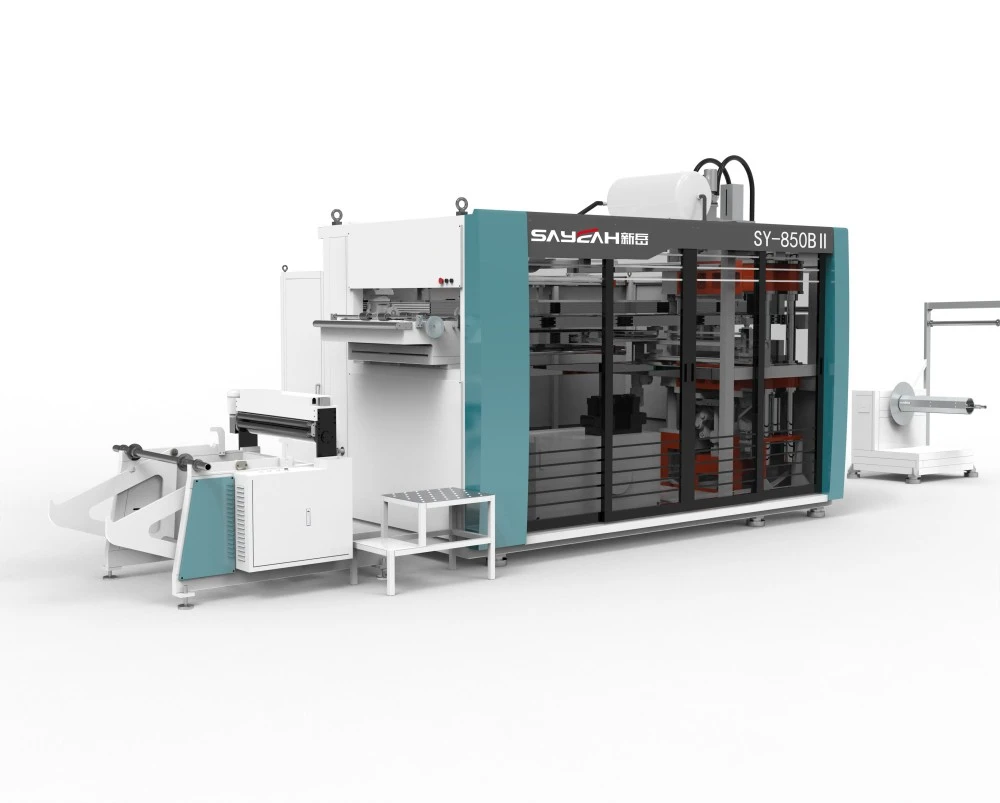
Improving the demolding efficiency of a Four Station Thermoforming Machine is essential for maximizing production rates and profitability. By understanding the demolding process, identifying the key factors affecting efficiency, and implementing the strategies outlined in this blog, manufacturers can significantly improve the performance of their thermoforming machines.
Three Station Thermoforming Machine As a supplier of Four Station Thermoforming Machines, we are committed to providing our customers with the highest quality equipment and support. If you’re looking to improve the demolding efficiency of your thermoforming process, we’d be happy to discuss your specific needs and provide you with customized solutions. Contact us today to learn more about our products and services and to start the procurement洽谈 process.
References
- Beckmann, P., & Kahl, W. (2007). Thermoforming Handbook. Hanser Publishers.
- Throne, J. L. (1996). Thermoforming. Marcel Dekker.
- Strong, A. B. (2006). Plastics Materials and Processing. Pearson Prentice Hall.
Zhejiang Sayeah Machinery Co., Ltd.
Zhejiang Sayeah Machinery Co., Ltd. is one of the most reliable manufacturers and suppliers of four station thermoforming machine in China, also supports high quality customized service. Please feel free to buy CE approved four station thermoforming machine from our factory. For price consultation, contact us.
Address: Wanquan District Industrial Zone,West Of China National Highway 104, Sunlou Village, Wanquan Town, Pingyang County, Zhejiang Province. China
E-mail: sales@sayeahmachinery.com
WebSite: https://www.sayeahthermoforming.com/
