If you’re a brand owner who’s ever stepped foot in a manufacturing or supply chain meeting, you’ve probably heard the phrase “other labels” tossed around casually—usually as a shorthand for the third-party, co-pack, or white label operations that churn out so many of the products lining store shelves and online carts today. For us, as a supplier that’s spent 12 years working exclusively behind the scenes on these so-called “other labels,” that phrase isn’t a punchline; it’s the core of our business, and it’s also what makes the question “How do other labels test their products?” so much more than a casual curiosity. Most folks outside the industry assume testing is just a box to check before shipping: a quick look for cosmetic flaws, a single safety spot check, maybe a quick email from a lab saying “passed.” But over the years, I’ve seen dozens of label clients (think small skincare lines, pet supplement brands, home goods startups) show up to our office after a big regulatory scare, or a product recall, because they didn’t dig into what testing the labels they contracted actually did. They thought “other labels” meant a one-size-fits-all process, but the truth is, testing is where the gap between a reliable, long-term partner and a liability waiting to happen gets really, really clear. Other Labels

Let’s start with the most common mistake I see new label clients make: conflating “our client’s quality standards” with “the label’s test protocols.” When a skincare brand comes to us with a formula for a CBD face oil, they bring with them their own non-negotiables: no parabens, no synthetic fragrances, 95% purity on their CBD extract, a 24-month shelf life. What they often don’t realize is that many low-volume, cut-rate labels will skip the actual testing to hit a lower price point. A few years back, we took on a small CBD brand that had worked with three other labels before us; every one of those previous labels had sent them a “COA” (Certificate of Analysis) saying the batch was good, only for the brand’s third-party regulator to flag that the oil contained 12% more heavy metals than allowed. When we dug into their old testing reports, we found that every prior label had sent their samples to a local lab that only ran a “fast screen”—a 10-minute test that looked only for the three most common heavy metals, not the five required by the FDA for cosmetic CBD products. That’s not a bad lab; it’s a label that chose the cheapest testing option, not the one that matched their client’s actual needs. So right off the bat, testing for other labels isn’t a single practice—it’s a split between what the label needs to do to keep costs low, and what the brand needs to do to stay compliant and safe.
One of the biggest, and most overlooked, areas of testing that other labels use is compliance testing, and it’s split between two very different tracks: regulatory compliance for the country of sale, and internal brand compliance that’s unique to each client. Let’s break that down with a concrete example: last year, a pet supplement brand came to us wanting to launch a line of joint chews for dogs, to be sold in the U.S. and Canada. The first label they approached had a standard testing package that included a check for U.S. FDA requirements, but nothing for Canada’s CFIA (Canadian Food Inspection Agency) rules. When we asked, their rep said “most of our clients only sell in the U.S., so we don’t do extra CFIA testing.” That’s a huge red flag for any brand targeting cross-border sales. For us, as a label that works with 70% cross-border brands, compliance testing is non-negotiable: for every batch, we test against the exact regulatory list for every country a client’s product is going to, and we work with two separate labs—one in the U.S. and one in Canada—to avoid cross-contamination in test results. That’s not something all other labels will offer, though. I’ve met label owners who’ll buy a single lab COA and copy it for every client, changing only the name on the top; I’ve seen testing reports from labels that list “passed” for a test that doesn’t even exist for that product category. The key here for brands is to ask: Does your testing lab specialize in our product category, and do they provide separate, location-specific results? If the answer is no, you’re not getting real compliance testing.
Then there’s performance testing, which is where other labels really diverge depending on what kind of product they’re making. For example, if a label is making plastic water bottles for a big retail chain, their performance testing is going to be focused on durability: drop tests from 6 feet, leak tests after 100 uses, BPA leaching tests. But if that same label is making organic cotton tote bags for a small sustainable brand, their performance testing is going to be totally different: tear strength tests for 10,000 uses, colorfastness tests to make sure the dye doesn’t bleed on clothes, and a biodegrability test to confirm they break down in a compostable environment. The mistake I see brands make here is assuming that the label’s standard performance testing matches what their product actually needs. A few months back, a sustainable apparel brand came to us with linen tote bags they’d tried to source from a label that normally made cheap plastic promotional bags. That label’s performance testing only checked that the tote didn’t have holes at shipping, not that the linen would hold up after three washes, or that the dye wouldn’t fade after 10 trips to the beach. The first batch the label sent us had a 40% failure rate on wash testing; we switched to a lab that specializes in textile performance, and fixed the process. That’s the thing about other labels: many specialize in a narrow product line, so their testing is tailored to that line, not to whatever product a random brand wants to throw their way. If you’re a brand with a unique product, don’t work with a label that doesn’t have a track record of testing that specific type of product—even if their price is lower.
Now, let’s talk about the part of testing that no one talks about: consistency testing. Most people know about batch testing, but what about testing that the 100th batch is the same as the first? That’s where a lot of other labels fall flat, especially when they’re scaling up production. I had a client a few years back who made a popular probiotic powder for kids; their first batch, made by a small boutique label, had a 98% potency rate, passed all safety tests, and sold out in 3 weeks. When they moved to a larger “other label” to keep up with demand, the third batch came in with a 62% potency rate—way below the label’s own stated guarantee. When we looked into the testing reports from that label, we saw they’d only tested the first and last batch in a production run, not every 5th batch like they’d told the client. Consistency testing is tedious, it adds about 10% to the cost of each batch, and it’s the first thing cut when a label is trying to undercut competitors. For us, consistency testing is non-negotiable; we test every 4th batch across all our product lines, because we know that even small changes in raw material sourcing (which happens all the time in bulk production) can throw off a product’s performance or safety. But if you’re looking at a label that quotes a price 10-15% lower than the competition, ask them about consistency testing. If they hem and haw or say they only test end-of-run samples, walk away.
I also want to touch on third-party vs. in-house testing, because that’s a line that a lot of other labels blur. Some larger labels have their own in-house labs, which is great for quick spot checks, but there’s a huge conflict of interest there: if a label owns the lab, they have a reason to pass every batch, even if it’s not up to par. Smaller other labels, on the other hand, often send samples to external third-party labs, which is usually more reliable because the lab has no stake in whether the product passes or fails. But again, not all third-party labs are the same. A few years back, a pet food brand came to us with a product recall they’d gotten because their label’s testing lab had accidentally contaminated a sample with a toxin, leading the brand to believe the product was safe when it wasn’t. The lab was a fly-by-night operation that mostly did tests for local farms, not pet food, and they’d mixed a sample of chicken feed with the dog food sample by mistake. That’s not a label’s fault, but it is a label’s responsibility to vet their testing labs. For us, we use two separate third-party labs: one for routine safety and compliance, and a second, niche lab for product-specific performance tests, just to catch that kind of error. It adds cost, but it’s saved us (and our clients) from multiple recalls.
All of this brings me back to why this matters so much for brands that work with other labels. Most small to mid-sized brands don’t have a huge quality assurance team; they’re the ones mixing formulas, designing packaging, and trying to get their product on shelves, so testing often falls to the label. But if you don’t ask the right questions about what testing they actually do, you’re putting your brand, your customers, and your reputation at risk. I’ve seen brands lose years of work because a label cut corners on testing, or because they chose a label that didn’t understand their product’s unique needs.
Here’s the thing: other labels aren’t a monolith. Some invest thousands of dollars a year in testing, work with specialized labs, and have strict consistency protocols. Others will do the bare minimum to get a batch out the door, cut testing costs wherever they can, and hope no one notices until a recall hits. The difference isn’t in the label’s size or how cheap their quotes are—it’s in how seriously they take testing as part of their job, not just a box to check.
If you’re a brand currently looking for a label to partner with, or you’re thinking about switching from your current label, don’t just ask “can you make my product?” Ask about their testing process. Ask for a sample test plan, not just a COA. Ask if they test against your product’s specific category standards, not a generic list. Ask how they handle consistency across batches, and if they work with multiple third-party labs to verify results. The labels that can answer those questions clearly, with specific examples, are the ones that will be reliable partners for the long haul. The ones that give you vague answers, or can’t share detailed testing protocols, are the ones that will cost you more in the long run.
At the end of the day, the work we do as a supplier behind these “other labels” isn’t just about manufacturing a product—it’s about making sure that when that product goes out to your customers, it’s safe, it works as promised, and it doesn’t end up in a recall or a bad review. Testing isn’t something to outsource and forget; it’s the foundation of every good product, and it’s the thing that separates the labels that are in it for the long run from the ones that are just here for a quick buck.
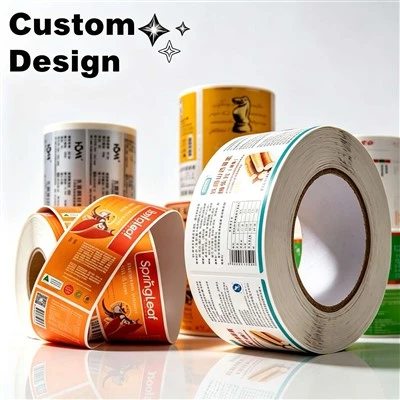
If you’re ready to talk through your product’s testing needs, to go over your specific requirements, and to build a partnership that prioritizes quality at every step, reach out to connect with our team. We’d be happy to walk you through our testing processes, share examples of past batch test results, and answer every question you have about what makes a reliable label partner. We’ve worked with brands of all sizes, from tiny startups to established lines, and we know that the right testing process is what turns a good product into a great one. Don’t leave your product’s safety and success to chance—let’s talk through the details.
Die Cut Stickers References
- U.S. Food and Drug Administration. (2022). Cosmetic Safety Testing and Compliance Requirements.
- European Chemicals Agency. (2023). Guidelines for Product Testing and Labeling for Consumer Goods.
- National Sanitation Foundation. (2021). Third-Party Testing Protocols for Dietary Supplements and Pet Products.
- International Organization for Standardization. (2022. ISO 17025: General Requirements for the Competence of Testing and Calibration Laboratories.
SpeedPrint Era (Xiamen) Digital Co., Ltd.
SpeedPrint Era (Xiamen) Digital Co., Ltd. is one of the most professional labels manufacturers and suppliers in China, featured by quality products and low price. Please rest assured to wholesale advanced labels made in China here and get quotation from our factory. We also accept customized orders.
Address: Floor 1, No. 27, Xianghong Road, Xiang’an District, 361101, Xiamen, Fujian, China
E-mail: hxmacka@gmail.com
WebSite: https://www.lumolabels.com/
