When I first started in the concrete pole machine business over 12 years ago, the idea of automating our production process felt like a distant dream. Back then, every concrete pole we built required hands-on labor at nearly every step: mixing concrete manually, pouring into molds with shovels, vibrating by hand to remove air bubbles, and finishing each pole with basic tools. We’d often work 14-hour days during peak season, and even then, consistency in pole quality was a struggle—one worker might leave more voids in the concrete than another, leading to longer curing times and higher rejection rates. Today, as a concrete pole machine supplier, the question I hear most often isn’t just “Can a concrete pole machine be automated?” but “How soon can I install one and start seeing the benefits?” The short answer is yes, not only can these machines be automated, but the technology has advanced enough that automation isn’t just a luxury—it’s become a necessity for staying competitive in the modern precast concrete industry. Concrete Pole Machine
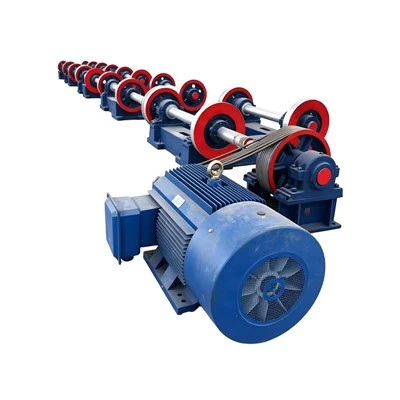
Let’s start with the core function of a concrete pole machine: its job is to transform raw materials (cement, aggregate, water, sometimes admixtures) into uniform, structurally sound poles that meet local electrical and utility standards. For decades, this process relied on manual operation, which had clear limits. Manual mixing meant inconsistent water-to-cement ratios—one bucket more water than usual could weaken the pole’s structural integrity. Manual pouring often resulted in uneven distribution of concrete along the mold, especially in longer poles, which would lead to sagging during curing. And hand-vibrating, while better than no vibration, rarely reached every corner of the mold, leaving hidden voids that would fail under pressure once the pole was in service.
Automating these steps eliminates those inconsistencies, and the tech involved is more accessible than most business owners realize. Modern automated concrete pole machines integrate programmable logic controllers (PLCs) that manage every stage of production from a single touchscreen interface. When a client tells me they’re considering automation, I walk them through how this works in practice. First, the raw material batching system is fully automated: sensors measure cement, sand, gravel, and water with precision up to 0.5%, far more accurate than even the most careful manual batching. The PLC stores recipes for different pole types—7-meter residential poles, 12-meter industrial poles, crossarm poles—and can switch between recipes in minutes without resetting scales or adjusting mix ratios. This alone reduces material waste by an average of 12%, according to data from the Precast/Prestressed Concrete Institute (PCI), because there’s no more over-batching to account for human error.
Next comes the mold handling and concrete placing stage, which is where most of the heavy lifting was once done manually. An automated concrete pole machine uses robotic arms or conveyor systems to move molds from the batching station to the placing area, where a controlled, high-pressure pump distributes concrete evenly along the entire length of the mold. Unlike manual pouring, which often leaves the bottom half of the mold overfilled and the top half underfilled, the automated pump adjusts flow rate based on the mold’s shape, ensuring a uniform density throughout. For prestressed concrete poles— the most common type used in utility lines—automated machines also handle the tensioning of steel strands with precision. Tension is a critical factor in pole strength; too little tension and the pole can crack under load, too much and the steel can snap before curing. Automated systems maintain tension within ±2% of the required spec, something even experienced technicians can’t consistently achieve over hundreds of poles.
Vibration and curing are two more stages that benefit enormously from automation. Manual vibration uses portable tools that a worker runs along the mold, but it’s easy to miss spots, especially on poles longer than 10 meters. Automated vibration systems mount vibrators directly to the mold or use a linear vibrator that moves along the mold’s exterior at a set speed, ensuring every layer of concrete is compacted evenly. This reduces curing time too—properly compacted concrete gains strength faster, so poles can move from curing to storage in 24 hours instead of 36, as we saw with our early automated models. Curing itself can be automated with climate-controlled chambers. The PLC adjusts temperature and humidity based on the concrete mix and local climate, which is especially important in extreme environments—hot, dry regions need higher humidity to prevent surface cracking, while cold regions need slower, controlled curing to avoid thermal shock. For our clients in Canada and Australia, this automated curing has cut their production cycle by 20% annually.
Of course, no automation system works without oversight, and that’s a common concern I hear from operators who’ve spent years doing the work by hand. “Will automation replace workers?” is another frequent question. My answer is always no—instead, it transforms their role from manual labor to machine operators and quality control specialists. A single worker can manage two or three automated concrete pole machines at once, monitoring the touchscreen, adjusting recipes if needed, and doing final inspections on finished poles. We’ve had clients in rural areas with labor shortages tell us that automation let them keep their business running when they couldn’t find enough workers to hire. One client in Texas, a small utility contractor, told me that before automation, he’d need 4 workers to produce 50 poles a week; now, with one automated machine and one operator, he produces 120 poles a week, with zero quality rejections. That’s not just efficiency—it’s business survival for small to mid-sized operations.
But here’s the thing: automation for concrete pole machines isn’t a one-size-fits-all solution. I’ve had clients come to me asking for a “fully automated” machine, but when we look at their production volume, their space limitations, and their long-term goals, sometimes a semi-automated system is a better fit. For example, a new business just starting out might not have the budget for a fully automated batching and mold handling system, but they can start with an automated vibrator and curing control, then add more automation as their volume grows. We design our machines to be modular, so operators can upgrade step by step without replacing the entire system. That flexibility is key—many of our clients initially invest in semi-automation, then expand to full automation within two years as they see the return on investment (ROI).
Speaking of ROI, that’s the biggest factor that sways decision-makers. Let’s do a quick breakdown based on data from our own installations. A standard manual concrete pole machine requires 3-4 workers per shift, with labor costs averaging $25 per hour per worker (this varies by region, but it’s a solid average in North America and Europe). A fully automated machine needs 1 operator per shift, so labor costs drop by 75%. Add in reduced material waste (10-15%), lower rejection rates (from 8-10% to 1-2%), and faster production cycles, and the upfront cost of an automated machine is typically recouped in 18-24 months. For small operations, that’s a game-changer—many can go from breaking even to profitable in that time, and larger operations see ROI even faster because of higher volume.
I’ll also be honest about the challenges of automating a concrete pole machine. The technology requires regular maintenance, but it’s minimal compared to manual equipment. Our automated machines have sensors that alert operators when a part needs service, preventing breakdowns that would stop production. There’s also the learning curve—while the touchscreen interface is intuitive, operators need a basic understanding of how PLC systems work, which most clients address with free training we provide with every machine. In over 10 years of selling automated concrete pole machines, the only issues we’ve seen have been from clients who tried to skip the training or cut corners on maintenance. Those problems were rare, though—less than 5% of our installations have required major service in the first three years.
Another point that often surprises people: automated concrete pole machines can handle more than just standard straight poles. We’ve customized our automated systems to produce tapered poles, crossarm poles, and even decorative poles for streetscapes, all with the same precision. The PLC’s recipe system can store dozens of different mold configurations, so operators can switch between pole types in minutes, no re-calibration needed. That’s a big advantage for utility companies that need to produce a range of pole sizes for different projects, or for companies that do custom work for municipalities.
Looking ahead, I see even more integration coming to automated concrete pole machines. We’re currently testing systems that connect the machine to project management software, so when a client places an order for 50 10-meter poles, the machine automatically pulls the right mix recipe, molds, and curing schedule, and updates the inventory when production is done. We’re also adding quality control cameras that scan each finished pole for cracks or surface defects, flagging any that need rework before they leave the plant. These advancements aren’t about replacing human oversight—they’re about making the process even more consistent, reducing waste, and letting operators focus on the work that matters most: ensuring every pole is safe and meets the needs of the client.

At the end of the day, the question of whether a concrete pole machine can automated is no longer a matter of “if”—it’s a matter of “how much” and “when.” For anyone in the precast concrete industry, automation isn’t just a technical upgrade; it’s a way to stay competitive, address labor shortages, and deliver higher quality products to utility and infrastructure projects. If you’re considering upgrading your production line, whether you’re a small operation just starting out or a large manufacturer looking to expand, the best first step is to talk through your needs with someone who knows the machines inside and out. We’ve worked with hundreds of clients to design systems that fit their exact budget, space, and production goals, and we’d be happy to do the same for you. Reach out to discuss your specific requirements, and we can walk you through the options, ROI projections, and how an automated concrete pole machine can transform your business.
Concrete Pipe Machine References
Precast/Prestressed Concrete Institute. (2022). Automation in Precast Concrete Production: Trends and Benefits.
Concrete Plant Precast Technology. (2023). ROI Analysis of Automated Pole Manufacturing Systems.
International Association of Utilities Contractors. (2021). Labor Shortages and Automation in Utility Infrastructure Manufacturing.
Jiangsu Zhongjian Concrete Machine Equipment Co., Ltd.
As one of the most professional concrete pole machine manufacturers and suppliers in China, we’re featured by high quality customized products. Please feel free to wholesale high quality concrete pole machine for sale here from our factory. Welcome to contact us for pricelist.
Address: Chengbei Industrial Park, Jiangdu District, Yangzhou City, Jiangsu Province
E-mail: JSZJTJ2026@163.com
WebSite: https://www.zhongjianmach.com/
