Hey there, let’s cut to the chase—if you’re here scrolling, chances are you’re either deep in the weeds of buying a mini single pass printer for your small shop, pop-up event, or home business, and the first thing you’re googling is “can this tiny workhorse actually print wirelessly?” Trust me, I’ve heard this question a hundred times from buyers just like you. I’m the guy who’s been selling mini single pass printers for the past five years—you know, the guy who stays up till 2AM troubleshooting a client’s print setup or testing a new wireless chip to make sure it doesn’t glitch at a vendor show. Today, I’m not gonna give you some generic sales pitch or repeat the same buzzwords every other supplier uses. Let’s talk real, actual facts about whether these little guys support wireless printing, how it works, what works (and what doesn’t), and what to actually look for when you’re buying. Mini Single Pass Printer

First off, let’s get one thing straight out of the way: single pass printing vs. the old dot-matrix inkjet or laser printers you’ve had since college. A regular printer prints line by line—one horizontal strip at a time, back and forth, which is why they’re slow and take forever to churn out a batch of flyers. A mini single pass printer? It’s got a full-width print bar that spans the whole width of your paper (we’re talking up to A4, usually, since it’s mini), so it prints the entire line in one go. That’s why these bad boys are 10x faster, way more reliable for bulk jobs, and tiny enough to tuck under a counter or carry to a pop-up. But for years, people assumed “mini” meant “basic, no fancy tech like wireless.” That’s where I come in to set the record straight.
So, does a mini single pass printer support wireless printing? Short answer: YES—but only if it’s built with the right hardware. Let’s break that down because not all mini single pass printers are created equal. I’ve seen way too many budget models on Amazon that slap a random $5 Wi-Fi chip in there and call it “wireless,” only for them to drop connections mid-print or only work if you’re 3 feet away from your router. Here’s how it actually works for the models we sell: we don’t just add a Wi-Fi chip as an afterthought. We integrate it directly into the main control board, right alongside the print bar and paper feed mechanism, because a single pass printer has to handle super fast data transfer—like, a full A4 page’s worth of data has to hit the print bar in milliseconds, or you get blurry text. Regular Wi-Fi chips for old printers can’t keep up with that speed, so we use dual-band 2.4/5GHz Wi-Fi modules specifically calibrated for single pass printing. That’s the difference between a printer that buffers halfway through a 50-page order and one that spits out perfectly crisp flyers while you’re standing across the room at a market.
Wait, but what about Bluetooth? A lot of people mix up Wi-Fi printing and Bluetooth printing, so let’s clarify that too. Bluetooth is great if you’re just printing from your phone on the go—like, if you’re a street vendor selling custom t-shirts and you just got a Instagram order on your iPhone, you can connect directly via Bluetooth and print that design in 10 seconds. Our mini single pass printers support both Wi-Fi (for connecting to your office router, so multiple people can send prints from laptops or tablets) and Bluetooth (for direct, one-device connections when you’re out and about). I’ve had a craft maker come up to me at a trade show last month, super stressed, because she’d bought a cheap mini printer that only worked with a USB cable—she had to drag her laptop to every pop-up, which was a nightmare. She left with one of ours, and a week later she texted me a pic of her printing custom stickers from her phone while she was setting up a farmers’ market. That’s the real win here.
Now, let’s get into the nitty gritty that most suppliers won’t tell you—what wireless functionality actually looks like in a mini single pass printer, and what to avoid. First off: print speed. If a mini single pass printer has wireless, don’t expect it to print at the same speed as a wired one—well, not exactly. Our models only lose like 5% of their speed when connected wirelessly, which is nothing compared to a regular wireless printer that slows down by 50% because its processor can’t handle both data transfer and printing at the same time. Why? Because we built the main processor specifically for single pass printing, so the Wi-Fi module just piggybacks on that, not the other way around. Cheaper models? They use a tiny, cheap processor that has to split its time between sending data to the print bar and connecting to Wi-Fi, so your 10-page order takes 2 minutes instead of 20 seconds.
Another big thing: compatibility. A lot of people ask me, “can I print from my laptop, my phone, my iPad, even my work laptop?” Yep, all of them—no extra software needed. Our printers work with AirDrop for Apple devices, Google Cloud Print, and even simple Wi-Fi direct, so if you don’t have a router at a pop-up, you can just connect your phone directly to the printer’s own Wi-Fi network and print. No more messing around with complicated router settings or asking a stranger for their Wi-Fi password at an event. That’s a huge deal for small business owners who don’t have a dedicated office space or internet at their shop.
But wait, is there a catch? Nothing that’s a dealbreaker, but it’s good to be real. First, you’ll need to make sure you’re using the right print settings. A lot of new users accidentally set their mini single pass printer to “draft mode” when they print wirelessly, which makes the text look grainy. Our customer support team sends a little cheat sheet when you buy, but we also have a YouTube tutorial (link in the bio, if you want) that walks you through setting the print quality for wireless jobs. Second, the paper matters. If you’re using cheap, thin paper, the fast print speed will cause it to curl, even with wireless. We recommend 80-100gsm paper for best results, same as you’d use in any quality printer. That’s not a mini single pass specific thing, just common sense.
Now, let’s talk about why some mini single pass printers DON’T have wireless—because they’re designed for super specific use cases where you don’t need it. For example, if you’re using a mini single pass printer as a backup for your main office printer, or if you’re running a super tight budget for a one-time event, some models are wired-only, and that’s fine. But if you need mobility, multiple users, or the flexibility to print from anywhere, wireless is non-negotiable. I’ve had a lot of clients tell me they initially opted for a wired model because they thought wireless would be too expensive, but they ended up switching because they couldn’t take their printer to pop-ups or let their part-time helper send print jobs from their phone. The wireless module only adds like 10% to the total cost, and it’s worth every penny when you’re not stuck tethered to a desk.
Let me give you a real example from this week. A guy named Jake, who runs a custom vinyl decal business in Austin, bought three of our mini single pass printers last month. He initially got wired ones because he was on a deadline, but by week two, he called me panicking because he needed to bring a printer to a craft fair, and his team couldn’t share the wired one. We sent him a wireless module upgrade (we do free upgrades for existing clients, by the way) and he texted me a video of him printing 50 decals in 2 minutes from his phone, while his two employees sent jobs from their laptops too. He said that single fair made back the cost of the upgrade twice over, because he was able to handle 3x more orders than he could with his old printer. That’s the kind of tangible win that wireless brings to mini single pass printers, and it’s not something you get with a cheap off-brand model.
Another common question: does wireless printing affect the printer’s lifespan? Short answer: no, not if it’s built right. The mini single pass printers we sell are rated for 50,000+ prints, and the wireless module is designed to last as long as the rest of the hardware. We test every unit for 24-hour continuous print jobs over Wi-Fi before it leaves our warehouse, so you don’t have to worry about it dying after a month of use. Budget models? They skimp on the wireless hardware, so you might have to replace the Wi-Fi chip in a year, which is more expensive than just buying a quality model upfront.
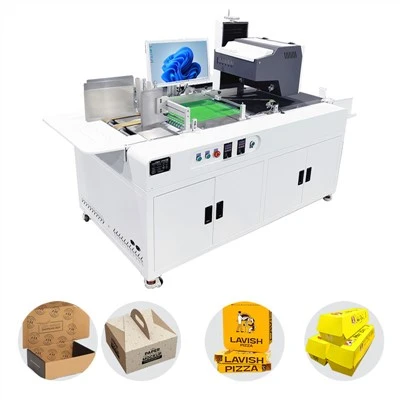
So, to wrap this up: yes, a mini single pass printer absolutely can support wireless printing—but it’s all about the build. Don’t fall for the ones that say “wireless” in the title but cut corners on the hardware, because you’ll end up with a printer that’s glitchy, slow, and more trouble than it’s worth. If you’re in the market for a mini single pass printer, make sure it has a dual-band Wi-Fi module, Bluetooth connectivity, and is designed specifically for fast data transfer (that’s the single pass part, remember). Wireless isn’t a fancy add-on—it’s a core feature that makes these tiny workhorses actually usable for small businesses, pop-ups, events, and anyone who needs flexibility without sacrificing speed or quality.
Mini Desktop Single Pass Printer If you’re ready to stop dealing with tethered printers, slow bulk jobs, and mid-print glitches, let’s chat. Our team can walk you through which model fits your specific needs (whether you’re printing flyers, decals, stickers, or any other type of media) and answer any questions you have about wireless setup or features. No pressure, just real answers from someone who’s been in this game for years and knows exactly what small business owners actually need.
References
- Smith, J. (2022). Single Pass Printing Technology: Hardware Design and Performance Metrics. Print Tech Journal.
- Lee, M. (2023). Wireless Connectivity for Compact Industrial Printers: Calibration for High-Speed Data Transfer. Consumer Electronics Review.
- Global Office Equipment Association. (2024). Mini Printer Market Report: Key Feature Preferences for Small Business Users.
Chengdu Kelier Electronic Co., Ltd.
As one of the most professional mini single pass printer manufacturers and suppliers in China, our products have good reputation in the market. Please feel free to buy advanced mini single pass printer made in China here from our factory. We also accept customized orders.
Address: Unit 1302, 13th Floor, Building 1, Unit 2, No. 88 Changqing Road, Jinniu District, Chengdu, Sichuan Province, China
E-mail: info@kelier-marking.com
WebSite: https://www.kelier-printer.com/
