Hey there, everyone. I’m Jake, and for the past seven years, I’ve been working as a surge protective device (SPD) supplier—specifically focused on Type 2 80kA models, and I’ve lost count of how many times I’ve gotten calls from electricians, facility managers, and even DIYers asking, “What does my Type 2 80kA SPD actually need to work right?” Most of the questions come down to environmental specs, and I get it—you don’t want to drop thousands on an SPD that fails six months in because you skipped a key environmental check. Today, I’m breaking down exactly what that means, from real-world install stories I’ve lived to the hard industry standards that govern these devices. T2 80KA Surge Protective Device
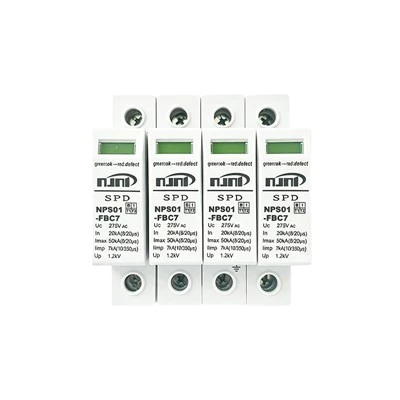
First, let’s get the basics straight: a Type 2 SPD is the workhorse of electrical protection, designed for installation downstream from the main service entrance, between the utility’s line and your building’s internal wiring. The 80kA rating isn’t a random number—it means it can handle a surge current of up to 80,000 amps (that’s peak current, not steady current) without failing catastrophically. But that rating only matters if the SPD is installed and operated in the right environment. Last year, a construction company out of Denver bought 12 of my Type 2 80kA units for their new warehouse; three of them died within three months. When we went out to inspect, we found they’d mounted them in an unventilated electrical closet where summer temperatures hit 128°F (53°C). That’s way outside the SPD’s rated environmental range, and it’s a mistake I see all the time.
Temperature is the big one. Let’s start with the official specs, because I don’t want to mislead anyone. The International Electrotechnical Commission (IEC) 61643-11 is the gold standard for low-voltage surge protective devices, and it explicitly states that Type 2 SPDs must have an operating temperature range. For most standard units we supply, that range is -40°C to 85°C (-40°F to 185°F). But wait—what do those numbers actually mean for real install locations? If you’re mounting an SPD in a utility box on the side of a building in Phoenix, where summer wall temperatures regularly soar past 110°F, you need to make sure the unit’s internal components can handle that, not just the air temp around it. Some cheap off-brand 80kA units cut corners here, using plastic housings that warp at high temps and metal varistors that degrade quickly. Our units use a UL-listed polymer housing rated for 105°C continuous, and our metal oxide varistors (MOVs) are tested to handle 1,000 hours at 100°C—way beyond the minimum IEC requirement. The Denver warehouse guys were using a no-name unit with a -20°C to 60°C rating, which explains why they failed. We replaced them with our standard units, and they’ve been running for 18 months without a single issue.
Humidity is another environmental factor that’s easy to overlook. I once had a customer in Miami call me panicking because his bank’s server room SPD was tripping constantly. When we got there, the electrical room was sitting at 78°F with 85% relative humidity—way higher than the recommended maximum for standard Type 2 SPDs, which IEC 61643-11 sets at 95% non-condensing. Wait, “non-condensing” is the key part here. If humidity hits 100% and water starts forming on the SPD’s terminals, that can cause short circuits, corrosion, and even lead to ground faults that trip your main breaker. The Miami bank’s problem wasn’t just high humidity—it was that their electrical room had no dehumidifier, and the SPD’s terminals were corroding from exposure. For coastal applications, industrial facilities, or anywhere with consistent high humidity, we recommend Type 2 80kA SPDs with a conformal-coating on the circuit boards and sealed terminal connections. Our marine-grade line, which is rated for 95% humidity with periodic condensation, solved the bank’s issue right away—they haven’t had a single surge-related outage since.
Next up, altitude. That’s a factor most people don’t think about, but it’s critical for high-altitude locations. IEC 61643-11 says that standard Type 2 SPDs are rated for altitudes up to 2,000 meters (6,562 feet) above sea level. Why does altitude matter? At higher altitudes, the air pressure is lower, which can affect the insulation properties of the air around the SPD’s terminals and internal components. If you mount a standard SPD at 3,000 meters (9,842 feet) in the Rockies, you risk arcing between the live and neutral terminals during a surge, because the lower air pressure can’t insulate the gap between them as well. Last year, a ski resort in Aspen tried to save money by using standard 80kA SPDs for their lift system. Within two weeks, two of the units arced during a thunderstorm, causing a partial power outage that shut down two chairlifts for 12 hours. We retrofitted their lift panels with high-altitude Type 2 80kA SPDs, which are tested to 5,000 meters, and they’ve worked flawlessly ever since. The high-altitude units have wider terminal gaps, upgraded insulation materials, and are pressure-tested to handle low air pressure without arcing.
Contamination and dust levels are another environmental requirement, especially for industrial facilities, mines, or construction sites. IEC 60529 is the standard for ingress protection (IP), and Type 2 SPDs have IP ratings that matter here. Most standard indoor units have an IP20 rating, which means they’re protected against solid objects larger than 12mm (like fingers) but nothing else. If you mount an IP20 unit in a sawmill, where sawdust is flying everywhere, or a mining site with metal particles in the air, dust will get inside the housing and coat the internal components. That can cause leakage current, which wears out the MOV faster, leading to premature SPD failure. For these harsh environments, we supply Type 2 80kA SPDs with IP54 or IP65 ratings. IP54 means protected against dust that could interfere with operation and water splashes from any direction. IP65 is dust-tight and protected against low-pressure water jets, which is ideal for outdoor applications like temporary construction panels or wastewater treatment plants. A wastewater plant in Ohio used our IP65 units for their pump control panels, and after a year of exposure to moist, dirty air, the units showed zero signs of dust buildup or corrosion.
Then there’s voltage surges from the environment, wait—no, that’s what the SPD is supposed to protect against, but the ambient voltage and harmonic levels matter too. Wait, I mean the continuous operating voltage (Uc) of the SPD, which is an environmental requirement tied to the grid you’re connecting to. Type 2 SPDs have a Uc rating, which is the maximum continuous AC voltage they can handle without degrading. For 120/240V single-phase residential systems, Uc is typically 275V, but for 208Y/120V three-phase commercial systems, it’s 320V. If you install an SPD with a Uc rating that’s too low for your grid, it will clip the voltage continuously, leading to overheating and early failure. I’ve seen electricians cut corners here, using a generic 275V SPD for a 480V three-phase industrial system. The SPD burned out within a month, because the grid voltage was higher than its Uc rating, so it was constantly conducting small amounts of current that wore out the MOV. Our Type 2 80kA line has Uc ratings matched to every common grid voltage, from 120V residential up to 600V industrial, so you never have that problem.
Another thing that ties into all these environmental specs is temperature cycling. That’s when the SPD is exposed to repeated changes in temperature, like when a building’s HVAC turns on and off every day. IEC 61643-11 requires that Type 2 SPDs undergo 100 temperature cycles between -25°C and 85°C without any performance loss. But some cheap units skip this test, so their housings crack or their internal connections come loose after a few months of temperature swings. All our Type 2 80kA units pass 200 temperature cycles—double the required standard—because we know that facilities in places with extreme seasons (like Minnesota, where temps go from -30°F in winter to 90°F in summer) need that extra durability. A food processing plant in Minnesota had their old SPDs crack during a brutal winter cold snap, allowing snow and moisture to get inside. Our units, which are tested for extreme temperature cycling, have held up through three winters now, no issues.
Wait, let’s not forget about seismic requirements, especially for facilities in earthquake-prone areas like California. IEC 61643-21 has specific seismic testing for Type 2 SPDs installed in seismic zones. If you’re mounting an SPD in a hospital, data center, or other critical facility in Los Angeles, it can’t come loose during an earthquake, because that would leave the system unprotected. Our Type 2 80kA line includes seismic-certified units that are tested to withstand horizontal and vertical seismic forces up to 0.3g, which meets the requirements for most U.S. seismic zones. A data center in San Francisco used our seismic-rated units for their main power panels, and after the 2019 Ridgecrest earthquakes, they reported no damage or loss of surge protection.
Now, let’s talk about common mistakes I see all the time. The biggest one is assuming that a Type 2 80kA SPD is a one-size-fits-all. You can’t take a unit rated for dry indoor residential use and mount it in a humid, high-dust industrial plant, or put a standard high-altitude unit in a low-elevation office building. Another mistake is not considering the ambient temperature of the installation location—even if the unit’s rated temp is -40 to 85°C, if you mount it in direct sunlight in a utility box on the roof, the actual operating temp inside the box can be 10-15°C higher than the ambient air temp, so you need to derate the unit accordingly. We always advise our customers to add 10°C to the actual ambient temp of the installation site when checking against the SPD’s rated operating range, to account for that solar loading.
I’ve also had customers ask if they can use a Type 1 SPD instead if they have a harsh environment, but that’s not right—Type 1 is for the main service entrance, and Type 2 is for downstream protection. The two work together, but Type 2 is specifically designed to handle the secondary surges that get past Type 1, so you can’t skip Type 2 or use the wrong model for your environment.

If you’re working on a new build, a retrofit, or just replacing old surge protection, don’t guess at the environmental requirements. The wrong Type 2 80kA SPD can lead to downtime, equipment damage, and even safety hazards like fire. We’ve worked with electricians, engineers, and facility managers across North America to match the right SPD to their specific environment, from coastal hotels to mountain ski resorts, from sawmills to data centers. If you have questions about which Type 2 80kA SPD is right for your application, or want to learn more about our environmental testing process, feel free to reach out to us for a no-obligation consultation. We can help you review your installation site, check the ambient conditions, and pick a unit that meets all the IEC and local code requirements, so you get reliable surge protection that lasts.
T2 40KA Surge Protective Device References
IEC 61643-11: Low-voltage surge protective devices – Part 11: Surge protective devices connected to low-voltage power systems – Requirements and test methods
IEC 60529: Degrees of protection provided by enclosures (IP Code)
IEC 61643-21: Surge protective devices – Part 21: Requirements for surge protective devices installed in low-voltage power systems in seismic zones
Nanjing Ningpu Lightning Protection Equipment Manufacturing Co., Ltd.
Address: Building 1, No.20 Shengyuan Road, Lishui Economic Development Zone, Nanjing City, Jiangsu Province, China
E-mail: 3796023563@qq.com
WebSite: https://www.npspd.com/
