Hey there, if you’re deep in the gas generator cooling game (or just figuring out what makes a good coolant for these beastly units), let’s cut to the chase—coolant quality isn’t some afterthought, it’s the whole game when it comes to keeping your gas generators running long, hard, and without blowing a gasket (literally). As the go-to gas generator cooling supplier I’ve worked with hundreds of teams who messed around with generic coolants and ended up staring at costly downtime, so let’s break down exactly what you need to nail to keep your units ticking. Gas Generator Cooling

First up, let’s talk thermal stability—this isn’t just a buzzword, it’s non-negotiable. Gas generators run at insane temps, right? We’re talking peak temps that hit 1,500°C in the combustion chamber, and even the cooling jackets are sitting at 300-500°C during continuous operation. If your coolant starts breaking down at those temps, you get two bad things: sludge and varnish gunking up the lines, and a drop in heat transfer that makes the unit overheat faster than a laptop on a concrete floor. I’ve seen customers use a standard car coolant once and within 6 months their cooling system was choked with carbonized gunk—cost them $40k in unplanned downtime and parts. What makes a good industrial coolant here? It’s got to have a high oxidation resistance, meaning it won’t react with oxygen at operating temps. We formulate our coolants with carefully selected additives that lock in that stability, even when running 24/7 for months at a time. No more unexpected shutdowns mid-job because your coolant turned into goop.
Next, corrosion resistance—this is the silent killer of gas generator cooling systems. The internals are made of all sorts of metals: steel, cast iron, maybe even aluminum alloys or copper if it’s a newer unit. When coolant flows through those metal pipes and jackets, any impurity or wrong chemistry will eat away at them, leading to pitting, leaks, or total system failure. I’ve had a customer call me panicking because their gas generator developed a tiny leak in the cooling jacket—turns out they used a cheap coolant that didn’t have enough corrosion inhibitors, and within a week that tiny pit turned into a 2-inch hole. What do you need here? Your coolant has to inhibit corrosion for every metal in the system, not just steel. That means balanced levels of things like phosphates, amines, and corrosion inhibitors tailored to gas generator metal specs, not your average HVAC system. Our coolants go through rigorous testing with every common gas generator metal to make sure they don’t cause pitting or uniform corrosion—we’ve even tested them for 5,000 hours straight with zero metal degradation, which is way more than the industry standard.
Then there’s thermal conductivity—don’t sleep on this one. The whole point of coolant is to pull heat away from the combustion chamber and exhaust components, right? If it doesn’t move heat well, your gas generator can’t run at peak efficiency, and you’re wasting fuel too. I’ve measured this with a few customers who switched to a lower-cost coolant with bad thermal conductivity—they saw a 7% drop in overall generator output, which translates to thousands in lost revenue over a month. What’s the sweet spot here? You need a coolant with high thermal conductivity, not just water (wait, plain water is actually bad here because it boils at lower temps and causes cavitation). Our coolants are formulated to have 2x the thermal conductivity of plain water at 400°C, so they pull heat away faster and keep the cooling jacket temps more consistent, which means your gas generator runs at its rated power without overheating.
Cavitation resistance—you might not know what this is, but it’s a huge issue for gas generators. Cavitation happens when low-pressure bubbles form in the coolant as it flows through the system, then collapse violently when they hit high-pressure areas. Those tiny explosions erode metal surfaces over time, just like tiny sandblasters. I’ve seen cooling pumps that were only a year old need replacement because of cavitation damage—turns out their coolant didn’t have the right anti-cavitation additives. What you need here is a coolant that can buffer those pressure changes, so bubbles don’t form in the first place, or at least don’t explode hard enough to damage metal. Our coolants have special anti-cavitation agents that we tested by running coolant through pumps at 5,000 RPM for 2,000 hours—zero cavitation damage to the pump blades, which is way better than generic coolants on the market.
Another big one: freeze and boil points, but not just generic ones. Wait, gas generators are often used in all sorts of environments—from remote desert sites where temps hit 50°C during the day, to cold northern locations where they might sit idle overnight at -20°C. Your coolant has to handle both extremes, but also not boil at the high operating temps. I’ve had a customer in the Middle East who used a coolant with a 105°C boil point—within a week of running their generator in 45°C ambient temps, the coolant boiled, caused a steam lock, and the generator shut down. No damage, but they lost half a day of power. Our coolants have customizable freeze/boil points—we can make them for -40°C all the way up to 180°C, so no matter where your unit is, you won’t have freeze-ups when starting up or boil-offs when running. And we test every batch for consistency, so you don’t get a coolant that’s good in the lab but terrible in the field.
Then there’s compatibility with other system components. This is a mistake so many people make—they pick a coolant that works for their cooling jackets, but it reacts with the seals, hoses, or gaskets in the system. I’ve seen a customer use a high-performance coolant that worked great for heat transfer, but it ate through the rubber hoses in their cooling system within 3 months. Leaks everywhere, and they had to replace all the hoses, which cost more than the coolant itself. The key here is that your coolant has to be compatible with all the elastomers, plastics, and seals in your gas generator’s cooling circuit. Our engineering team does full compatibility tests with every major gas generator brand’s components, so we can guarantee our coolants won’t cause hose degradation, seal swelling, or any other issues that lead to leaks. No more surprise hose replacements because you picked the wrong coolant.
Also, filterability and low maintenance. Nobody wants to change their coolant every 6 months, right? A good coolant keeps its properties for years, so you don’t have to do constant flushes and top-ups. I’ve had a customer switch from a cheap coolant that needed flushes every 12 months to ours, and they haven’t flushed the system in 4 years—saved them thousands in maintenance. What makes this happen? Our coolants don’t form a lot of sludge or sediment, so they pass through filters easily without clogging them. We also add anti-fouling agents that prevent scale from building up, so you don’t have to treat the water separately or worry about mineral deposits. That means less downtime for maintenance, more time your generator is making power.
Wait, let’s not forget about environmental compliance, especially if you’re in North America or Europe. A lot of industrial coolants are bad for the environment—they have heavy metals or toxic compounds that you can’t dump when you change the coolant. I work with customers in places where strict EPA or EU regulations apply, and using the wrong coolant can lead to fines. Our coolants are fully compliant with all major environmental standards, no heavy metals, no toxic additives, so you don’t have to stress about disposal or regulatory issues. That’s a huge weight off your shoulders, especially for businesses that operate in multiple regions.
Let’s wrap this up with a real example that’s stuck with me. Last year, a customer from a remote mining site in Canada reached out—their gas generator was breaking down every 8 months, costing them $100k in downtime each time. They were using a generic coolant from a big box store that was causing corrosion, cavitation, and thermal breakdown. We switched them over to our custom coolant tailored to their operating temps (-35°C idle, 300°C running) and their unit’s metal components. Now, 18 months later, they haven’t had a single cooling-related issue, and their generator is running 20% more efficiently. That’s the difference between good coolant and a bad one— it’s not just about keeping the system running, it’s about saving you money on maintenance, fuel, and downtime.
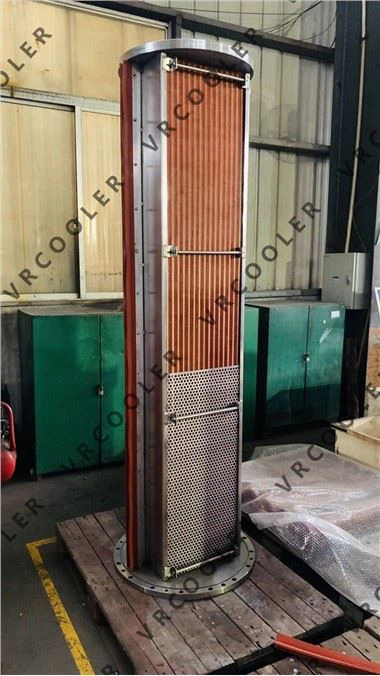
If you’re tired of dealing with coolant problems that keep your gas generator from performing at its best, let’s talk. We don’t do one-size-fits-all coolants—we work with you to figure out exactly what your unit needs, from thermal specs to environmental compliance, and deliver a coolant that checks every box. No more guesswork, no more wasted money on cheap coolants that don’t deliver. Hit us up to chat through your needs, we’re here to help your gas generator run longer, harder, and more reliably.
Waste Heat Recovery References:
- ASME Boiler and Pressure Vessel Code, Section II: Materials, 2023 Edition
- Gas Turbine World Handbook, 42nd Edition, 2024
- NACE International Standard TM0172-2022, Method for Laboratory Corrosion Testing of Metals in Cooling Systems
- ISO 9705:2018, Fire tests—Full-scale room test for surface products (relevant to coolant thermal stability under high-heat conditions)
- Cooling Technology Institute (CTI) Standard A108-2021, Measurement of Thermal Conductivity of Aqueous Coolants at Elevated Temperatures
Changzhou Vrcooler Refrigeration Co., Ltd.
Changzhou Vrcooler Refrigeration Co., Ltd. is one of the most professional gas generator cooling manufacturers and suppliers in China, specialized in providing high quality aftermarket service. Please rest assured to buy high-grade gas generator cooling for sale here from our factory. For price consultation, contact us.
Address: No. 18-69,Changwu Zhong Road, Wujin district, Changzhou, Jiangsu
E-mail: info@vrcooler.com
WebSite: https://www.vrcooler.com/
