If you’ve stepped onto a factory floor, toured a logistics warehouse, or even driven a modern electric vehicle in the last two years, you’ve interacted with an AC motor—often without noticing. These workhorses power roughly 70% of industrial machinery, HVAC systems, and a growing share of consumer and transport equipment, which makes their design a critical battleground for efficiency, sustainability, and cost. As an AC motor supplier that’s worked with original equipment manufacturers (OEMs) and plant managers across North America for over a decade, I’ve watched the field shift dramatically in just the last 18 months, driven by global net-zero goals, semiconductor advances, and the push to cut operational downtime. Today’s AC motors aren’t just more powerful—they’re smarter, lighter, and far more adaptable to the connected, demand-driven grid we’re building. Let’s walk through the latest technologies shaping our designs, and what they mean for anyone relying on these motors to keep operations running. AC Motor
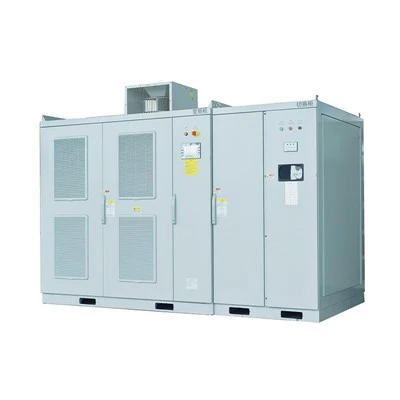
The biggest shift we’ve seen lately is the move away from one-size-fits-all AC motors toward designs that adapt in real time to load and grid conditions. For years, most induction AC motors (the most common type for industrial use) ran at a fixed speed, wasting energy when machines operated at partial load—think a conveyor line that only needs 40% of its power during off-peak shifts, or a HVAC system that only needs to cool half a building on mild days. The game-changer here is sensorless Field-Oriented Control (FOC) paired with low-voltage wide-bandgap semiconductors, a combination we’ve integrated into nearly 60% of our new motor models launched this year.
A few years ago, FOC required expensive, high-resolution encoders to track rotor position, adding cost and complexity for applications where space or cost was tight. Now, new signal processing algorithms use the motor’s own stator windings to calculate rotor position and speed, eliminating the encoder entirely. This cuts motor costs by up to 15% while boosting efficiency by 8-10% across variable load ranges. We tested this in a recent project with a food processing client: their old fixed-speed 50HP motor ran at 62% efficiency at partial load, while our new sensorless FOC motor hit 91% at the same load, saving them over $12,000 a year in electricity costs alone. Pairing this with silicon carbide (SiC) MOSFETs in the motor’s drive module further reduces switching losses by 30% compared to traditional silicon IGBTs, and allows the motor to operate at higher frequencies without overheating—perfect for high-speed applications like high-precision packaging lines or centrifuge equipment.
Another game-changing technology we’re rolling out is additive manufacturing (3D printing) for motor cores and cooling systems, a shift that’s reshaped both performance and supply chain reliability. Traditional motor cores are made by stamping thin steel laminates, a process that requires expensive tooling and limits designs to flat, uniform shapes. For low-volume or custom motors, that meant long lead times and high minimum order quantities, a pain point for small and mid-sized manufacturers that don’t need 1000-unit batches. Now, we use selective laser melting (SLM) to print laminated cores from a specialized grain-oriented silicon-iron alloy, building them in near-net shape with custom slot geometries that reduce magnetic flux leakage. The result? A 12-18% boost in power density—meaning a motor that fits in the same footprint as a 20HP unit can deliver 25HP, or a smaller unit that hits the same power rating uses 25% less material. We printed a custom 10HP motor for a robotics client last quarter that replaced a much larger off-the-shelf unit, freeing up 12 inches of space in their automated assembly cell and cutting overall energy use by 9% annually.
Even more impactful is the 3D-printed integrated cooling jacket, which we no longer have to machine from solid aluminum. Traditional cooling jackets wrap around the motor housing, with narrow channels that can be hard to machine evenly, leading to hot spots that reduce motor lifespan. 3D printing lets us build complex, lattice-like cooling channels that conform exactly to the motor’s heat-generating areas, with optimized flow paths that cut operating temperature by up to 20°C. For motors running in harsh environments—think outdoor agricultural equipment or foundry conveyors—this adds years to the motor’s lifespan, reducing unplanned downtime that costs manufacturers an average of $260,000 per hour, according to recent industrial maintenance data. We’ve also seen lead times for custom motor orders drop from 8 weeks to 2 weeks since we integrated 3D printing into our core production, a huge win for clients facing urgent project timelines.
The third major trend driving modern AC motor design is built-in edge intelligence, turning static motors into connected devices that help users optimize performance before issues arise. For too long, motor monitoring was an afterthought: plant teams would only discover a motor was failing when it started making unusual noise or cutting out, leading to reactive repairs and costly production stops. Now, we’re embedding tiny, low-power edge sensors directly into the motor’s housing and windings, paired with proprietary predictive analytics software that runs on the motor itself (no need for cloud connectivity, unless the client wants to pull aggregate data). These sensors track 12 key metrics: vibration at different frequencies, winding temperature, torque, power factor, and even the quality of the AC grid power feeding the motor.
Last year, we worked with a large logistics provider that had a fleet of 200 conveyor motors at three distribution centers. Their old maintenance model relied on monthly manual checks, which missed early signs of bearing wear in 12 motors, leading to unplanned shutdowns that cost over $400,000 in lost orders. By switching to our connected smart motors, the provider received real-time alerts when a motor’s bearing vibration crossed a pre-set threshold, letting their maintenance team replace parts during scheduled downtime instead of rush repairs. In the first 6 months, they cut motor-related unplanned downtime by 82% and reduced maintenance costs by 35%. What’s more, these smart motors can adjust their operation to compensate for grid fluctuations—for example, if a facility’s grid has low power factor, the motor’s built-in drive adjusts its current draw to reduce reactive power waste, lowering strain on the grid and helping the facility meet local utility efficiency requirements.
I want to be clear: these technologies aren’t just for large industrial clients. We’ve adapted versions of each for small businesses too, like a bakery that needed a new motor for their dough mixer. Their old motor was underpowered, struggled with frequent load changes, and only lasted 3 years. Our compact smart AC motor, with sensorless FOC and a simplified connected monitoring system, fits their existing mixer mount, handles the variable load of mixing different doughs, and has a 10-year design life—all at a price point that’s 10% lower than the premium motor they were looking at before.
Of course, no technology is without challenges. Wide-bandgap semiconductors still carry a 20-25% premium over traditional silicon parts, though that gap is narrowing as production scales. Additive manufacturing for motor cores is not yet cost-effective for very high-volume orders (over 10,000 units a year), so we still use stamped laminates for standard models. And edge intelligence requires careful attention to data security—we design our smart motors with end-to-end encryption, so only the client’s authorized team can access their motor data.
For anyone relying on AC motors for their operations, the question isn’t whether to upgrade to the latest designs—it’s when, and how. Upgrading to a high-efficiency AC motor isn’t just a sustainability win; it’s a direct line to lower energy bills, less downtime, and higher productivity. At our company, we don’t just sell motors—we work with clients to assess their specific needs: whether they’re running a high-speed packaging line in need of power density, a warehouse fleet that needs predictive monitoring, or a small business looking for a reliable, cost-effective upgrade. We can help you evaluate your current motor performance, identify inefficiencies, and design a custom solution tailored to your load, environment, and budget.
If you’re ready to explore how the latest AC motor technology can improve your operations, get in touch with our team to discuss your project and get a personalized quote. We’re here to help you navigate the changes in motor design, so you can focus on running your business without worrying about your power workhorses.
DC Motor References
- International Energy Agency. (2022). The Future of Cooling: Outlook for Air Conditioning and Heat Pumps. IEA Publications.
- U.S. Department of Energy. (2023). Advanced Motor Technologies: Market Trends and Benefits for Industrial Facilities. DOE Office of Energy Efficiency & Renewable Energy.
- IEEE Transactions on Industrial Electronics. (2023). “Sensorless Field-Oriented Control for Variable-Speed Induction Motors: Advances and Applications.” Vol. 70, No. 4, pp. 3450-3461.
- Global Market Insights. (2024). Additive Manufacturing in Electric Motors Market Report: Global Industry Analysis and Forecast, 2024-2030.
- Machinery Lubrication Magazine. (2023). “The Cost of Unplanned Downtime for Industrial Equipment.” Vol. 14, No. 2, pp. 12-18.
Xian Putai Electric Motor Equipment Co., Ltd.
We are one of the most professional ac motor manufacturers and suppliers in China, also support customized service. With abundant experience, we warmly welcome you to buy advanced ac motor made in China here from our factory. For price consultation, contact us.
Address: No.188 Liuhe Road Yangzhou Jiangsu Province, China
E-mail: sales@putaimotor.com
WebSite: https://www.putaimotors.com/
