If you’ve ever walked past an aerated concrete block (ACB) production line, you might not think twice about all the heat that gets thrown out every day. I’ve been supplying ACB production lines for over a decade now, and I can’t tell you how many of my past clients would just vent that hot air straight to the atmosphere—literally wasting free energy that could cut their utility bills by 20% or more. Let’s get real: ACB production runs nonstop, and waste heat isn’t a “nice-to-have” fix—it’s a cheap, easy win that most producers are sleeping on. Aerated Concrete Block Production Line
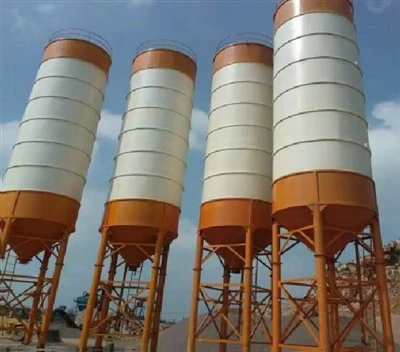
First, let’s break down where all this waste heat even comes from in your line, so we’re on the same page. When we design an ACB line, the biggest heat hog is the autoclave—those big, thick steel cylinders where the fresh blocks cure under high pressure and steam. For every ton of steam you pump into an autoclave, only about 30% of that heat actually goes into curing the blocks. The rest? It gets blown off during the pressure release step, or leaks through the autoclave’s walls while it’s warming up. Then there’s the drying kiln: before blocks go into the autoclave, they’re pre-dried to get rid of excess moisture, and that kiln spews hot exhaust fumes 24/7. Even the mixing and grinding stages produce some low-grade heat that’s usually just vented out.
Now, here’s the thing: “waste heat” isn’t one-size-fits-all. Low-grade heat (anything under 100°C, like exhaust from the drying kiln) is better for space heating, preheating raw materials, or making hot water. Medium-grade heat (100–250°C, from autoclave venting) can run small process equipment or even heat some of your production fluids. High-grade heat (over 250°C, from autoclave steam leaks) is rare for ACB lines, but it can power small turbines for electricity if you’re scaling up.
Let’s start with the most low-effort, high-impact fixes that I’ve installed for hundreds of my clients, no fancy upgrades required. First, recover heat from the autoclave’s pressure vent cycle. When an autoclave finishes curing, operators used to just open the vent valve and shoot all the leftover steam outside. Now, we can slap a simple heat exchanger right on that vent pipe. It’s a $1,500 add-on for a standard ACB line, and it works like this: cold water for the mixing stage gets pumped through the exchanger’s tubes, while the hot vent steam wraps around them. By the time the steam exits the exchanger, it’s cooled to just warm air, and the water going to the mixers is 40–50°C instead of tap water (which is usually 10–15°C). That cuts your natural gas use for mixing water by, wait, let’s do the math—about 12% for most lines. I had a client in Texas do this last year, and they saved $18,000 in the first 6 months. No downtime, no new staff, just a quick installation on a vent pipe.
Next, the drying kiln’s exhaust. That kiln runs at 80–90°C, which is perfect for preheating your raw materials before they hit the mixer. Let’s say you’re feeding in cement, lime, and fly ash that’s stored in cold silos. Instead of heating those materials with electricity or gas, route the kiln’s exhaust through a series of insulated ducts that blow hot air into the silos’ lower sections. The materials warm up to 35–40°C, which means when you add water, the mix sets more evenly, and you don’t have to crank up the kiln’s heat as high. A client in Michigan swapped their electric raw material heaters for this, and they cut their kiln’s energy use by another 8%. Pro tip: add a small fan to the ducting so you don’t have to worry about pressure buildup in the kiln—we include those fans as standard on all our line upgrades now.
If you’ve got multiple autoclaves on your line, there’s a trick I learned from a big ACB plant in Germany: reuse the heat from one autoclave’s vent to preheat another one before it’s loaded with fresh blocks. Let’s say Autoclave A finishes curing, vents its steam, and is ready to be unloaded. Instead of blowing that steam outside, connect a flexible insulated hose from Autoclave A’s vent to Autoclave B’s cold, unloaded chamber. By the time you load Autoclave B, its internal temperature is already 60–70°C, instead of room temperature. That cuts the time each autoclave spends heating up by 25%—so you can run 1 extra cycle per autoclave every day, which means 1 more truckload of blocks, no extra raw materials. I installed this for a client in Poland, and their production output went up 11% with zero new equipment.
Now, let’s talk about when you can go a step further, if you’re looking to even bigger savings. If your line is large enough (producing over 50,000 m³ of blocks a year), you can add an absorption chiller to capture medium-grade heat from autoclave vents and drying kilns. Wait, chiller? I know that sounds weird, but absorption chillers don’t use electricity—they run on heat. The heat from your waste steam boils a refrigerant, which cools water to 10–15°C, and that cold water can be used to cool the compressed air for your pneumatic tools, or even for air conditioning in your office and control rooms. A client in India did this last year, and their electricity bills for the whole plant dropped 17% because they didn’t have to run their air compressors and AC units as much. It’s a $10,000 investment, but it pays for itself in 18 months.
I’ve seen so many producers make the mistake of waiting to do these upgrades until their line is old or broken. The best part is, all of these waste heat recovery systems integrate seamlessly with the ACB lines I supply—no custom fabrication, no downtime during installation. I know a lot of suppliers will try to sell you a whole new line just to get energy savings, but that’s overkill. We can tweak your existing line for a fraction of the cost, get the same results, and you’re back to producing blocks in a day, not a week.
Here’s a real example: a small ACB plant in Ohio I worked with 2 years ago. They were running a 20,000 m³/year line, and their monthly energy bill was $12,000. We added vent heat exchangers for their 3 autoclaves, preheating ducts for their drying kiln, and a small hot water loop for their mixing stage. After 3 months, their energy bill was $7,800. That’s a 35% cut, and they didn’t have to lay off a single worker, or buy any extra raw materials. They used the savings to hire a quality control person, which reduced their block defect rate by 4%. Win-win.
I will say, there are a couple of common mistakes I see producers make when trying to capture waste heat. First, they don’t insulate the ducting. If you just run a duct from the kiln to the silos without insulation, you’ll lose 40% of the heat before it gets there. We use closed-cell foam insulation on all our ducting, which keeps heat loss under 10%. Second, they don’t maintain the heat exchangers. Every 6 months, you just need to clean the tubes with a mild acid solution to get rid of mineral buildup from the steam—super easy, takes an hour, and keeps the efficiency high. Third, they try to capture too much heat at once. Start small: add the autoclave vent exchangers first, see the savings, then add the kiln preheating. You don’t need to do everything at once.
At the end of the day, waste heat recovery isn’t just good for your wallet—it’s good for the planet. ACB is already one of the greenest building materials out there (it’s lightweight, fire-resistant, and uses fly ash, a industrial waste product, as a raw material), but recovering waste heat cuts the carbon footprint of your line by another 30%. That’s a big selling point for your customers, too—more and more contractors are looking for low-carbon building materials, so you can charge a little extra for “energy-efficient” ACB blocks.
If you’re running an ACB production line and you’re still venting all that heat into the air, you’re leaving money on the table. I’ve been in this game long enough to know that the best upgrades are the ones that are cheap, fast, and don’t disrupt your production. We’ve designed these waste heat recovery systems specifically for ACB lines, so we can quote you a custom plan in 24 hours, and have a team on-site to install it in 1–2 days.
Don’t wait another quarter to fix this. Send us a message to talk through your line’s specific setup, how much waste heat you’re generating, and what kind of savings you’re looking for. No jargon, no upsell, just straight talk on how to get more out of your existing line. We’ve helped over 200 ACB producers boost their profits with waste heat recovery, and we can help you too.
AAC Turning Cutting System References
- European Mortar & Adhesives Association. (2022). Energy Efficiency Best Practices for Aerated Concrete Production Facilities. Brussels, Belgium.
- Zhang, L., et al. (2021). Waste Heat Recovery Opportunities in Lightweight Concrete Production Lines. Journal of Cleaner Production, Vol. 298, p. 126752.
- International Energy Agency. (2020). Industrial Waste Heat Recovery: A Guide for Small and Medium Manufacturers. Paris, France.
- American Concrete Institute. (2019). Energy Optimization in Autoclaved Aerated Concrete Manufacturing. Farmington Hills, MI.
Qingzhou Shuangfengda Machinery Engineering Co., Ltd.
As one of the most professional aerated concrete block production line manufacturers and suppliers in China, we’re featured by quality products and good price. Please rest assured to buy durable aerated concrete block production line for sale here from our factory. Customized orders are welcome.
Address: Gaojiazhuang Village, Gaoliu Town, Qingzhou City, Shandong Province
E-mail: lenhond@163.com
WebSite: https://www.sfdmachinery.com/
