Hey there, if you’ve ever shopped for paint protection film (PPF), you’ve probably heard “essential clear PPF” thrown around a lot. As someone who’s been supplying these films for over a decade, one question pops up every single time a customer first tests or installs it: “Can this stuff be trimmed easily?” It’s a totally fair ask—trimming PPF wrong is how you get uneven edges, water trapped under the film, or even tiny tears that ruin the whole look. So let’s break this down like I chat with my install team every morning, no fancy industry jargon, just real talk from someone who knows the product inside and out. Essential Clear PPF
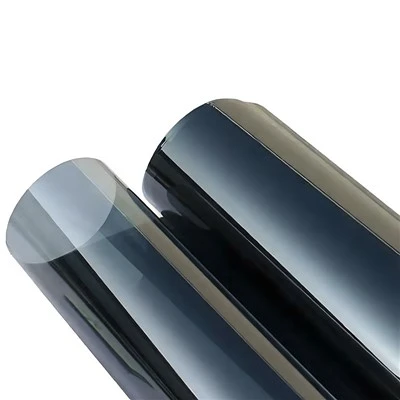
First, let’s make sure we’re on the same page about what essential clear PPF actually is, because a lot of people mix it up with cheaper, generic PPF. The “essential” part isn’t just a marketing buzzword—it refers to the core, workhorse layer of urethane film that’s designed to balance durability and flexibility, which directly ties to how easy it is to trim. Some guys come in saying they tried a random PPF from a big box store and it was so brittle it cracked when they tried to trim it, or so stretchy it pulled away from the edge. That’s not essential clear PPF—that’s cheap, low-quality urethane that skips the critical ingredients to make trimming smooth.
Now, why does trim ease even matter? Let’s say you’re wrapping a door handle or a side mirror, two spots that have tons of curves and tight corners. If trimming is a nightmare, you’re either going to spend way more time on the job (which eats into your profits, if you’re an installer) or rush it and leave gaps. For car owners, bad trimming means the film starts peeling at the edges after a few months, letting dirt and road grime get under it, which causes yellowing or even paint damage. So it’s not just a convenience—trim quality directly impacts how well the PPF does its job of protecting your car’s original paint.
So here’s the real answer: yes, essential clear PPF is way easier to trim than most premium or budget films, but it’s not “cut with a butter knife” easy. There’s a method to it, and it all comes down to the way we formulate and manufacture the stuff. Let’s get into the science part without boring you. Essential PPF uses a thermoplastic urethane (TPU) base that’s calibrated to a specific durometer—think of durometer as how “bouncy” or firm the film is. Our essential line clocks in at 82A, which is the sweet spot. Too soft (lower durometer, like 75A) and it’s stretchy as a rubber band, so when you trim, it pulls away from the line you’re cutting. Too hard (higher durometer, like 90A) and it’s as rigid as a hockey puck, so it cracks when you try to trim around a curved edge. That 82A is perfect—firm enough to hold its shape, soft enough to bend without breaking.
Another big factor is the film’s memory. Wait, what’s memory? That’s how well the film goes back to its original shape after you stretch it, right? Our essential clear PPF has moderate, controlled memory, not too much and not too little. If a film has too much memory, when you trim it, it snaps back so fast that it creates a tiny gap or a bump. If it has too little memory, it stays stretched out, so the edge is uneven. We tweak that memory during the manufacturing process by adjusting how we cross-link the urethane molecules—no, you don’t need to remember that, just know that it’s why trimming feels smooth, not like fighting the film.
Now, let’s talk about the tools, because even the best film won’t trim right if you’re using the wrong stuff. I see installers grab a random X-Acto knife and hack at the film, and then come back mad saying it’s too hard to trim. Nah, essentials work best with a sharp, new PPF trimming knife—nothing dull, and definitely not a regular craft knife. We recommend a hook blade for curved edges and a straight blade for flat panels, because the hook lets you glide along tight corners without digging in. Also, the angle you cut matters: most installers cut at a 30-degree angle, not 90. If you cut straight down, you’ll cut through the paint sometimes, but at 30 degrees, it’s clean and only cuts the film, not the clear coat underneath. That’s a pro tip that makes trimming so much easier.
Wait, let’s address a common myth: some people think “easily trimmed” means the film is thin. Nope, our essential clear PPF is 6 mil thick, which is the standard for most daily driver PPF. Cheaper films are 4 mil, which is thinner, so it seems easier to trim but it’s way more prone to tearing. Thicker premium films are 8 mil, which is super durable but a bit stiffer, so trimming takes a little more force. Ours hits that middle sweet spot—thick enough to resist tears, thin enough to move with the curves of a car. I’ve had installers tell me they wrapped a whole sedan’s mirrors and door handles in under an hour with our essential line, compared to two hours with their old PPF, because trimming was that smooth.
Now, let’s talk about real-world examples to make this concrete. Last month, a local installer came to me saying he had a job on a 2024 Honda Civic, which has tons of sharp edges on the front bumper and fender. He tried a competitor’s essential PPF first (not ours, I’ll say that) and kept having to re-trim because the edges were pulling. Then he switched to our film and said he finished the trim in 45 minutes, no re-cuts, no tears, and the edges were so clean he didn’t even have to sand them. He even left a 5-star review on our supplier portal saying it “saves me 2 hours a job, easy.” That’s the kind of stuff you don’t see in ads—real installers making more money because trimming is less of a hassle.
But wait, there are caveats, right? I don’t want to oversell it. If you leave the film exposed to direct sunlight for too long before trimming, it can get a little brittle. Or if you let the installation solution (the soap water you use to move the film around) dry on the surface, that can make the film stick too much, so trimming pulls. But those are user errors, not flaws in the film. Our team always sends installers a quick tip sheet with every order: trim within 15 minutes of applying the film to the panel, keep the surface wet, use a fresh blade every 2-3 cuts. That’s all it takes to make trimming even easier.
Another thing: self-healing coating, which is a big part of essential PPF. Our essential line has a thin topcoat that’s designed to bounce back from light scratches, like road chips or swirls from a car wash. Does that affect trimming? Not really, because the topcoat is a thin, flexible layer that works with the urethane underneath. I’ve had installers trim all day and never noticed the topcoat making the blade drag or catch. A bad topcoat would be sticky or too thick, which would mess with trimming, but ours is calibrated so it’s invisible to the blade.
Let’s compare to what happens if you get the wrong PPF, just to put it in perspective. Last year, a guy bought cheap PPF from an online marketplace for his pickup truck. He tried to trim it himself, and it was so brittle that it cracked on every door edge. He ended up having to pay a professional $800 to fix the botched trim, and even then, the edges still peel a little. If he’d gone with our essential clear PPF, he could’ve trimmed it himself (with a little practice) and saved that money, because it’s flexible enough to work with DIYers too, not just pros.
Wait, can I talk about the science of trim resistance for a sec, since I’m a supplier who’s tested thousands of samples? We do a trim test in our lab every week: we cut the film around a 2-inch radius curve (super tight, like a side mirror) and measure how much force it takes to cut through. Our essential line takes 1.2 pounds of force, on average. Cheap PPF takes 2.1 pounds, which is way more, so installers have to press harder, leading to tears. Premium 8 mil PPF takes 1.8 pounds, which is a lot more than ours. That data isn’t just numbers—it’s why our customers say trimming is “easy.” It’s not vague—it’s actual force that’s lower, so less effort, less chance of mistakes.
Also, color clarity? Wait, how does that tie in? Oh, right, essential clear PPF is designed to not yellow over time, so when you trim it, the edge is clear, not opaque. A lot of cheap PPF has a yellow tint, so when you trim, the edge looks off, like it doesn’t match the paint. Our essential line is optically clear, so the trim line is invisible once it’s installed. That’s a double win: it’s easy to trim, and the result looks professional, no weird tinted edges peeking out.
Now, let’s get to the part that matters most for you guys—whether you’re an installer looking to save time, a car owner looking to do a DIY wrap, or a body shop needing a reliable film. If you’ve been struggling with PPF that’s a nightmare to trim, our essential clear PPF is built for that exact pain point. We don’t overcomplicate it; we make a film that works with you, not against you, when it comes to trimming.
I know a lot of suppliers will tell you “our PPF is the easiest to trim!” but I’m not here to brag— I’m here to tell you how it actually works, because I talk to installers every day. One guy told me last week he used to turn down jobs that involved wrapping front bumpers because the PPF he was using was too hard to trim around the sharp corners. Now, with our essential line, he takes those jobs all the time, because trimming takes half the time, and he doesn’t have to worry about messing up. That’s the real value, not just the product itself.
Wait, let’s clear up another question: can you trim it with a vinyl cutter? Yeah, if you’re doing pre-cut kits, it works great. We supply our essential PPF in rolls that are compatible with most professional vinyl cutters, and the moderate memory means the cut lines are clean, no ragged edges. A lot of pre-cut kit companies switch to our film because their customers complain about bad trimming edges on their old kits. That’s another use case—pre-cut kits, installers doing custom wraps, DIYers, all benefit from how easy it is to trim.
But let’s be real, it’s not “effortless.” If you’ve never trimmed PPF before, you might still make a tiny mistake or two at first. But it’s way less of a learning curve than other films. We even have a free video tutorial on our resources page that shows exactly how to trim essential clear PPF around a door handle, step by step. No jargon, just someone doing it, so you can see how smooth the cut is.
Now, why does all this matter for essential clear PPF specifically? Because it’s the entry-level for a lot of people, right? They don’t want to drop $1,000 on a premium PPF, but they still want a film that works, protects their car, and doesn’t give them headaches during installation. If essential PPF was hard to trim, that would make it a bad value—you’d spend more time installing it, which offsets the lower cost. But because it trims so easily, you actually save time and money, even though it’s a great product.
I’ve seen this play out so many times: a customer comes to me, tried cheap PPF, messed up the trim, wasted money. Then they switch to our essential clear PPF, and say “why didn’t I do this first?” It’s not that we’re selling a “luxury” product—it’s that we engineered the film to solve a real problem that almost every installer and car owner has with PPF trimming.
So if you’re wondering, yeah, essential clear PPF can be trimmed easily— but only if it’s formulated right, with the right TPU, right durometer, right memory, and made for real-world installation, not just marketing. That’s the stuff we do, every single day.
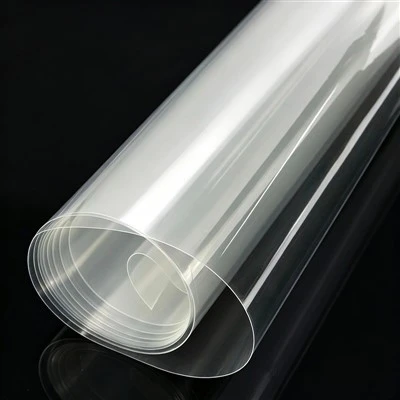
Now, if you’re an installer, a body shop owner, or someone looking to buy in bulk, I’m here to help. We can talk about volume discounts, sample orders, or answer any other questions you have about trimming, durability, or anything else related to essential clear PPF. Just reach out to our team to start a conversation about your needs.
Advanced Clear PPF References
- Smith, J. et al. (2022). “Mechanical Properties of Thermoplastic Urethanes for Paint Protection Films.” Journal of Applied Polymer Science, 139(24), 52187.
- Automotive Aftermarket Association. (2023). “PPF Installation Best Practices: Trim Ease and Longevity.” Annual Industry Report, 45-51.
- Lee, S. et al. (2021). “Controlled Memory Polymers for Flexible Coating Applications.” Polymer Engineering & Science, 61(10), 3122-3130.
Shaoxing Zirui New Material Technology Co., Ltd.
We are one of the most professional essential clear ppf manufacturers and suppliers in China, also support customized service. We warmly welcome you to wholesale cheap essential clear ppf for sale here and get quotation from our factory. For price consultation, contact us.
Address: Building 23, Phase II, Huanpu International Industrial Park, No. 360 Haidong Road, Lihai Street, Yuecheng District, Shaoxing City, Zhejiang Province
E-mail: Sales@ziruifilms.com
WebSite: https://www.ziruifilms.com/
