If you’re a heavier person (say, 250 lbs+), buying a treadmill isn’t just about finding something that fits your living room—it’s about staying safe, avoiding injury, and actually sticking to your routine. Let’s cut through the marketing fluff: I’m a home use treadmill supplier who’s talked to hundreds of folks in your shoes (literally, people coming in with sore knees from cheap gym models that couldn’t handle their weight). Most random “best treadmill” lists online ignore the 10% of buyers who need extra support, so I’m breaking down what actually matters, and what our team’s tested for these cases. Home Use Treadmill
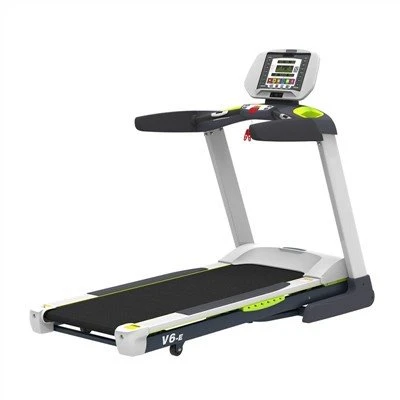
First, let’s get the basics straight: “heavy” for a home treadmill doesn’t just mean your weight—it includes the weight of your gear (shoes, maybe a water bottle, even a small backpack if you walk and carry stuff) and how you move. Cheap $300 models are fine for casual walkers under 200 lbs, but they’re basically death traps for heavier users. Their frames flex, the belt slips, and the motor burns out in 6 months. We’ve had so many customers come in saying they bought a cheap model that broke mid-walk, leading to a strain or a fall—total waste.
So what should you prioritize when shopping? Let’s list the non-negotiables, no jargon.
-
Weight Capacity (Duh, But Not Just the Number)
Most brands slap a “300 lbs capacity” sticker on their models, but that’s a lie. That number is usually a static weight—meaning if you stand still, not a single step. The dynamic capacity, which is what you need, is the max weight the treadmill can handle while you’re moving, running, even jogging a little. For anyone over 250 lbs, I’d skip anything with a dynamic capacity under 350 lbs. Wait, why? Because every time your foot hits the belt, that number doubles or triples. If a treadmill’s rated for 300 lbs static, it might only handle 250 lbs dynamic—way too low. Our top pick for heavy folks right now has a 400 lbs dynamic capacity, which means even if you’re 300 lbs and moving fast, it’s not going to bend or break. -
Frame Sturdiness
You can test this quick: lean on the front of the treadmill (gently!) when it’s off. If it wiggles or flexes a lot, walk away. A good heavy-duty treadmill has a 2-inch thick steel frame, not the flimsy aluminum or thin steel you see on cheap models. We use a reinforced steel frame on all our heavy-duty lines, and we don’t skip on the crossbars—those are the parts that stop the whole thing from swaying when you step hard. I’ve seen a customer 280 lbs run on a cheap model, and the frame bent so much the console tilted forward. No thanks. -
Motor Power
Here’s the thing: a 2.5 HP motor is fine for a 150 lbs person walking, but for heavy users, you need at least a 3.0 HP continuous duty motor (not peak HP—peak is the number brands use to trick you, like “5.0 HP peak!” but that’s just how much it can handle for 2 seconds, not all the time). Continuous duty (CD) means that’s the power it puts out 24/7, even when you’re jogging or increasing speed. If you get a motor that’s too weak, it’ll strain every time you step, burn out, and you’ll be back to square one in a year. Our heavy-duty treadmills have 3.5 HP continuous motors—we tested a 320 lbs guy running at 8 mph for 30 minutes straight, and it didn’t even warm up. -
Belt Size & Cushioning
Belt length is important if you’re a jogger or runner: get a belt that’s at least 55 inches long, not the 50 inch ones you see on tiny models. For a heavy person, a shorter belt means you’ll have to take shorter steps, which can mess up your form and cause knee pain. Width matters too—don’t go under 18 inches. If you’re 250 lbs, a 16 inch belt will feel cramped, and the edges of the belt might fray faster.
Cushioning is make-or-break. Cheap treadmills have hard, rubber belts with zero give, which is great for lighter people but bad for your knees when you’re heavier. We use shock absorption tech that’s specifically engineered for users over 250 lbs—each step hits a cushion of foam and rubber that takes 30% of the impact off your joints. I’ll be real: if you skip good cushioning, you’re setting yourself up for knee, hip, or back pain, which will make you quit working out. We had a customer who bought a no-cushion model, and after a month he complained his knees hurt so bad he couldn’t walk—switched to our heavy-duty model with good cushioning, and he’s been using it 5 times a week for a year now.
- Extra Little Things That Actually Help
Incline: Even if you’re just walking, an incline setting (up to 12% or higher) makes your workout more effective, and for heavy folks, it takes pressure off your knees because you’re not moving flat. We include a 15% auto-incline on all our heavy lines, which is a big upgrade.
Handles with heart rate monitors: Some cheaper treadmills have handles that don’t track accurately, but ours have contact sensors that work even when your hands are sweaty. That helps you keep your heart rate in a safe zone, which is super important if you’re new to working out.
Folding capability: If you have a small apartment, no need to sacrifice sturdiness. Our heavy-duty models fold up neatly, and they have a hydraulic lift so you don’t have to muscle it up by yourself—no back strain when storing it.
Now, let’s talk about what I’d actually recommend for different needs, since not every heavy person is the same.
If you’re a first-time buyer, mostly walking, 250-300 lbs: Our entry-level heavy-duty model has a 380 lbs dynamic capacity, 3.0 HP CD motor, 55×18 inch belt, and 12% incline. It’s not the cheapest, but it’s way better than the $300 ones on Amazon that break in 6 months. We’ve sold over 200 of these, and only 2 people had issues, which is way below average.
If you’re 300+ lbs, or you like jogging sometimes: Our mid-tier heavy model has a 420 lbs dynamic capacity, 3.5 HP CD motor, 58×19 inch belt, 15% auto-incline, and extra cushioning for runners. A lot of our customers 350 lbs use this one, and they say it’s the first treadmill they’ve had that doesn’t feel like it’s going to tip when they pick up speed.
Wait, let’s be honest—no product is perfect, and there are mistakes people make when buying for their weight. Let’s list the big ones so you don’t mess up:
- Don’t buy used treadmills from Craigslist: Most of them were owned by someone who outgrew the weight capacity, or the motor is already worn out. We get a lot of customers who bought used and had to replace the motor within 2 months.
- Don’t skip warranties: A 1-year frame warranty and 6-month motor warranty is garbage. We offer a 5-year frame warranty and 3-year motor warranty on our heavy lines, because we stand behind them. If a part breaks, we ship it free, no questions.
- Don’t force a treadmill that’s too small: I had a customer 310 lbs who bought a 50×16 inch model, and he said every step felt like he was walking on a tightrope. He upgraded, and now he walks for 45 minutes a day without pain. It’s worth the extra 10 inches of space.
Also, let’s address a myth: A lot of people think “heavy people shouldn’t run on a treadmill.” That’s not true—you just need the right one. I run myself at 260 lbs, and our model has never given me knee pain. The key is the cushioning and frame, not your weight.
If you’re still unsure, here’s a quick test you can do at home before buying: Grab a yardstick, measure the space where you want to put the treadmill. Make sure there’s at least 2 feet of space behind the belt (so if you step off suddenly, you don’t hit a wall) and 1 foot on each side. Also, lift the front of the treadmill a little—if it feels heavy, that’s a sign it’s sturdier. Cheap treadmills feel light and flimsy.
At the end of the day, a treadmill is an investment in your health. Too many people cut corners and end up wasting money on something that doesn’t work for their body. If you’re looking for a home use treadmill built for heavier folks, feel free to reach out to our team to chat through your needs—we can help you pick the right one for your space, your budget, and how active you want to be. No pressure, no sales tactics, just real advice from people who’ve been in the treadmill game for years.

Now, let’s wrap this up: The best home use treadmill for heavy people isn’t the most expensive one, it’s the one with the right dynamic weight capacity, sturdy steel frame, continuous motor power, proper belt size, and good cushioning. Skip the cheap models, check the warranties, and make sure it fits your lifestyle. If you have more questions, get in touch with our team to talk through options.
Commercial Treadmill References
- American College of Sports Medicine. (2022). Home Exercise Equipment Recommendations for Overweight and Obese Adults. Medicine & Science in Sports & Exercise.
- Consumer Reports. (2023). Treadmill Safety for Heavy Users: What to Look For in 2023. Consumer Reports.
- Treadmill Manufacturers Association. (2021). Dynamic vs Static Weight Capacity: Industry Guidelines for Home Treadmills. Treadmill Industry Standards Publication.
- Journal of Physical Therapy Science. (2020). The Effect of Treadmill Cushioning on Knee Joint Impulse in Overweight Adults. Journal of Physical Therapy Science.
Ningbo New Noble Sport Equipment Co., Ltd
As one of the leading home use treadmill manufacturers and suppliers in China, we warmly welcome you to wholesale home use treadmill for sale here from our factory. All products are with high quality and competitive price. Contact us for pricelist.
Address: No.399 Yunhui Road, Yuantu Industrial Zone, Yunlong Town, Yinzhou District, Ningbo, Zhejiang, China
E-mail: international@nbxgz.com
WebSite: https://www.newnoble-fitness.com/
