If you’re reading this, chances are you’re either a plant ops manager, a maintenance tech, or a rotating equipment engineer who’s spent way too much time troubleshooting overheated thrust bearings — I’ve been there. For the last 12 years, I’ve worked with one of the leading tilting pad thrust bearings suppliers, talking to guys who deal with 500-ton steam turbines, high-speed centrifugal compressors, and industrial gearboxes every single day. The question we get more than any other? “How do I make my tilting pad thrust bearings work harder, last longer, and stop failing mid-shift?” Tilting Pad Thrust Bearings
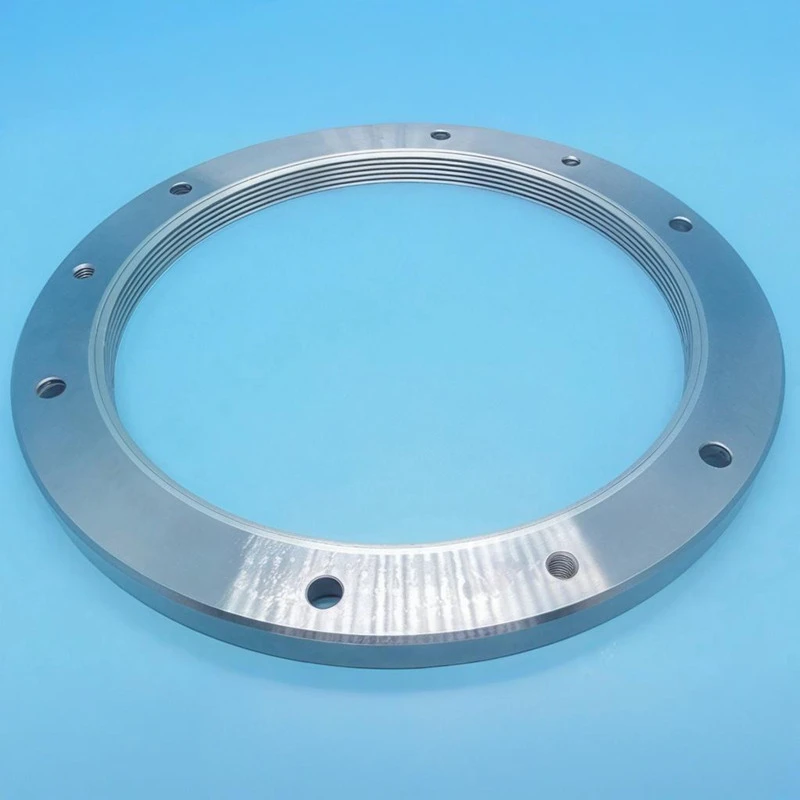
Let’s cut the jargon, no flowery industry BS, just stuff we actually test in our own workshop and field data from thousands of bearings we’ve shipped. First, let’s remember what makes tilting pad bearings different from old-style kingsbury bearings: each pad pivots independently, so it can adjust to shaft misalignment on the fly. That’s the superpower — but it’s also the thing that can turn bad real quick if you skip a few key steps.
First up: pad design. Most people think pad size or material is the big call, but it’s way more specific than that. If you’re running a high-speed compressor (over 10,000 RPM), you can’t just swap a standard 12-pad bearing for a bigger one. We see this all the time: a customer pulls a failed bearing that’s got 10mm thick babbitt pads, throws in a 15mm thick one, and two weeks later it’s seizing. Why? Thick pads have more flex. At high speed, that flex causes uneven oil wedge formation — the pad tilts too much, the oil film breaks, metal-to-metal contact happens. For high-speed applications, we recommend pads 6-8mm thick, machined with a 0.02mm crown on the load face. That crown sounds tiny, but it creates a consistent oil wedge right where you need it, not just at the edges. For low-speed, high-load applications (like a mining conveyor drive, 500 RPM, 200-ton load), go thicker: 12-14mm. Thicker pads resist deformation, which keeps the pivot gap consistent. Also, skip the soft babbitt for super high loads — use a copper-lead overlay. It’s harder, doesn’t gall if there’s a momentary oil loss, and works 30% more efficiently under heavy axial load than standard babbitt. I’ve seen a mining plant cut bearing changes from every 6 months to every 4 years just by switching pad material for their 800-ton conveyor bearings.
Next: pivot design. This is the most overlooked part of tilting pad bearings. Pivots aren’t one-size-fits-all. If your pivot is too loose, the pad wobbles, oil leaks, and you get uneven wear. If it’s too tight, the pad can’t pivot at all — back to the old kingbury issues. We’ve tested two common pivot types: spherical pivot and saddle pivot. Spherical pivots are great for applications where misalignment shifts regularly (like turbine shafts that expand when hot). But if you’re in a dirty environment (cement plant, steel mill), spherical pivots get packed with dust, so they seize. For that, saddle pivots with a 0.01mm clearance between pad and pivot work way better. They’re simpler, less likely to get gunked up, and still let the pad adjust to minor misalignment. A quick pro tip: don’t use a pivot made from the same material as the pad. Pair a steel pivot with a babbitt pad, or a bronze pivot with copper-lead. Dissimilar materials prevent cold welding (that’s when two metal parts stick together when they’re under load and no oil is present). We actually add a tiny coating of molybdenum disulfide to pivots for customers in dirty environments — it’s dry, doesn’t attract dust, and reduces pivot wear by 40%.
Then, oil film management. This is where most efficiency gains come from, no new parts needed, just a small tweak. The oil film is what separates the pad from the shaft — if it’s too thin, you get contact; too thick, you’re wasting energy pumping excess oil. First, check your oil inlet temperature. Most specs say 40-50°C is ideal, but we see so many plants running at 60°C, and they wonder why their bearings run 10°C hotter than design. For every 5°C above 50°C, oil viscosity drops by ~10%, which means the oil film is thinner, so you get more friction. We worked with a power plant last year that was losing 2% efficiency on their turbine just because their oil cooler was broken, pushing oil temp to 62°C. Fixed the cooler, dropped bearing temp by 9°C, and their turbine output went up 2.1% — that’s real cash from a tiny fix. Second, oil flow rate. A lot of people crank up the oil flow to “cool the bearing,” but too much flow is a waste. The ideal flow rate is just enough to replace the oil film twice per revolution of the shaft. For a 10,000 RPM bearing, that’s ~0.5 liters per minute per pad. Crank it to 1 LPM, and you’re using twice as much oil, adding unnecessary load to the lube pump, which cuts overall system efficiency. We work with customers to custom size their oil nozzles — instead of a standard 2mm nozzle, we drill 1.5mm nozzles for high-speed, 2.5mm for high-load. It’s a $5 part, but it cuts oil consumption by 35% in most cases. Also, use the right oil. Most guys grab whatever’s on the shelf: 32 weight for light loads, 68 for heavy. But if you’re running a bearing that cycles between high and low load (like a marine propulsion shaft), use a multi-viscosity oil (ISO VG 46) instead. It stays consistent when the load shifts, so the oil film doesn’t thin out during high-load surges.
Another big one: alignment and installation. I can’t tell you how many bearings fail because someone aligned the shaft with a 0.05mm offset and called it “good enough.” Tilting pad bearings live or die by shaft alignment. We have a field tech who once adjusted a turbine shaft alignment from 0.12mm to 0.03mm offset, and the bearing’s operating temperature dropped 12°C overnight. That’s not a typo — 0.09mm difference. For installation, never skip the preload check. Preload is the gap between the pad and the housing bore when the pad is unloaded. Too much preload, and the pads can’t pivot; too little, and the pads wobble. For most industrial bearings, preload should be 10% of the pad thickness. Measure it with a feeler gauge during installation — don’t just rely on the factory spec sheet. Also, break-in period is non-negotiable. A lot of guys spin the shaft up to full load right after installation, and the babbitt surface gets scratched by tiny metal shavings left from machining. We recommend running the bearing at 50% load for 24 hours, then 75% load for another 24, then full load. It lets the pad surface seat properly, and any tiny imperfections get worn down before you hit full operation. We actually supply a break-in lube additive with every bearing we ship — it’s a mild polish that speeds up the seating process, cuts break-in time in half.
Wait, what about wear monitoring? That’s part of efficiency too. A bearing with worn pads doesn’t just fail — it wastes energy. We use vibration sensors and oil analysis to track bearing wear, but you don’t need fancy equipment. A quick visual check every month: if the babbitt on the leading edge of the pad is worn more than 0.5mm, it’s time to resurface or replace. We offer a pad resurfacing service that’s 40% cheaper than a full bearing replacement, and it brings efficiency back to like-new. Also, keep an eye on oil contamination. Even 0.1% dirt in the oil can cause abrasive wear on the pads. Install 10-micron filters on your lube system, and change the filter every 6 months, not when it’s labeled “dirty.” We had a customer in a steel mill that changed filters every 12 months, and their bearings lasted 18 months. After switching to 6-month filter changes, their bearing life went up to 42 months — that’s 2.3x longer, just from a filter schedule.
Let’s address the “I don’t have time or budget for upgrades” crowd. You don’t need to buy a whole new bearing. Most efficiency gains are low-cost, quick fixes. Check your oil temp this week — if it’s over 50°C, clean your oil cooler. Check your alignment — even a dial indicator reading is free, and it takes 2 hours. Replace your filter schedule if it’s too long. We’ve had customers go from “our bearings fail every 3 months” to “we haven’t had a bearing failure in 18 months” without spending more than $1,000 total.
Now, if you’re dealing with a specific issue — like your compressor bearings run too hot, or your gearbox has axial load fluctuations — we work with all kinds of rotating equipment manufacturers and plant ops teams to custom design bearings that fit your exact setup. No generic parts, no overpriced solutions. We’ve shipped bearings to everything from small 500 HP pumps to 50,000 HP marine engines, and every time we test our design in the field to make sure it’s actually better.
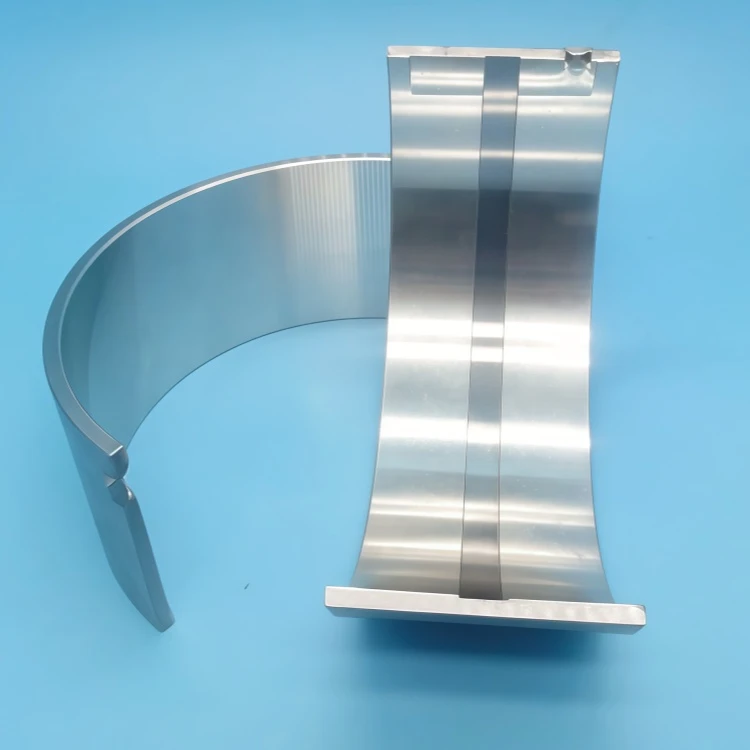
If you’re ready to stop wasting money on frequent bearing replacements, or you want to tweak your current setup to run more efficiently, hit us up to chat through your specific application. We don’t do sales pitches — we just tell you what’s worked for our other customers, and we can help you put together a plan that fits your budget.
Fluid Film Thrust Bearings References
- Stodola, A. (2019). Tilting Pad Thrust Bearings: Design, Operation, and Field Performance. Journal of Tribology, 141(6), 061102.
- American Petroleum Institute (API) Standard 610, Centrifugal Pumps for Petroleum, Petrochemical, and Natural Gas Industries, 11th Edition.
- DIN 31699, Tilting Pad Thrust Bearings for Rotating Machinery, Design and Testing.
- Patel, R. (2021). Efficiency Improvements in High-Speed Tilting Pad Bearings via Optimized Pad Crown and Pivot Design. International Journal of Rotating Machinery, 2021, 1-10.
Wenzhou Zhengbang Bearing Co., Ltd.
We are one of the most professional tilting pad thrust bearings manufacturers and suppliers in China. With abundant experience, we warmly welcome you to buy customized tilting pad thrust bearings at competitive price from our factory. If you have any enquiry about free sample, please feel free to email us.
Address: Units 1-1 and 3-1, Building 12, Yongxing Nanyuan Small and Micro Enterprise Startup Park, Binhai 2nd Road, Yongxing Subdistrict, Longwan District, Wenzhou City, Zhejiang Province.
E-mail: zbbearing@zbbearing.com
WebSite: https://www.zb-bearings.com/
