If you’re a facility manager, construction foreman, or anyone who relies on diesel generators for backup power or off-grid operations, you know how critical stable output voltage is. A voltage that’s too high can fry sensitive electronics—think hospital monitors, construction tools, or office servers—while voltage that’s too low will leave your equipment underperforming or shutting down entirely. As a diesel generator supplier with over a decade of hands-on experience working with clients across industries, I’ve seen first-hand how improper voltage adjustment leads to costly downtime, equipment damage, and even safety hazards. That’s why today, I’m breaking down how to safely and effectively adjust your diesel generator’s output voltage, along with common mistakes to avoid, to keep your power running as it should. Diesel Generator
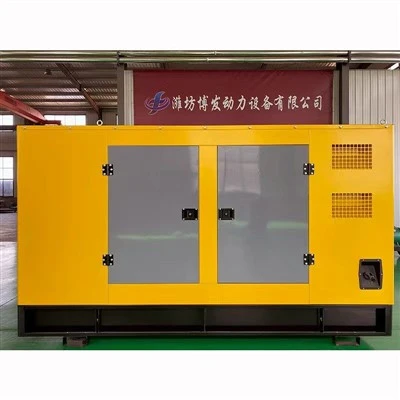
First, let’s get clear on the basics: what is the output voltage of a diesel generator, and why does it shift in the first place? Unlike grid power, which is regulated by utility companies, diesel generators rely on a combination of mechanical and electrical components to produce voltage. The two core parts here are the alternator (or generator head, which converts mechanical energy from the engine into electricity) and the voltage regulator (the electronic or electromechanical component that keeps output consistent). Voltage can shift for lots of reasons: fluctuating engine speed (from variable loads, like starting a heavy compressor one minute and running a few lights the next), worn alternator brushes, a faulty regulator, or even changes in ambient temperature or altitude. For example, a generator running at 5,000 feet above sea level produces about 3-5% less power than at sea level, so its voltage needs a small tweak to compensate. That’s why adjustment isn’t a one-time setup task—it’s something you should check regularly, especially if you’re switching between different load types or operating environments.
Before you start adjusting anything, safety is non-negotiable. I can’t stress this enough: diesel generators are heavy, high-voltage equipment, and cutting corners here can lead to serious injury or death. First, make sure the generator is turned off and disconnected from all loads (no devices plugged in, no tie-in to the main electrical grid) to avoid backfeeding. Backfeeding happens when generator power flows back into the grid, which is a deadly risk for utility workers working on power lines. Next, give the generator at least 10-15 minutes to cool down if it’s been running recently—parts like the alternator housing can get hot enough to cause burns. Finally, wear proper personal protective equipment: insulated gloves, safety glasses, and non-slip work boots. If you’re not comfortable working with electrical components at all, hire a certified electrician or your generator’s manufacturer technician—this isn’t a task for DIYers who skip safety steps.
Now, the step-by-step process for adjusting voltage. First, you need to locate your generator’s voltage regulator. On most modern diesel generators, the regulator is a small metal box, usually mounted on the alternator housing (it’s often labeled “AVR” for Automatic Voltage Regulator, which is standard for models made in the last 20 years). Older generators might have a manual voltage regulator, which is a simpler device with a small adjustment screw instead of electronic controls. Let’s split this into two scenarios: adjusting an automatic voltage regulator (AVR) (the most common type now) and a manual regulator.
For AVR adjustments, first confirm the correct target voltage for your generator. Most 120V generators run at 120V ± 2%, and 240V units run at 240V ± 2%, but always check your generator’s manual or the label on the alternator to confirm—some specialty models (like those for marine use or heavy industrial loads) have slightly different targets. Next, start the generator and let it run at full idle speed (most modern gensets run at 1,800 RPM for 60Hz power, 1,500 RPM for 50Hz—again, confirm your specs). Use a multimeter to measure the output voltage: plug the multimeter’s leads into the generator’s output terminals (the labeled “L1” and “L2” for single-phase, or “L1, L2, L3” for three-phase, neutral as ground) and set it to AC voltage. A stable reading here is your baseline. Now, locate the small adjustment screw on the AVR (it’s usually marked with a “V” or “Adjust,” and is small enough that you’ll need a flathead screwdriver that fits—never use a slotted screwdriver that’s too big, as you can strip the screw). Turning the screw clockwise increases the output voltage, and turning it counterclockwise decreases it. Make tiny adjustments: a quarter-turn at a time, then wait 30 seconds for the voltage to stabilize, then re-measure. Repeat until the multimeter reads your target voltage. For three-phase generators, you’ll want to check all three phases—each should be within 1V of each other, so you may need to adjust slightly for the one that’s off.
For manual voltage regulators, the process is a bit different. Manual regulators don’t have electronics to adjust, so you’ll be tweaking the excitation current sent to the alternator. First, confirm your target voltage as before, start and idle the generator, and measure output voltage with a multimeter. The adjustment screw here is also on the regulator, but it’s often larger than an AVR screw, and may be covered by a small plastic cap you’ll need to remove. Again, turn clockwise to raise voltage, counterclockwise to lower—make the same small, incremental adjustments, rechecking after each, to avoid overshooting. One note: manual regulators are less precise than AVRs, so you may need to adjust more frequently as loads change, and they’re more prone to voltage spikes if you’re not careful.
Now, common mistakes that lead to bad voltage adjustment—mistakes I’ve seen customers make again and again, often because they skip the basics. First, adjusting the engine speed instead of the voltage regulator. It’s easy to think “if the generator is running slow, speeding it up will fix voltage,” but modern generators are calibrated to run at a specific RPM for power frequency (60Hz or 50Hz). Changing RPM to adjust voltage will throw off frequency, which can damage equipment even if voltage is correct. For example, a tool designed for 60Hz will run too fast and burn out if the generator is running at 65Hz. Second, not disconnecting all loads before adjusting. If you have a load plugged in when you tweak the regulator, the voltage reading will be inaccurate, because the load is drawing power and skewing the multimeter’s reading. That leads to you adjusting to the wrong voltage, which causes problems later. Third, making too big of an adjustment at once. Turning the regulator screw a full turn might sound fast, but that can change voltage by 10-15%, which is enough to damage electronics. Small, quarter-turn increments are the right way to go. Fourth, forgetting to check all phases for three-phase generators. I had a client last year who adjusted his three-phase generator’s voltage based only on L1, then found L2 and L3 were 5V off, which caused his industrial compressors to cycle constantly, leading to 8 hours of downtime until he fixed it.
There’s also the question of when to adjust voltage, versus when to call for service. Most of the time, small voltage shifts are fixed with a regulator adjustment, but if you’re needing to adjust the voltage every few weeks, or if voltage is fluctuating wildly even after you tweak the regulator, that’s a sign of a bigger problem. Common issues include worn alternator brushes, a faulty voltage regulator (AVRs last 5-10 years, so if your generator is older, it may need a replacement), or engine issues like a clogged fuel filter that’s causing inconsistent RPM. As a generator supplier, I tell clients: if adjustments don’t fix the issue, don’t keep tweaking—call a technician, because you could end up damaging your generator or connected equipment.
Another tip for long-term voltage stability: use a load bank periodically. A load bank is a device that simulates electrical loads, letting you test your generator under full capacity without connecting to actual equipment. Running a load bank test every 6-12 months, depending on how often you use your generator, helps you catch voltage inconsistencies before they cause problems. It also gives you a baseline for your generator’s performance, so you can spot shifts early.

At the end of the day, proper voltage adjustment is a mix of following the steps carefully, prioritizing safety, and knowing when to call for help. As someone who’s worked with diesel generators for years, I can tell you that a well-regulated generator not only avoids downtime—it also extends the life of your equipment, from your office’s servers to your construction’s heavy machinery. If you’re still unsure about adjusting your generator’s voltage, or if you’ve tried adjustments and are still having issues, don’t hesitate to reach out to our team. We can help you walk through the process, recommend service if needed, or answer any questions you have about maintaining your generator’s performance. We’re here to make sure your power runs smoothly, no matter the load or environment.
Diesel Generator References:
- Diesel Equipment Manufacturers Association. (2021). Operation and Maintenance of Portable and Stationary Diesel Generators. North America: DEMA Publications.
- International Electrotechnical Commission. (2018). IEC 60034-1: Rotating Electrical Machines – Rating and Performance. Geneva, Switzerland: IEC Press.
- Occupational Safety and Health Administration. (2020). Safety Guidelines for Diesel Generator Installation and Maintenance. Washington, D.C.: U.S. Department of Labor.
- Cummins Power Generation. (2022). AVR Adjustment and Troubleshooting Guide for Diesel Generators. Minneapolis, MN: Cummins Inc.
- The Generator Supply Association. (2023). Best Practices for Voltage Regulation in Off-Grid Power Systems. Dallas, TX: GSA Publications.
Weifang Bofa Power Equipment Co., Ltd.
We’re well-known as one of the best diesel generator suppliers in China. With a professional production team, we are able to meet the needs of the majority of our customers. Please feel free to buy cheap diesel generator for sale here from our factory. For price consultation, contact us.
Address: Lianhuachi Village, Fangcheng Street Office, Fangzi District, Weifang City, Shandong Province.
E-mail: sales@wfbofapower.com
WebSite: https://www.wfbfgenset.com/
