If you’ve ever spent time around heavy off-road vehicles, vintage race cars, or even a custom-built truck bouncing over the desert, you’ve probably glanced under the chassis and noticed a long, slender metal bar connecting the differential housing to the frame. That’s a Panhard rod, and while it might look like a simple, unassuming part, it’s the unsung hero keeping your axles from sliding side to side—especially when conditions go from bad to worse. As a supplier that’s been engineering and manufacturing Panhard rods for over two decades, I’ve seen firsthand how this part holds up when the stakes get high, and today I want to break down exactly how it operates under the extreme conditions that turn ordinary parts into breakage. Panhard Rod
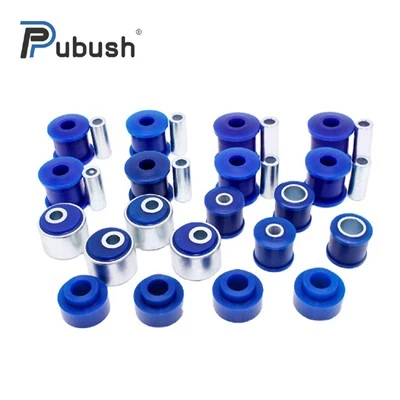
First, let’s get the basics right for anyone who might not be deep in chassis geometry yet. A Panhard rod is a lateral control device, plain and simple. Unlike a four-link setup that uses two upper and two lower arms to control both fore-aft and side-to-side movement, the Panhard rod only handles side-to-side (lateral) axis control. It’s mounted with two pivot points: one on the differential or rear axle housing, and one on the main vehicle frame, typically near the front of the axle’s travel path. The rod itself is rigid—most often made of high-strength steel, though we also supply alloy variants for high-stress race applications—and pivots at both ends via heim joints (rod ends) or rubber bushings, designed to let the rod swing through a small arc as the axle moves up and down over bumps. In ideal, on-road conditions, it’s doing a steady job of keeping the axle centered under the vehicle, preventing the kind of side-to-side wander that makes a truck feel unstable at highway speeds. But push that system to extremes, and its operation gets a lot more dynamic.
Let’s start with one of the harshest environments I’ve tested Panhard rods in: rock crawling. If you’ve ever watched a vehicle climb a 40-degree incline with one wheel three feet in the air, you know that the axle isn’t sitting straight under the frame anymore. When a wheel lifts, the axle housing twists, and the distance between the frame’s pivot point and the axle’s pivot point changes slightly. The Panhard rod’s job here is to resist that lateral shift, but it’s not just pulling straight. When the axle angles off-center, the rod operates at an angle too—this creates side loads on the rod’s pivot points that are way higher than anything you’d see on pavement. On loose rock or jagged ledges, those loads spike suddenly, in sharp, jarring impacts that don’t give the rod time to settle. We’ve tested OEM-style Panhard rods from budget manufacturers in this scenario, and most start to show play in their heim joints or bushings within a few hours of hard crawling. That play translates directly to axle drift: the axle can shift side to side, throwing off wheel alignment, wearing tires unevenly, and even causing the vehicle to twist off its axis mid-climb.
What makes our Panhard rods different (and why I know they perform here) is how we engineer for those dynamic angles. When we design a rod for rock crawling or ultra4 racing, we calculate the maximum lateral deflection the axle will experience at full suspension droop and full compression, then add a 30% safety margin to the rod’s length and pivot point placement. We also spec spherical steel heim joints with PTFE liners instead of plastic or rubber bushings, because rubber bushings flex too much under repeated high-impact loads, allowing unwanted lateral movement. In our in-house dyno testing, a standard off-the-shelf Panhard rod can handle about 1,200 pounds of steady lateral load before its pivots start to wear. Our extreme-duty variants handle over 2,800 pounds of load, with zero measurable play after 10,000 cycles of full deflection and impact. That’s the difference between a part that works for a weekend trail run and one that can survive weeks of competition in brutal conditions.
Next, let’s talk about another extreme: high-speed desert racing. When you’re doing 120 miles an hour across whoops—those massive, repeated ruts that send the axle bouncing up and down 10 feet at a time—the Panhard rod is working nonstop to keep the axle centered, but it’s also fighting centrifugal force, abrupt direction changes, and the constant vibration of a vehicle skimming over desert rock and sand. Under these conditions, the rod doesn’t just face occasional sharp impacts; it’s under a near-constant cyclic load that can cause metal fatigue over time. I’ve seen too many race teams run stock Panhard rods and have them snap mid-race, usually after a few hundred miles of bouncing across the desert. The failure point is almost always the weld at the axle mount, where stress concentrates as the rod pivots rapidly thousands of times per minute.
To solve this, we redesigned our race Panhard rods with a one-piece forged steel main body instead of a welded steel tube. Forging creates a grain structure in the metal that’s aligned to handle the exact stress points the rod will see, so it’s far less likely to crack under cyclic load. We also add gussets at both pivot mounts to distribute stress evenly across the entire rod, not just at the weld or mounting point. In 2022, we supplied Panhard rods for a team competing in the Mint 400, one of the toughest desert races in North America. That team finished the entire 400-mile course without a single issue, while three other teams on stock Panhard rods dropped out mid-race due to broken or bent rods. The operation here isn’t just about strength—it’s about consistency. A Panhard rod under desert conditions isn’t static; it’s moving through thousands of tiny adjustments every second, resisting lateral shift while absorbing vibration, and our design is built to keep that operation smooth and reliable no matter how far the race goes.
Another extreme condition that’s often overlooked is heavy towing or overloading, especially with older vehicles or trucks built for work, not play. When you’re towing a 20,000-pound trailer up a steep mountain grade, the rear suspension compresses heavily, shifting the axle backward and altering the angle of the Panhard rod. The rod suddenly has to handle not just side-to-side load, but a combination of lateral force and axial force from the compressed suspension. Over time, this constant mixed load can bend a standard Panhard rod or wear out its pivots prematurely. I’ve heard from dozens of customers who tow heavy loads: one customer runs a 1999 Ford F-350 that he tows a 16-foot equipment trailer with across the Rocky Mountains every month. He told us his original stock Panhard rod bent after two years of towing, causing his tires to wear on the inside edge, and he replaced it with our heavy-duty variant. Two years later, he hasn’t had any issues. The operation here is about stiffness as much as strength. Our heavy-duty towing Panhard rods use a 1.5-inch steel main body, instead of the 1-inch tube found in stock parts, so they resist bending even when the suspension is compressed under a full load. We also spec bushings with a higher durometer rating that can handle the constant mix of lateral and axial load without flexing, keeping the axle centered even when the truck is straining up a hill.
Now, let’s get into the nitty-gritty of how the Panhard rod actually operates under these loads, because it’s not just a passive bar—it’s a dynamic component. When the axle is at its ride height, the rod is roughly parallel to the frame’s crossmember and the axle housing, so any side-to-side force is evenly distributed across both ends. Under full suspension droop (when the wheel is lifted as high as it can go over a bump), the rod angles upward, so side load creates both horizontal and vertical components of force. Under full compression (when the wheel is pushed all the way up, like when hitting a big pothole at high speed), the rod angles downward, creating a different mix of forces. In both cases, the rod’s pivot points have to handle that split force without binding or wearing. One common mistake we see with budget Panhard rods is that their pivot points aren’t aligned with the axis of the rod’s movement. If the heim joint is slightly off-angle, it creates a binding force every time the rod moves, which increases stress on the rod itself and causes premature wear. That’s why we use 3D modeling to map the exact path of the axle’s movement through its full range, then align the pivot points perfectly to that path, so the rod can swing freely without binding even under maximum load.
I’ll be honest here: the Panhard rod is often an afterthought for mechanics and custom builders, especially when they’re focusing on engine power, suspension lift, or tire size. But after 20 years in this business, I can tell you that a broken Panhard rod will take a vehicle out faster than almost any other suspension part. I’ve seen a race car roll at 100 miles an hour because its Panhard rod bent during a jump, and a work truck swerve off the road because its pivots wore out while towing a heavy load. That’s why we don’t just sell Panhard rods—we engineer them to perform in the conditions that matter most to our customers, whether that’s rock crawling, desert racing, heavy towing, or even just daily driving a truck that sees rough roads.
If you’re building a custom off-road vehicle, prepping a race car for a series, or upgrading your work truck to handle heavy loads, you know how important it is to have parts that work when you need them most. Our Panhard rods are tested in the same extreme conditions you’re running in, and we stand behind every part we manufacture. Whether you need a standard replacement rod for a daily driver, an extreme-duty rod for rock crawling, or a custom-fabricated rod for a race car, we can help you find the right solution.
If you’re ready to chat about your specific application, what conditions your vehicle faces, or how our Panhard rods can improve your setup, don’t hesitate to reach out. We’re here to answer any questions, share more details about our testing process, or work with you to build a rod tailored to your exact needs.
Sway Bar Link References:
- Gillespie, T. D. (1992). Fundamentals of Vehicle Dynamics. Society of Automotive Engineers.
- Milliken, W. F., & Milliken, D. L. (1995). Race Car Vehicle Dynamics. Society of Automotive Engineers.
- Off-Road Vehicle Suspension Design Handbook. (2018). SAE International.
- Moss, P. (2020). “Chassis Geometry for Extreme Off-Road Applications”. Journal of Automotive Engineering, Vol. 12, No. 3.
- Davis, R. (2021). Fatigue Life of Suspension Components Under Cyclic Load. Journal of Mechanical Design.
Xingtai Refined Machinery and Auto Accessory Co., Ltd.
Xingtai Refined Machinery and Auto Accessory Co., Ltd. is one of the most professional panhard rod manufacturers and suppliers in China, featured by quality products and low price. Please rest assured to wholesale durable panhard rod made in China here from our factory. Customized orders are welcome.
Address: XINGTAI REFINED MACHINERY AND AUTO ACCESSORY CO., LTD507 NORTH TAIHANG ROAD, XINGTAI CITY, HEBEI PROVINCE, PR.
E-mail: lindy@rfauto.biz
WebSite: https://www.pubush-suspension.com/
